Veal Saltimbocca alla Romana with Prosciutto and Sage
June 15, 2026
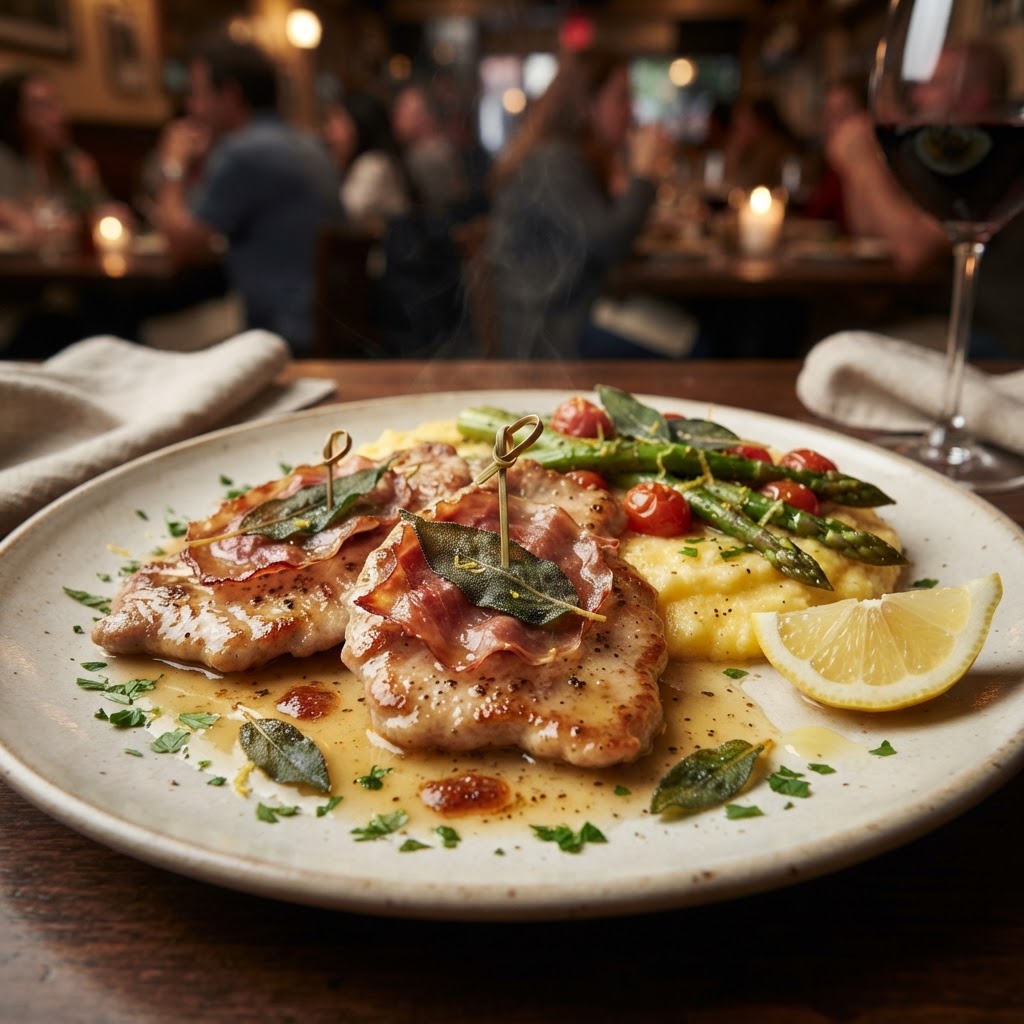
Saltimbocca alla Romana, "jumps in the mouth" in the Roman style, originated in Rome, where it has been a fixture of trattoria menus since at least the 19th century. The first known printed recipe appears in Ada Boni's *Il Talismano della Felicità* (1929), the most influential Italian cookbook of the 20th century, though the dish was certainly well-established in Roman cooking long before. It is a masterclass in simplicity that combines just five ingredients: thin slices of veal topped with prosciutto and a fresh sage leaf, secured with a toothpick, dredged in flour, and pan-seared in butter and white wine until golden, then served with the reduced pan juices spooned over. The name "saltimbocca" is literal, the dish is so delicious it "jumps in the mouth" of its own accord.
The key to great saltimbocca is the quality of the ingredients, because there are only five, each must be excellent. The veal should be thinly sliced top round or scaloppine, pounded to an even thickness. The prosciutto should be genuine Prosciutto di Parma or Prosciutto di San Daniele, aged 18 to 24 months. The sage must be fresh, dried sage is unacceptable. The butter should be European-style (84% fat) for the best flavor. And the wine should be a dry Italian white, a Frascati or Pinot Grigio.
Ingredients (serves 6 as a main course or 8 as a second course): - 12 thin slices veal scaloppine (top round, about 2 ½ oz-2 ⅞ oz each, pounded to 4mm thickness) - 12 slices Prosciutto di Parma (aged 18–24 months), cut to the same size as the veal - 24 fresh sage leaves (the largest, most fragrant leaves you can find) - 6 toothpicks, soaked in water (to secure the prosciutto) - 3 ½ oz all-purpose flour, seasoned with salt and pepper, for dredging - 2 ⅞ oz unsalted butter (European-style, 84% fat) - 2 tablespoons olive oil - ⅔ cup dry white wine (Frascati, Pinot Grigio, or Vermentino) - 1 tablespoon fresh lemon juice - 1 tablespoon capers, rinsed (optional but traditional in some Roman versions) - Salt and freshly ground black pepper
Garnish: - Fresh sage leaves, fried crisp in butter - Lemon wedges - Fresh parsley, chopped
To Serve: - Polenta or mashed potatoes - Sautéed greens (spinach or Swiss chard) - Crusty bread for the sauce
Preparing the Veal: If the veal scaloppine is not already thin enough, place each slice between two sheets of plastic wrap and pound gently with a meat mallet to an even 4mm thickness. The veal must be thin — it cooks in less than 2 minutes and should be tender, not chewy. Season lightly with salt (remember the prosciutto is very salty) and pepper.
Assembling the Saltimbocca: Place a slice of prosciutto on top of each veal slice. Top with 2 fresh sage leaves. Fold the veal in half (prosciutto side inward) or roll it loosely (the traditional method is to fold, not roll). Secure with a toothpick. The prosciutto should be on the inside, against the veal, so it stays moist during cooking. Dredge each saltimbocca lightly in seasoned flour, shaking off excess.
Pan-Searing: Heat 2 tablespoons butter and 1 tablespoon olive oil in a large skillet over medium-high heat. When the butter foams, add the saltimbocca (work in batches — do not crowd the pan). Cook 90 seconds to 2 minutes per side until golden. The veal should be just cooked through — do not overcook or it becomes tough. Remove to a warmed platter.
The Sauce: Pour off excess fat from the pan. Return to medium heat. Add the white wine and lemon juice. Deglaze, scraping up the browned bits from the bottom of the pan. Cook 1 minute to reduce. Add the remaining butter (cut into cubes) and swirl the pan constantly until the butter is incorporated and the sauce is glossy and slightly thickened. Add the capers (if using). Season with pepper (additional salt is rarely needed — the prosciutto is very salty).
Service: Remove the toothpicks. Arrange the saltimbocca on warmed plates. Spoon the sauce generously over the top. Garnish with fried sage leaves, lemon wedges, and parsley. Serve immediately with polenta or mashed potatoes and sautéed greens.
The Mimosa Pairing Logic: The savory, salty, buttery character of saltimbocca calls for a mimosa with bright acidity that cuts through the richness of the butter and prosciutto while complementing the sage. A classic orange mimosa is the most natural pairing — the citrus echoes the lemon in the sauce and the champagne's acidity balances the butter. A lavender elderflower mimosa is inspired — the floral notes create a beautiful resonance with the sage, which is itself a floral, aromatic herb. For a more structured pairing, a grapefruit rosemary mimosa provides a bright, slightly bitter counterpoint that refreshes the palate between bites of the rich, salty prosciutto. Avoid very sweet tropical mimosas — they make the prosciutto taste flat and the sage taste bitter.
Reference Links: - Veal Saltimbocca alla Romana: La Cucina Italiana - Classic Veal Saltimbocca: Sugar Love Spices - Saltimbocca authentic recipe: The Italian Chef - Prosciutto di Parma guide: Consorzio del Prosciutto di Parma
Make-Ahead: Saltimbocca can be assembled (veil topped with prosciutto and sage, folded, and secured) up to 4 hours ahead and refrigerated. Dredge in flour and cook just before service — the dish takes less than 5 minutes to cook and must be served immediately. The sauce is made in the same pan and must be finished à la minute.
Pro Tips: The veal must be very thin — 4mm is ideal. Thicker veal takes longer to cook and becomes tough and dry. The prosciutto should be on the inside, against the veal, so it stays moist and flavors the meat during cooking — if it is on the outside, it dries out and becomes hard and salty. The sage leaves should be large and fragrant — small, weak leaves do not provide enough aromatic punch. The butter for the sauce should be added cold, in cubes, and swirled in off the heat — this is the beurre monté technique that produces a glossy, thickened, emulsified sauce. Adding the butter all at once or while the pan is too hot causes the sauce to break (separate into oil and liquid). The veal should be cooked for no more than 2 minutes per side — it is so thin that it cooks almost instantly, and overcooking makes it tough and dry.
Rate this recipe
Be the first to rate this recipe
to submit your rating.
Recent Posts

Couscous Royale: North Africa's Grand Platter of Lamb, Chicken, and Merguez
October 14, 2026

Seattle Cream Cheese Dog Bites: Hadley Long's 1989 Pioneer Square Invention
October 14, 2026

Khao Soi: Chiang Mai's Northern Thai Coconut Curry Noodles
October 13, 2026

Korean Bibimbap: Jeonju's Joseon Dynasty Mixed Rice
October 11, 2026

Spaghetti alla Carbonara: Rome's World War II Pasta of Eggs, Guanciale, and Pecorino
October 9, 2026