Toll House Chocolate Chip Cookies: Ruth Wakefield's 1938 Massachusetts Invention
August 2, 2026
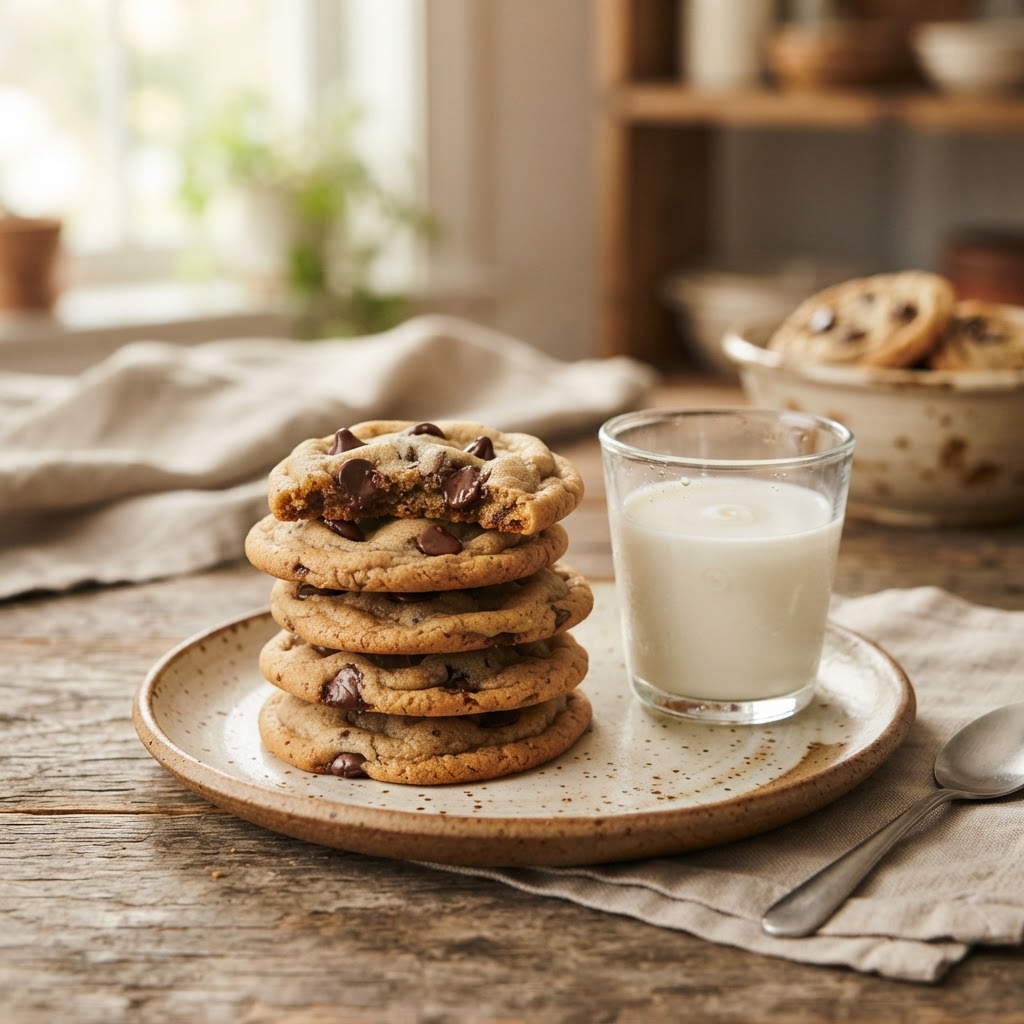
The chocolate chip cookie is the most famous cookie in the world — and the most American — a buttery, brown-sugar drop cookie studded with morsels of semi-sweet chocolate that hold their shape in the bake, invented in 1938 by Ruth Graves Wakefield at the Toll House Inn in Whitman, Massachusetts, in an act of deliberate culinary creativity rather than the accident of popular legend. According to Wikipedia, the Toll House Inn was established in 1930 by Kenneth and Ruth Graves Wakefield, and in 1938 Wakefield and her assistant Sue Brides created the first chocolate chip cookie using a bar of semi-sweet chocolate made by Nestlé, wanting to "do something a little more interesting with" their already popular butterscotch nut cookie; Wakefield struck a deal with Nestlé — the company would print her recipe on the cover of all their semi-sweet chocolate bars, and she would receive a lifetime supply of chocolate. The Wikipedia entry on Ruth Graves Wakefield notes that she was "known for her innovations in the baking field" and "pioneered the first chocolate chip cookie recipe, an invention many people incorrectly assume was a mistake" — she used an icepick to break the chocolate into pea-sized bits, which today would be recognized as the cookie's staple, chocolate "chips."
The genius of the chocolate chip cookie is the chocolate: Wakefield's insight was that bits of semi-sweet chocolate, unlike baking chocolate, would hold their shape in the oven rather than melting into the dough, so that every bite carried a distinct pocket of chocolate. The cookie itself — brown butter and brown sugar, vanilla and egg — is the perfect vehicle, crisp at the edge and chewy in the center, and the combination has been the most-baked cookie in America since Nestlé began printing the recipe on every bag of morsels.
About the Ingredients
Butter — unsalted butter, melted and cooled to brown butter for the deepest, nuttiest flavor, or simply softened and creamed; the butter is the cookie's richness.
Brown sugar — light or dark brown sugar, the source of the cookie's moisture, chew, and caramel flavor; a blend of brown and granulated sugar gives the ideal crisp-edge, chewy-center texture.
Eggs and vanilla — eggs for structure and moisture; pure vanilla extract for aroma.
Flour, baking soda, and salt — all-purpose flour, baking soda for lift, and salt to balance the sweet and heighten the chocolate.
Semi-sweet chocolate — chocolate chips or chopped bars of good semi-sweet chocolate (Nestlé Toll House morsels are the original); a blend of chips and chopped chunks gives the best texture and the most beautiful pools of melted chocolate.
Ingredients (makes about 3 dozen cookies): - 2 1/4 cups all-purpose flour - 1 tsp baking soda - 1 tsp salt - 1 cup (2 sticks) unsalted butter, softened - 3/4 cup granulated sugar - 3/4 cup packed brown sugar - 2 large eggs - 2 tsp vanilla extract - 2 cups (one 12-oz bag) semi-sweet chocolate chips
Instructions: Preheat the oven to 375°F. In a bowl, whisk the flour, baking soda, and salt. In another bowl, cream the butter and both sugars until light and fluffy. Beat in the eggs one at a time, then the vanilla. Gradually stir in the dry ingredients until just combined. Fold in the chocolate chips.
Drop rounded tablespoons of dough onto parchment-lined baking sheets, spacing 2 inches apart. Bake 9–11 minutes until the edges are golden but the centers are still pale and soft — they will set as they cool. Cool 2 minutes on the sheets, then transfer to a rack.
The Mimosa Pairing Logic: The brown-sugar cookie and the semi-sweet chocolate want a bright, fruit-driven drink that cuts the richness and echoes the chocolate's fruit notes. A dark chocolate espresso champagne mimosa is the inspired match — the chocolate and coffee mirror the cookie and the bubbles lift the butter. A classic Champagne mimosa is equally right, the orange a bright, acidic counter to the sweet cookie the way a glass of cold milk is. This is the brunch equivalent of a warm chocolate chip cookie and a glass of milk — a sparkling toast to Ruth Wakefield and the Toll House Inn.
Reference Links: - Toll House Inn (Ruth Graves Wakefield, 1938, Nestlé deal, Whitman Massachusetts): Wikipedia - Ruth Graves Wakefield (inventor of the chocolate chip cookie, deliberate invention): Wikipedia
Make-Ahead: The dough can be made and chilled up to 2 days ahead; chilled dough bakes into thicker, chewier cookies. The dough also freezes beautifully — portion into balls, freeze on a tray, then transfer to a bag and bake from frozen, adding 2–3 minutes. Baked cookies keep 4 days in an airtight container, or freeze for 2 months; they are best the day they are baked, when the edges are crisp and the chocolate still molten.
Pro Tips: Do not overbake; the cookies should look underdone in the center when you pull them, and they will set on the hot sheet into the perfect chewy texture — an overbaked chocolate chip cookie is crisp and dry. Use a blend of chips and chopped chocolate; the chopped chocolate melts into beautiful pools, and the chips hold their shape for contrast. Cream the butter and sugar thoroughly; the creaming is what gives the cookie its lift and its chew, and under-creamed dough is dense. Chill the dough before baking if you have time; chilled dough spreads less, bakes thicker, and the flavors deepen. Use pure vanilla, not imitation; the vanilla is a genuine flavor contributor in a cookie with so few ingredients.
Rate this recipe
Be the first to rate this recipe
to submit your rating.
Recent Posts

Couscous Royale: North Africa's Grand Platter of Lamb, Chicken, and Merguez
October 14, 2026

Seattle Cream Cheese Dog Bites: Hadley Long's 1989 Pioneer Square Invention
October 14, 2026

Khao Soi: Chiang Mai's Northern Thai Coconut Curry Noodles
October 13, 2026

Korean Bibimbap: Jeonju's Joseon Dynasty Mixed Rice
October 11, 2026

Spaghetti alla Carbonara: Rome's World War II Pasta of Eggs, Guanciale, and Pecorino
October 9, 2026