The Caipirinha: Brazil's National Cocktail
August 12, 2026
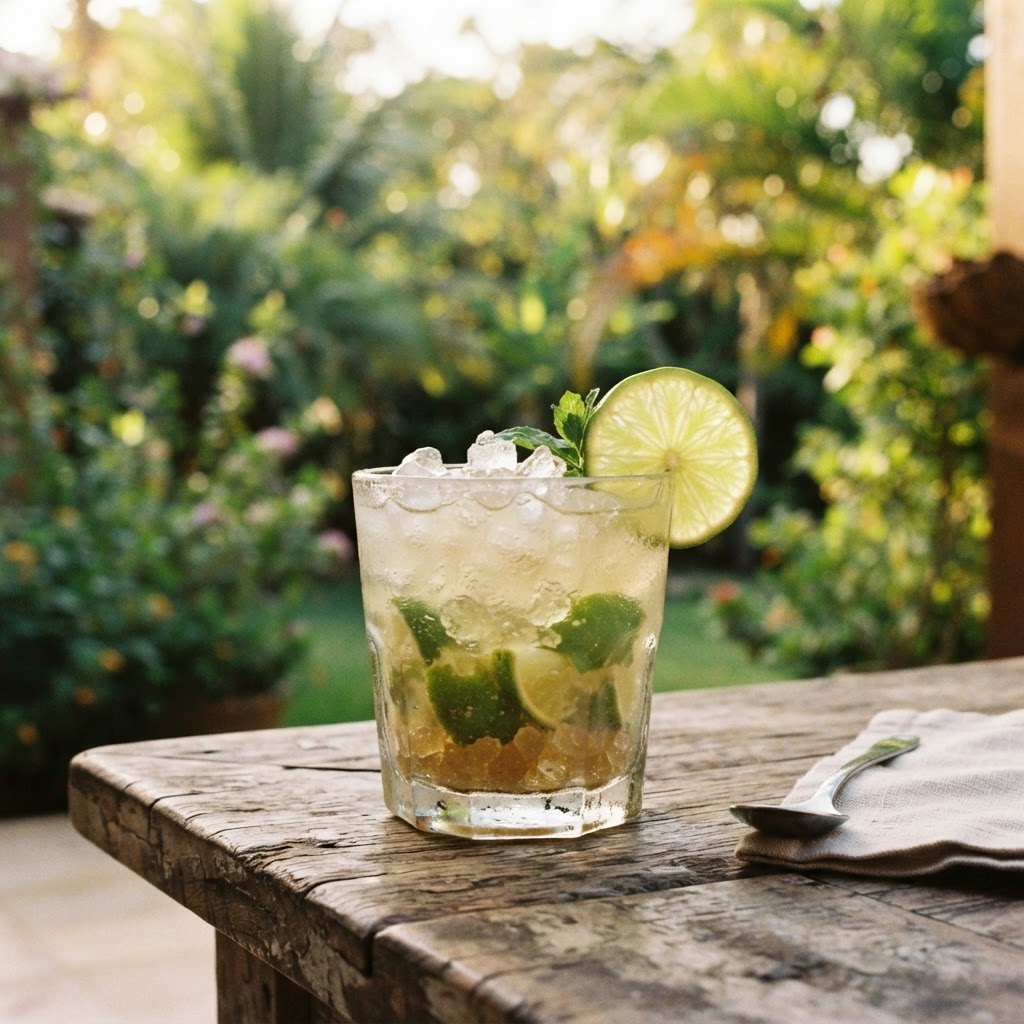
The Caipirinha is the national cocktail of Brazil — a rustic, vividly fresh drink of cachaça, fresh lime, and sugar, muddled with crushed ice in the same glass it is served in, a drink of startling simplicity and bracing, tropical brightness that captures the spirit of the Brazilian afternoon in three ingredients. According to Wikipedia, the caipirinha is a Brazilian cocktail made with cachaça, sugar, lime, and ice, originating in the state of São Paulo; the drink is prepared by mixing fruit with sugar in a glass, and the most popular version uses lime. The drink's roots are widely traced to the early 20th century, when a similar lime-and-cachaça mixture was used as a folk remedy during the 1918 Spanish flu pandemic, and it evolved into the cocktail recognized today and decreed Brazil's national drink.
The genius of the Caipirinha is the muddle: the lime wedges — skin, pith, and flesh — are pressed with the sugar so that the lime oils from the skin release into the drink, giving it a perfume and a gently bitter edge that plain lime juice alone can never achieve. Cachaça, Brazil's sugarcane spirit (distinct from rum, which is made from molasses), brings a grassy, funky, earthy sweetness that is the drink's signature.
About the Ingredients
Cachaça — Brazil's native sugarcane spirit, distilled from fresh-pressed sugarcane juice (unlike rum, which is made from molasses); it is grassy, vegetal, and faintly funky. Unaged (branca) for a clean Caipirinha, or aged (amarelada) for depth. Brands like Leblon, Novo Fogo, and Ypióca are excellent.
Lime — fresh, whole lime wedges, muddled skin and all; the lime oils from the skin are essential, so do not simply squeeze juice.
Sugar — superfine white sugar dissolves most easily in the cold muddle; brown sugar adds caramel depth. The sugar is muddled with the lime, not dissolved in a syrup.
Crushed ice — the drink is served on crushed ice, which chills rapidly and dilutes gently, softening the cachaça's edge.
Ingredients (makes 1): - ½ lime, cut into 4 wedges - 2 tsp superfine sugar - 2 oz cachaça - Crushed ice
Instructions: Cut the lime half into 4 wedges and place them in a sturdy old-fashioned glass. Add the sugar. Muddle firmly, pressing the lime wedges to release their juice and the oils from the skin — do not pulverize the fruit. Add the cachaça and stir to dissolve the sugar. Fill the glass with crushed ice and stir again until the glass frosts. Serve with a stirrer or short straw.
The Mimosa Pairing Logic: The Caipirinha's lime-and-cachaça brightness wants a mimosa with tropical, citrus-forward energy. A passionfruit mimosa is the inspired match — the passionfruit nods to Brazil and its tropical acidity mirrors the lime. A classic Champagne mimosa is the clean, bright cousin, its citrus a natural sibling of the lime. This is the brunch equivalent of a Caipirinha on a São Paulo afternoon and a mimosa at the table — a toast to Brazil and its national drink.
Reference Links: - Caipirinha (Brazilian cocktail, cachaça, São Paulo, lime, sugar, ice): Wikipedia
Make-Ahead: The Caipirinha is built to order in the glass and does not batch well — the muddled lime must be fresh, and crushed ice melts. For a brunch, pre-cut lime wedges and portion the sugar; muddle and build each drink to order. Make the simple work of muddling part of the show. Use genuine cachaça, not rum — they are different spirits, and rum makes a different (lesser) drink called a caipiroska or daiquiri-adjacent, not a Caipirinha.
Pro Tips: Muddle the lime with the sugar, not just the juice — the oils from the skin are the whole point, and a juice-only drink is flat and dull. Don't over-muddle; press to release the oils, don't shred the fruit into bitter pulp. Use superfine sugar so it dissolves in the cold muddle; granulated sugar leaves grit. Use crushed ice, not cubes — the texture and dilution are essential, and cubes make a different, harsher drink. Use genuine cachaça — substituting rum makes a caipiroska-adjacent drink, not a Caipirinha, and the grassy cachaça character is irreplaceable. Serve with a straw that reaches the bottom, where the sweetest part settles.
Rate this recipe
Be the first to rate this recipe
to submit your rating.
Recent Posts

Couscous Royale: North Africa's Grand Platter of Lamb, Chicken, and Merguez
October 14, 2026

Seattle Cream Cheese Dog Bites: Hadley Long's 1989 Pioneer Square Invention
October 14, 2026

Khao Soi: Chiang Mai's Northern Thai Coconut Curry Noodles
October 13, 2026

Korean Bibimbap: Jeonju's Joseon Dynasty Mixed Rice
October 11, 2026

Spaghetti alla Carbonara: Rome's World War II Pasta of Eggs, Guanciale, and Pecorino
October 9, 2026