The Texas Prickly Pear & Lime Mimosa
August 29, 2026
The prickly pear is the cactus that defined the Texas landscape long before it had a name on a map. The Opuntia genus — flat-padded cacti bearing edible fruits known as tunas — is native to the Americas and has been a food source across the arid Southwest and Mexico for thousands of years. The fruit ripens in midsummer to a deep magenta-red, and its juice is one of the most vividly colored natural liquids in the entire culinary canon: a saturated fuchsia that turns anything it touches an extraordinary jewel-pink. The flavor is mild, sweet, and faintly melon-like, often compared to a cross between watermelon, kiwi, and pear, with a subtle earthy undertone (Wikipedia; Texas Beyond History).
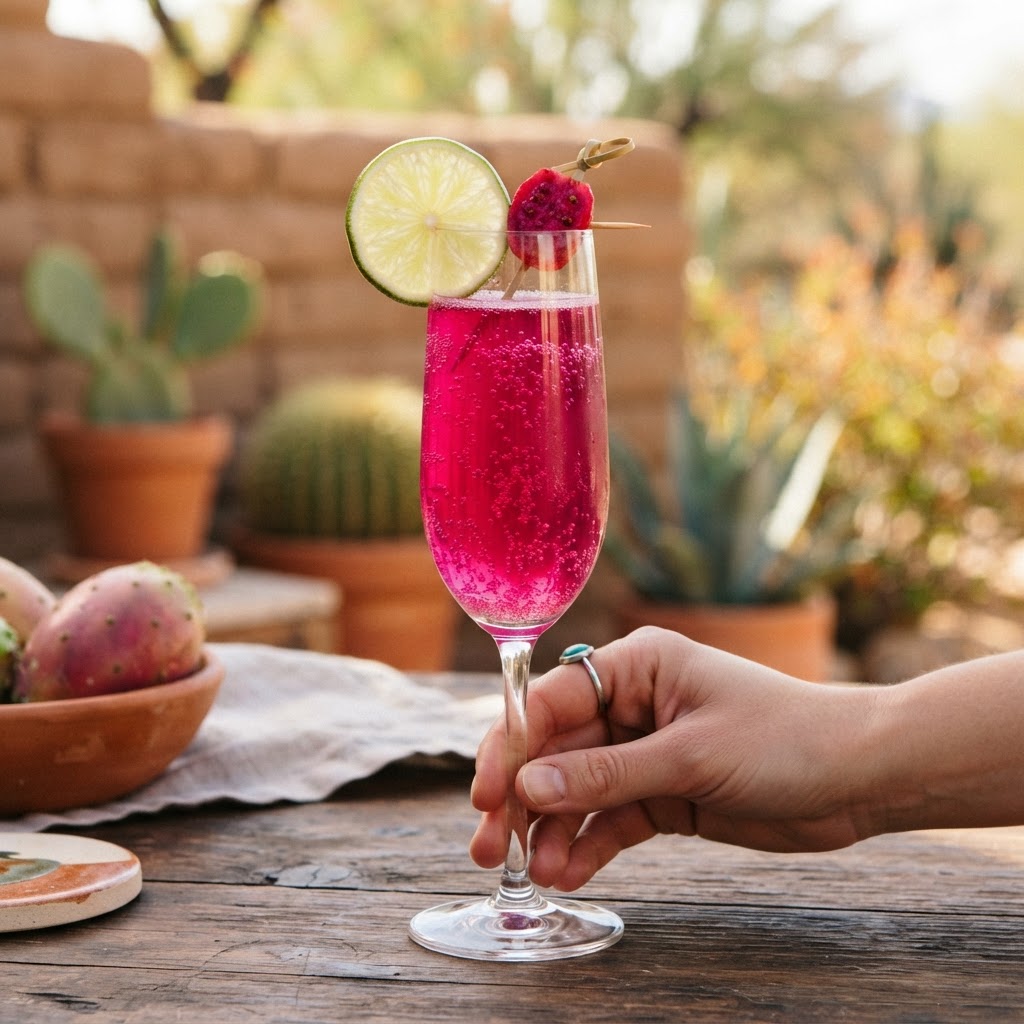
In Texas kitchens, the prickly pear has become a point of regional pride — the fruit is turned into syrups, jams, and margaritas, and the cactus itself was designated the official state plant of Texas in 1995 (Texas Highways). In a mimosa, the magenta juice meets dry Cava or Champagne to spectacular effect: the color alone makes it the most photographed drink on any brunch table, and the lime — a Southwestern staple that brightens the prickly pear's mild sweetness — gives the drink the acidity it needs to read as a cocktail rather than a fruit punch.
Ingredients (serves 6): - 1 cup prickly pear juice (see below) or 1 cup high-quality prickly pear syrup (such as Monin), thinned with 2 tablespoons water - 2 oz fresh lime juice (about 3–4 limes) - 1 tablespoon agave nectar or simple syrup (to taste) - 1 bottle (3 ⅛ cups) chilled Cava Brut or Brut Champagne - Lime wheels and small prickly pear fruits for garnish
Prickly Pear Juice: Handle the fruits with tongs or thick gloves — the tiny glochids (hair-like spines) on the skin are irritants. Slice each fruit in half and scoop out the flesh and seeds with a spoon. Blend the pulp briefly, then strain through a fine-mesh sieve, pressing firmly to extract the deep magenta juice. Discard the seeds. Chill thoroughly. About 6–8 ripe fruits yield roughly 1 cup of juice.
Instructions: Chill champagne flutes for 5 minutes. Stir together the prickly pear juice, lime juice, and agave nectar in a small pitcher. Pour 2 oz of the magenta blend into each flute — the color is magnificent against the glass. Top slowly with chilled Cava, pouring carefully down the side to preserve the dramatic color layering. Garnish with a lime wheel on the rim and, if available, a small whole prickly pear fruit speared on a pick.
For a Mimosa Bar (serves 12): - 2 cups prickly pear juice - 4 oz fresh lime juice - 2 tablespoons agave nectar - 2 bottles chilled Cava Brut
Variations: - Prickly Pear Margarita Mimosa: Add 1 oz blanco tequila to the blend for a crossover that bridges the margarita and the mimosa. - Jalapeño Prickly Pear: Drop 2 thin jalapeño slices into each flute for a slow, building Southwestern heat. - Non-Alcoholic: Replace the Cava with sparkling water or a Mexican mineral water like Topo Chico for a vibrant zero-proof cooler.
Pairing: This vivid mimosa pairs beautifully with Tex-Mex brunch dishes — breakfast tacos, migas, chilaquiles — and with any spread that includes guacamole or a fruit platter. The prickly pear's gentle sweetness also makes it a refreshing counterpoint to salty, smoky dishes like carne asada or bacon-wrapped jalapeño poppers.
Reference Links: - Opuntia (prickly pear cactus, tuna fruit): Wikipedia - Prickly Pear in Texas Kitchens (state plant, culinary pride): Texas Highways - Prickly pear fruit (tuna) history and flavor: Mexico In My Kitchen
Pro Tips: Always handle fresh prickly pears with gloves or tongs — the nearly invisible glochids will embed in skin and are deeply unpleasant to remove. If you cannot find fresh fruit, bottled prickly pear juice (available at Latin American grocers) or Monin prickly pear syrup both produce excellent results; thin the syrup with a little water so it pours cleanly. The juice's color is so intense that a small amount goes a long way — start with the ratio above and adjust to taste. Prickly pear juice oxidizes and loses some vibrancy over several hours, so press it the morning of service for the brightest color.
Rate this recipe
Be the first to rate this recipe
to submit your rating.
Recent Posts

Couscous Royale: North Africa's Grand Platter of Lamb, Chicken, and Merguez
October 14, 2026

Seattle Cream Cheese Dog Bites: Hadley Long's 1989 Pioneer Square Invention
October 14, 2026

Khao Soi: Chiang Mai's Northern Thai Coconut Curry Noodles
October 13, 2026

Korean Bibimbap: Jeonju's Joseon Dynasty Mixed Rice
October 11, 2026

Spaghetti alla Carbonara: Rome's World War II Pasta of Eggs, Guanciale, and Pecorino
October 9, 2026