Tarte Tatin allo Spumante

June 7, 2026
In the 1880s, at the Hôtel Tatin in Lamotte-Beuvron, a small town in the Loire Valley about 150 kilometres south of Paris, two sisters, Stéphanie and Caroline Tatin, ran the kitchen, and the tarte that carries their name was born there, by accident, in a busy hunting season. The most repeated story credits Stéphanie, the elder sister and the hotel's cook, who, overwhelmed by the demands of the kitchen, left a pan of apples and butter caramelizing on the stove too long. Rather than discard the burnt apples, she covered them with pastry and put the whole pan in the oven to salvage the dessert, then inverted the pan onto a plate, revealing the caramelized apples on top of the golden pastry. The exact date is disputed, some accounts placing the incident in the 1880s and others in 1898, but the tarte became a specialty of the Hôtel Tatin and never carried the sisters' name in their lifetime; they never wrote a cookbook or published the recipe, and they never called it tarte Tatin. That recognition came from the gastronome Curnonsky and from Maxim's in Paris, after the sisters' deaths, and Louis Vaudable of Maxim's is said to have brought the recipe to the restaurant under the name "tarte des demoiselles Tatin" (Wikipedia).
A proper tarte Tatin has apples deeply caramelized in butter and sugar until golden, soft, and intense, topped with puff pastry, baked until the pastry is golden and crisp, and inverted so the apples sit on top. The caramel, butter and sugar in the bottom of the pan, becomes a rich golden syrup that coats the apples and soaks into the pastry. The traditional apples are firm, slightly tart varieties that hold their shape, Reine des Reinettes, Boskoop, or Granny Smith.
Our Mimosavated version adds a splash of Spumante to the caramel, the bright, slightly acidic wine cutting the richness of the butter and caramel and adding a fruity note that complements the apples.
Ingredients (serves 8):
The Caramel and Apples: - 3 ½ oz unsalted butter - 5 ¼ oz granulated sugar - 2 ⅔ lb firm, tart apples (Granny Smith, Braeburn, or Reine des Reinettes), peeled, cored, and halved - 3 ⅓ tbsp Spumante (Italian sparkling wine, brut) - 1 teaspoon vanilla extract - A pinch of salt
The Puff Pastry: - 13 ¼ oz all-butter puff pastry (store-bought is fine — just make sure it's all-butter) - 1 egg, beaten (for egg wash, optional)
Making the Tarte Tatin: Preheat the oven to 392°F (400°F).
In a 9 ⅞ in (10-inch) cast-iron skillet or ovenproof frying pan, melt the butter over medium heat. Add the sugar and stir until dissolved. Cook, without stirring, until the caramel turns a deep golden amber color — about 5–7 minutes. Watch carefully, as caramel goes from golden to burnt very quickly. Remove from heat and stir in the Spumante (be careful — it will sputter), vanilla, and salt.
Arrange the apple halves cut-side up in the caramel, packing them tightly in concentric circles. They will shrink during cooking, so don't be afraid to crowd them. Return to medium heat and cook for 15–20 minutes, until the apples are softened and the caramel has thickened and is deeply golden. Remove from heat.
Adding the Pastry: Roll the puff pastry to a circle slightly larger than the skillet (about 11 inches. Carefully drape the pastry over the apples, tucking the edges down around the apples and into the pan, as if you're tucking them into bed. Prick the pastry a few times with a fork to allow steam to escape.
Baking: Bake for 25–30 minutes, until the pastry is deep golden brown and crisp. Let the tarte rest in the pan for 5 minutes — no longer, or the caramel will set and the apples will stick.
Inverting: Run a knife around the edge of the pastry to loosen it. Place a large serving plate (larger than the skillet) upside-down on top of the skillet. Using oven mitts, quickly and confidently invert the whole thing — skillet and plate — so the plate is on the bottom and the skillet is on top. Give it a gentle shake and lift the skillet away. The apples should be on top, beautifully caramelized, with the golden pastry beneath.
Serving: Serve warm, with a scoop of vanilla ice cream or a dollop of crème fraîche. The contrast between the warm, caramelized apples and the cold, creamy accompaniment is essential.
The Mimosa Pairing Logic: Since the caramel contains Spumante, pair with a classic Prosecco mimosa — orange juice and Prosecco. The bright citrus complements the caramel and the apples. An apple cider mimosa is even more thematic — the cider echoes the apples in the tart. Avoid heavy or sweet mimosas — tarte Tatin is rich with caramel and butter, and you need something bright and refreshing to balance it.
Reference Links: - The History of Tarte Tatin (Tatin sisters, Lamotte-Beuvron, 1880s): Coeur de Xocolat - Lamotte Beuvron, Home of the Tarte Tatin (1898 hunting party story): Frog Mom - Tarte Tatin on Wikipedia (Stéphanie and Caroline Tatin, accidental origin): Wikipedia - Spumante Italian sparkling wine guide: Wine Folly
Make-Ahead: Tarte Tatin is best served warm, the day it's made. However, it can be made up to 1 day ahead and stored at room temperature — reheat gently in a 347°F/350°F oven for 10 minutes before serving to restore the crisp pastry. The apples can be caramelized a few hours ahead and left in the pan at room temperature; add the pastry and bake just before serving. Do not refrigerate — the pastry will become soggy. Do not freeze.
Pro Tips: Use firm, tart apples — soft or sweet apples will turn to mush during cooking. Granny Smith, Braeburn, or Reine des Reinettes are ideal. Pack the apples tightly in the caramel — they will shrink significantly during cooking, and a loose arrangement will result in a sparse tarte. Use a cast-iron skillet — it holds heat evenly and goes from stovetop to oven seamlessly. Watch the caramel carefully — it goes from golden to burnt in seconds. Remove from heat the moment it turns deep amber. When adding the Spumante, be careful — it will sputter. Add it gradually and stir quickly. Don't skip the resting period after baking — the caramel needs to settle, but don't wait too long or it will harden and stick. Invert with confidence — hesitation is the enemy. One quick, smooth motion, and the tarte will release perfectly. Serve warm — the caramel and apples are at their best when slightly warm, and the contrast with cold ice cream is the entire point. Use all-butter puff pastry — margarine-based pastry doesn't have the same flavor or flakiness.
Rate this recipe
Be the first to rate this recipe
to submit your rating.
Recent Posts
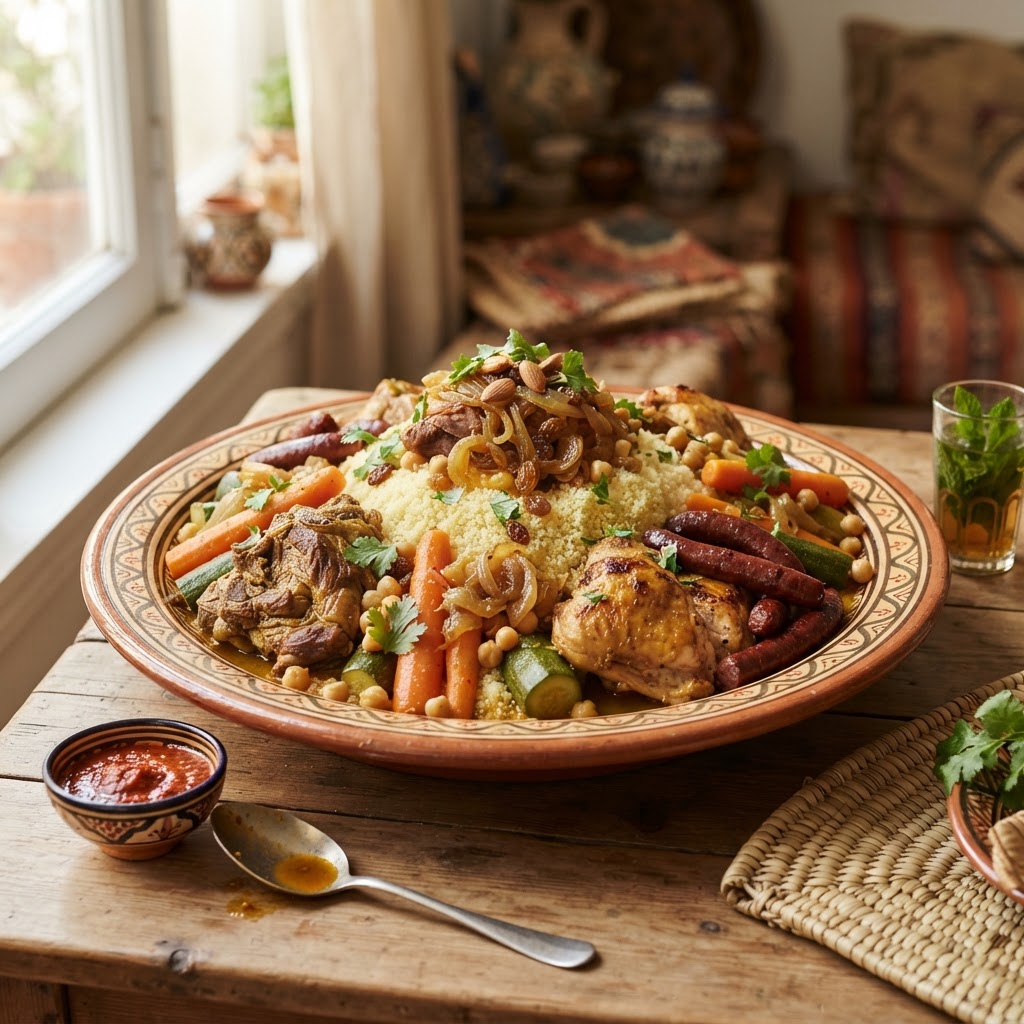
Couscous Royale: North Africa's Grand Platter of Lamb, Chicken, and Merguez
October 14, 2026
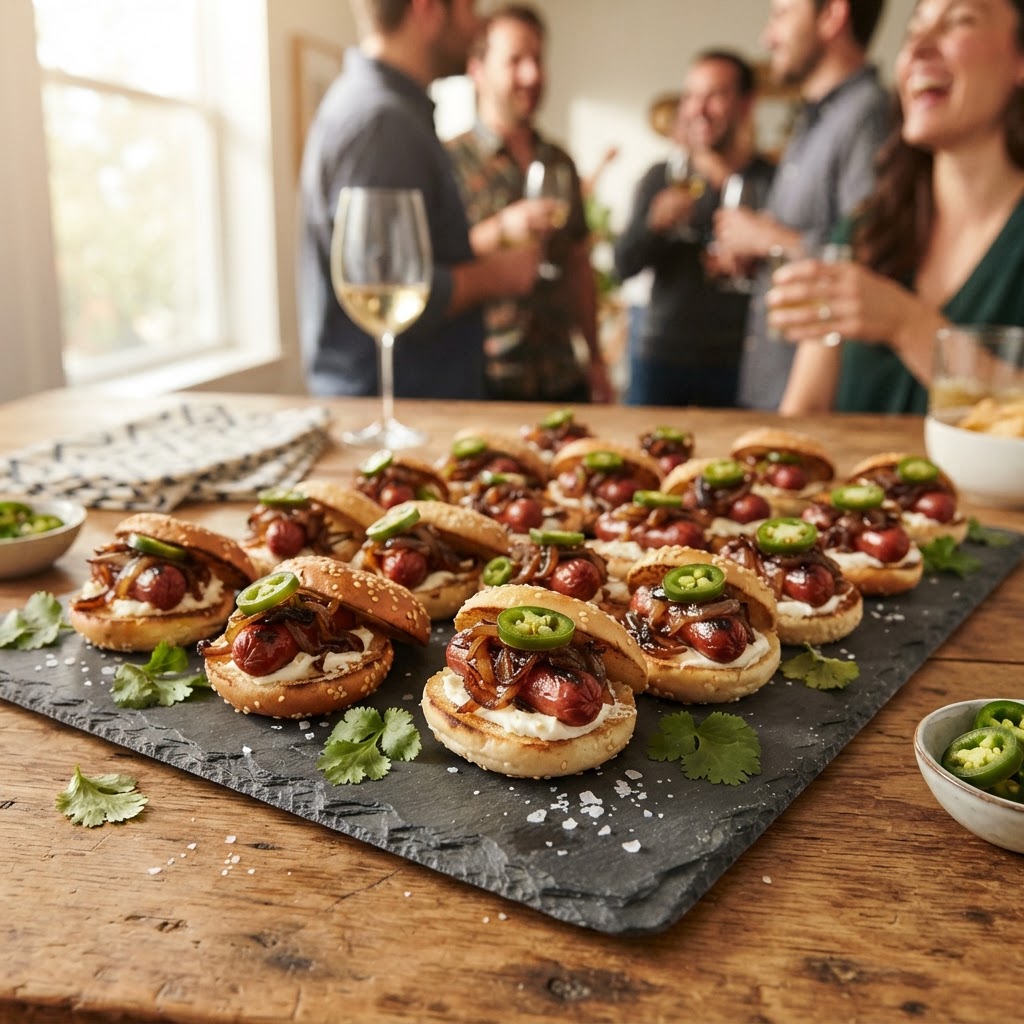
Seattle Cream Cheese Dog Bites: Hadley Long's 1989 Pioneer Square Invention
October 14, 2026
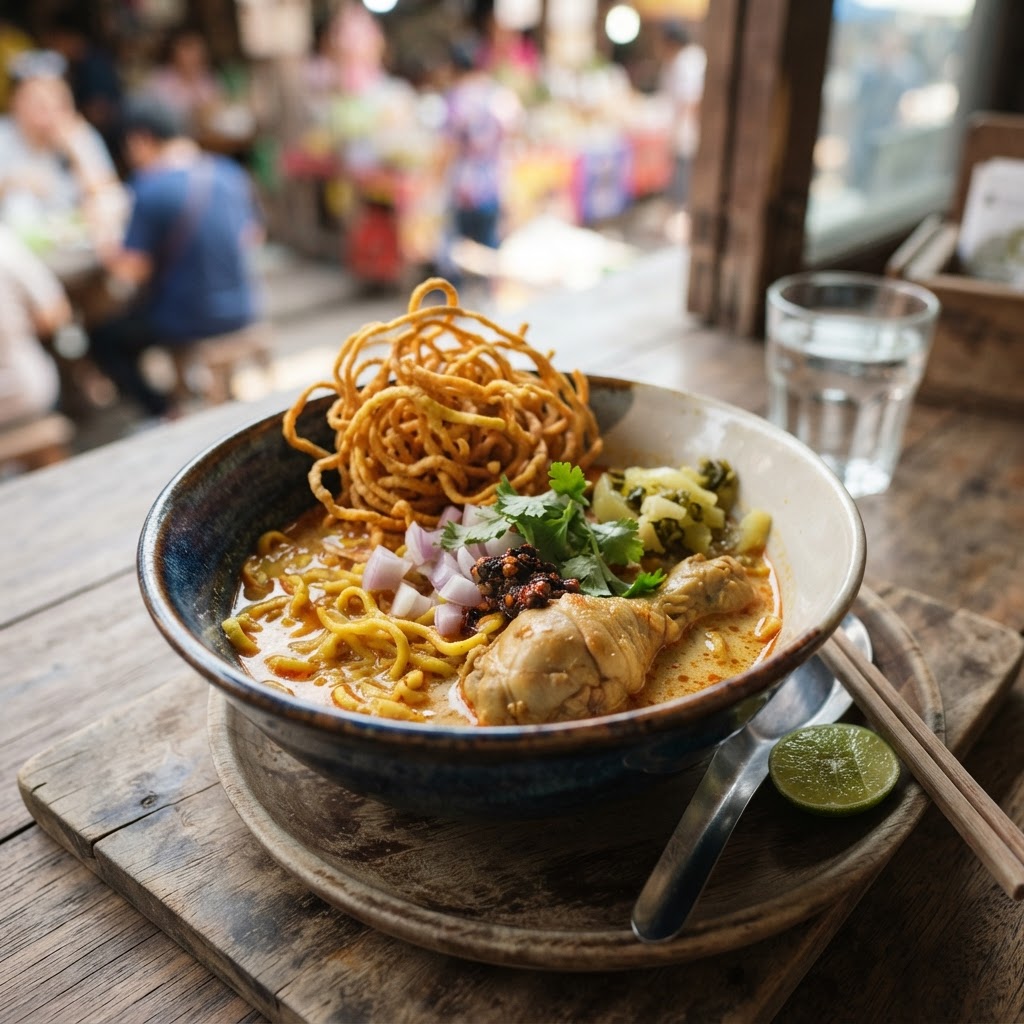
Khao Soi: Chiang Mai's Northern Thai Coconut Curry Noodles
October 13, 2026
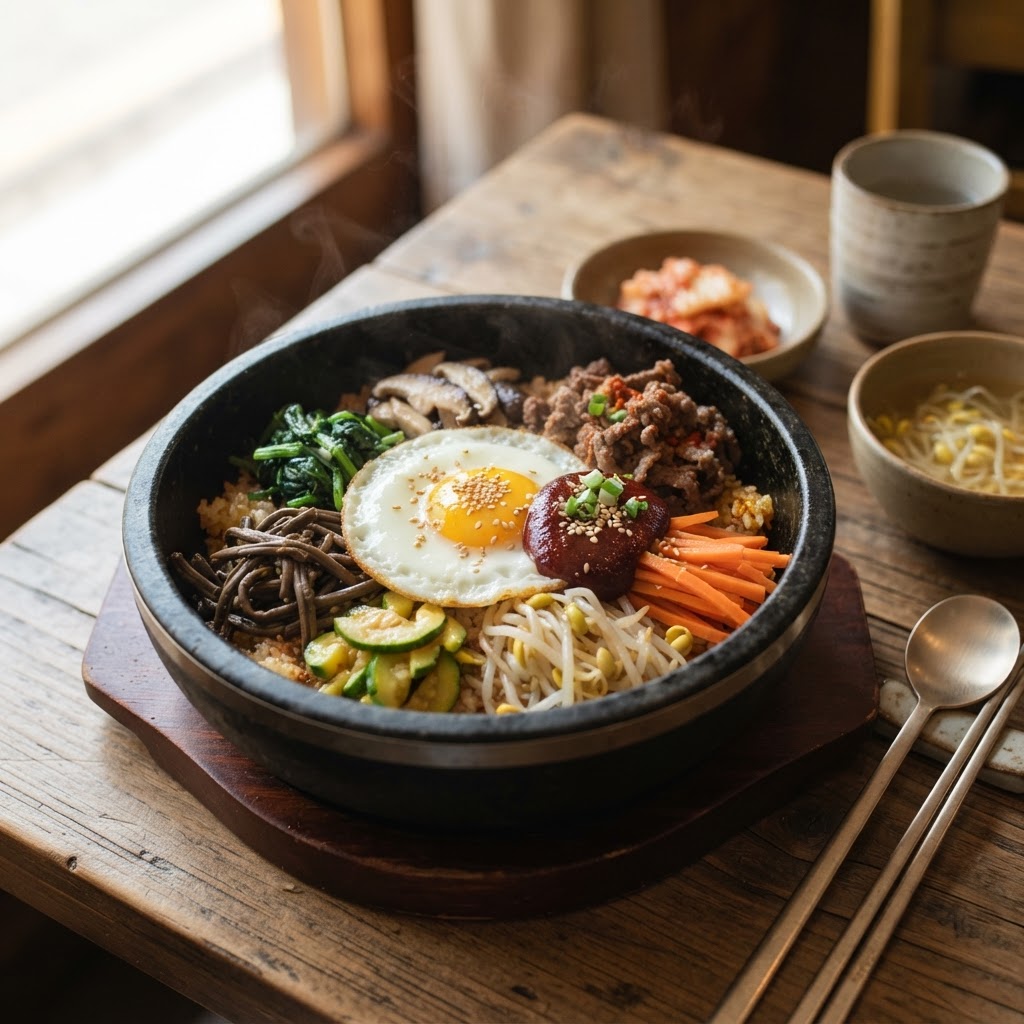
Korean Bibimbap: Jeonju's Joseon Dynasty Mixed Rice
October 11, 2026
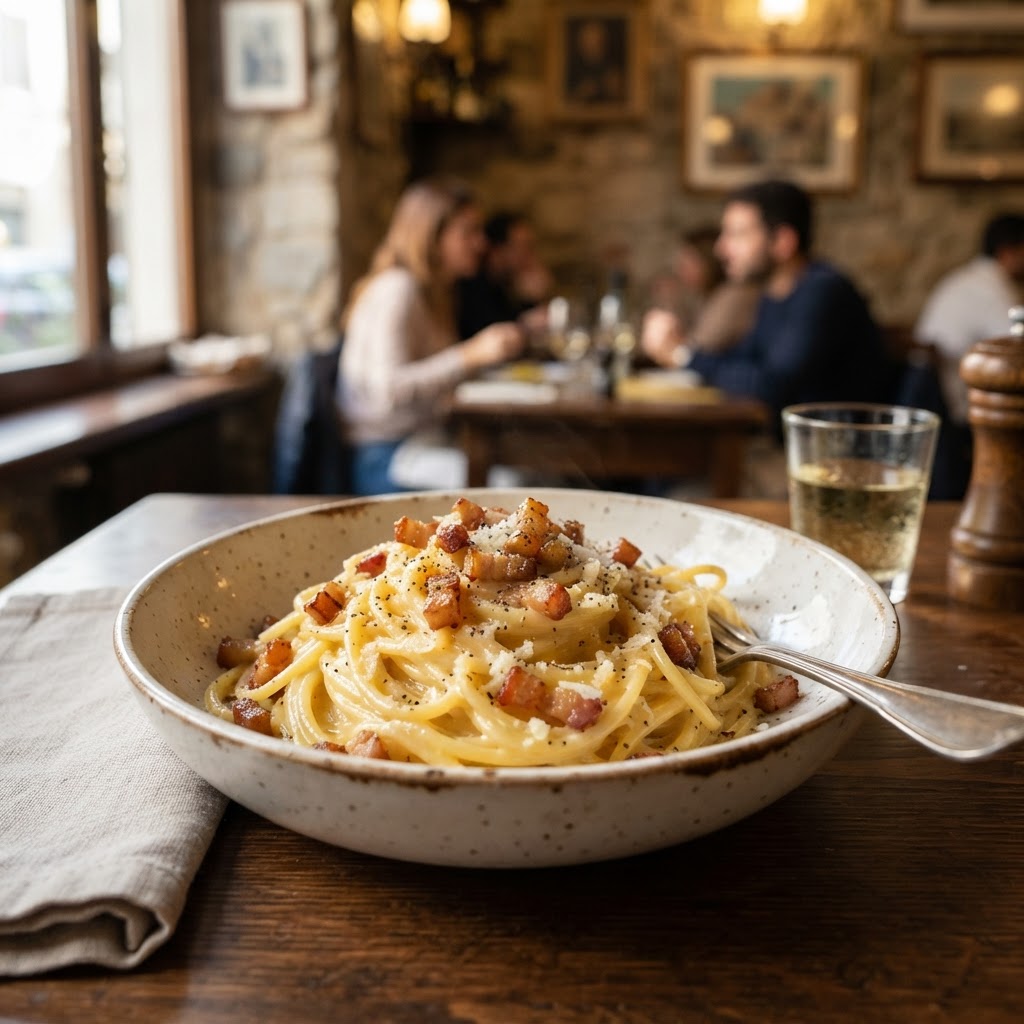
Spaghetti alla Carbonara: Rome's World War II Pasta of Eggs, Guanciale, and Pecorino
October 9, 2026