Swedish Gravlax on Rye Crispbread with Mustard Dill Sauce
April 3, 2026
Gravlax — Swedish cured salmon with dill — is one of Scandinavia's most ancient and elegant dishes. The name comes from the Swedish *gravad lax*, meaning "buried salmon," a reference to the medieval practice of preserving fish by burying it in the sand above the tide line, packed with salt and covered with branches. The salt preserved the fish and kept it from rotting, and the natural fermentation gave it a distinctive tang. Today's gravlax is a gentler cousin of that ancient preservation method — salmon cured for 24–72 hours in a mixture of salt, sugar, dill, and white pepper, resulting in a silky, translucent, intensely flavored fish that is sliced paper-thin and served with a sweet-and-sour mustard dill sauce called *hovmästarsås*.
The history of gravlax is well documented. According to Swedish Spoon, we know from a French guest of the Swedish nobleman Axel Oxenstierna that cured salmon was served in the 1640s, sliced thin with a mustard, oil, and vinegar sauce — essentially the way it is served today. Sweden's official cultural site confirms that gravlax is central to the Swedish smörgåsbord, the festive buffet that marks Scandinavian entertaining. For a party, gravlax served on dark rye crispbread (*knäckebröd*) with a dollop of mustard dill sauce is the classic Scandinavian canapé — elegant, make-ahead friendly, and deeply flavorful.
About the Ingredients
Salmon should be the freshest, highest-quality salmon you can find — ideally "sushi grade" or previously frozen (freezing kills any potential parasites, as recommended by food safety authorities). A side of salmon with the skin on is traditional; the skin protects the flesh and makes the fish easier to handle during curing. A 2 lb side of salmon serves approximately 12 people as an appetizer. Food52 offers Magnus Nilsson's authoritative recipe from *The Nordic Cookbook*.
The cure is a simple mixture of salt, sugar, and coarsely ground white pepper. The ratio is important: too much salt will make the fish tough and overly salty; too little will not cure it properly. The traditional Swedish ratio is roughly equal parts salt and sugar by volume, with a smaller amount of white pepper. Fresh dill — a large bunch, stems and all — is packed around the fish and is essential to the flavor.
Hovmästarsås (mustard dill sauce) is the traditional accompaniment. It is an emulsion of Swedish mustard (or a blend of Dijon and whole-grain mustard), oil, vinegar, sugar, and finely chopped dill. The sauce should be sweet, tangy, and intensely dill-flavored.
Rye crispbread (*knäckebröd*) is the traditional base. Wasa crispbread is widely available. The dark, seeded varieties provide the best contrast to the silky salmon.
Ingredients (serves 12 as an appetizer):
Gravlax: - 2 lb salmon side, skin on, pinbones removed - 1/2 cup kosher salt (do not use iodized or mineral salt) - 1/2 cup granulated sugar - 2 teaspoons coarsely ground white pepper - 1 large bunch fresh dill, stems and fronds, roughly chopped
Hovmästarsås (Mustard Dill Sauce): - 3 tablespoons Swedish mustard (or 2 tablespoons Dijon + 1 tablespoon whole-grain mustard) - 1 tablespoon red wine vinegar - 1/2 cup neutral oil (not olive oil) - 1 tablespoon sugar - 1 teaspoon salt - 2 tablespoons finely chopped fresh dill - 1 tablespoon hot water (to thin if needed)
For serving: - Dark rye crispbread (Wasa or similar) - Fresh dill sprigs for garnish - Lemon wedges
Instructions: Prepare the cure: mix the salt, sugar, and white pepper in a small bowl. Chop the dill roughly — stems and all.
Pat the salmon dry with paper towels. Place a large piece of plastic wrap on a work surface. Sprinkle half of the cure mixture and half of the dill on the plastic. Place the salmon skin-side down on top. Sprinkle the remaining cure and dill over the flesh, coating it completely and evenly. Wrap the salmon tightly in the plastic wrap, then place it in a second plastic bag or a container to catch any liquid. Place a light weight on top (a small plate or a can).
Refrigerate for 48–72 hours, turning the salmon every 12 hours so it cures evenly. For a firmer, more cured fish, go 72 hours; for a softer, fresher texture, 48 hours is sufficient.
Prepare the sauce: whisk the mustard and vinegar together in a small bowl. Gradually whisk in the oil, drop by drop at first, then in a steady stream, to create an emulsion (like making mayonnaise). Whisk in the sugar, salt, and chopped dill. If the sauce is too thick, thin with a tablespoon of hot water. Refrigerate for at least 1 hour before serving — the flavor improves with time.
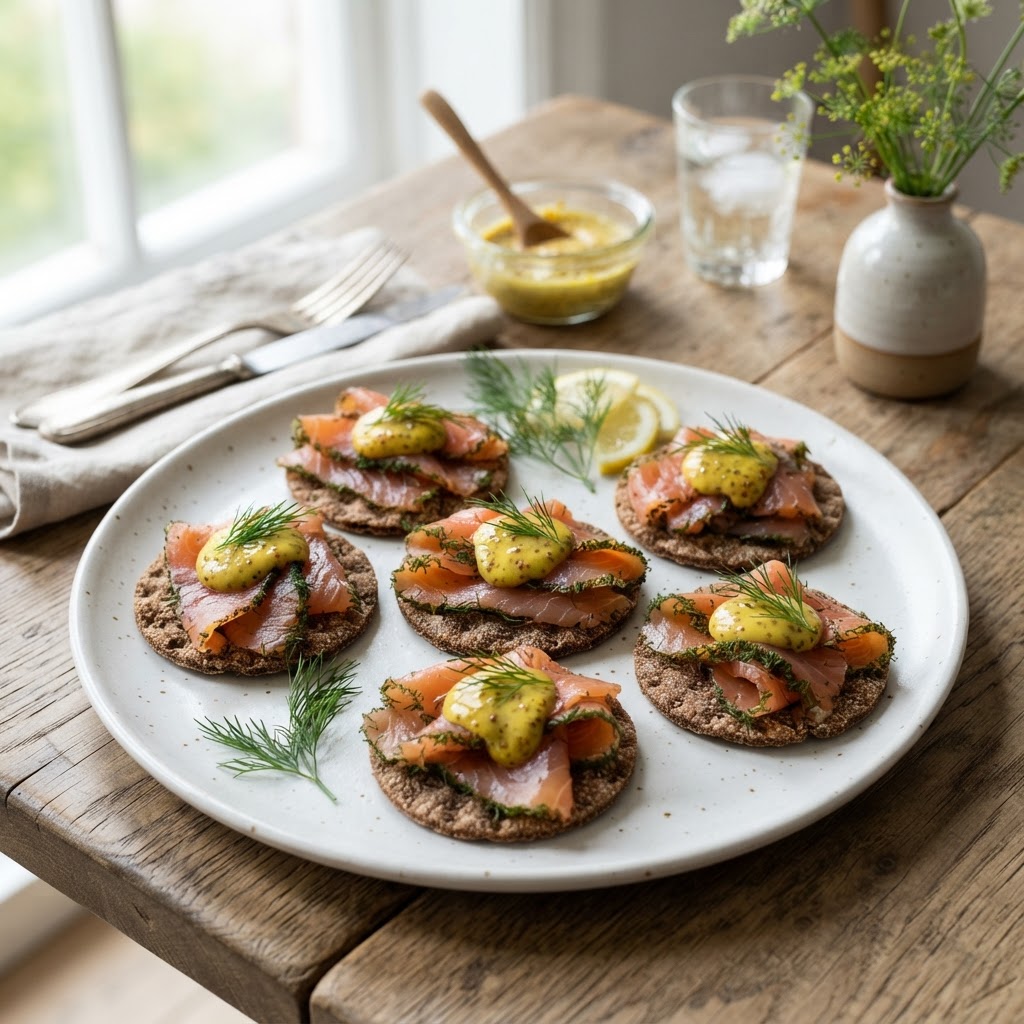
To serve: unwrap the salmon and scrape off the cure and dill. (You can add a sprinkle of fresh dill for appearance.) Using a very sharp knife, slice the salmon paper-thin on a slight diagonal, cutting away from the skin. Discard the skin. Arrange the slices on rye crispbread rounds, top with a dollop of mustard dill sauce, and garnish with a dill sprig. Serve with lemon wedges.
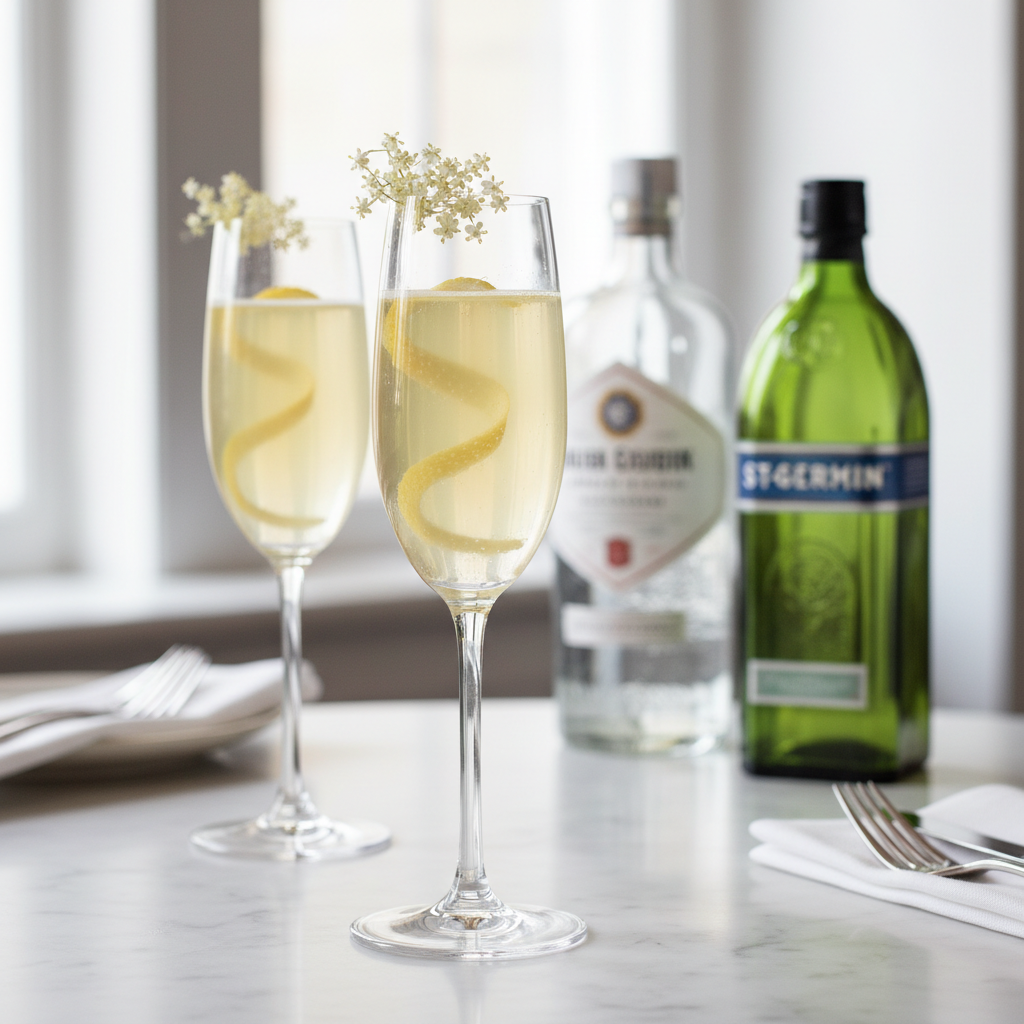
The Mimosa Pairing Logic: The silky, salt-cured salmon and the sweet-tangy mustard dill sauce pair beautifully with a crisp, citrus-forward mimosa. A classic Champagne mimosa or a lemon verbena mimosa is ideal — the bright citrus of the mimosa echoes the mustard sauce's tang, while the wine's effervescence cleanses the palate of the rich, oily fish. The slight sweetness of the mimosa balances the salt of the cure, creating a pairing that is at once Scandinavian and brunch-elegant. This is the mimosa-and-smoked-salmon pairing elevated to its highest expression — the cure and the dill make the salmon more complex, and the mimosa more complementary.
Reference Links: - Gravlax recipe and history: Swedish Spoon - Swedish gravlax official recipe: Sweden.se - Magnus Nilsson's gravlax recipe: Food52 - Gravlax history: Saveur
Make-Ahead: Gravlax must be made ahead — it needs 48–72 hours to cure. The cured salmon can be kept refrigerated for up to 5 days after curing, wrapped tightly. The mustard dill sauce can be made up to 3 days ahead and refrigerated — it improves with time. The gravlax can be frozen for up to 1 month after curing; thaw overnight in the refrigerator before slicing. Do not freeze the assembled canapés — the crispbread will soften.
Pro Tips: Buy the freshest, highest-quality salmon you can find — this is a raw-cured fish, and the quality of the fish is everything. Previously frozen salmon is safest for raw consumption. Do not reduce the salt — it is the curing agent and will not make the fish overly salty if the correct ratio is used. Turn the salmon every 12 hours for even curing — the bottom side will cure faster than the top. Slice the salmon paper-thin on a slight diagonal, and use a very sharp knife — thick slices will be chewy and overly salty. The mustard dill sauce should be sweet and tangy; adjust the sugar and vinegar to your taste.
Rate this recipe
Be the first to rate this recipe
to submit your rating.
Perfect Mimosa Pairings
Mimosas that pair perfectly with this dish
Recent Posts

Couscous Royale: North Africa's Grand Platter of Lamb, Chicken, and Merguez
October 14, 2026

Seattle Cream Cheese Dog Bites: Hadley Long's 1989 Pioneer Square Invention
October 14, 2026

Khao Soi: Chiang Mai's Northern Thai Coconut Curry Noodles
October 13, 2026

Korean Bibimbap: Jeonju's Joseon Dynasty Mixed Rice
October 11, 2026

Spaghetti alla Carbonara: Rome's World War II Pasta of Eggs, Guanciale, and Pecorino
October 9, 2026