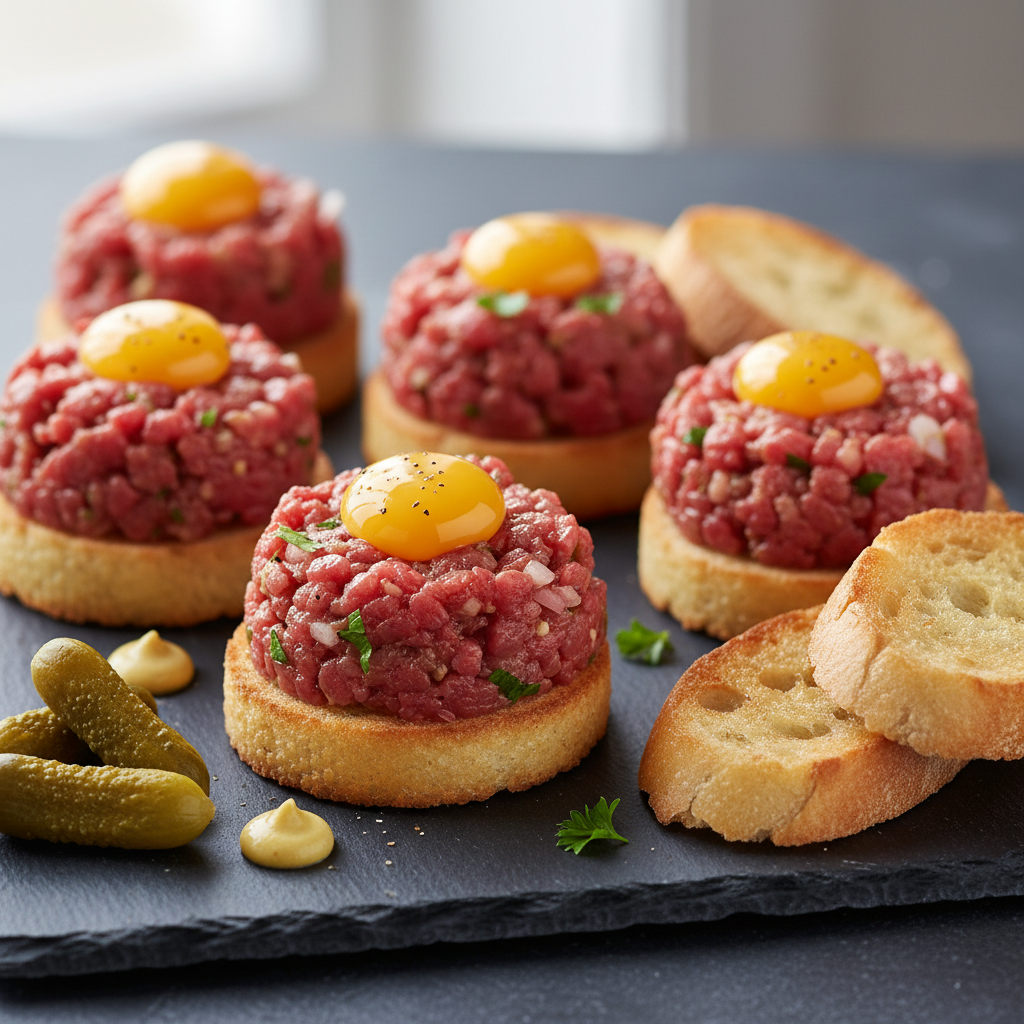
Steak Tartare on Crostini with Quail Egg
April 14, 2026
Steak tartare is one of the great dishes of French cuisine — finely hand-chopped raw beef tenderloin, seasoned with shallots, capers, Dijon, and parsley, served with toasted baguette. The quality of the beef is everything: it must be the freshest, highest-grade tenderloin, hand-chopped (never ground — grinding tears the fibers and produces a paste-like texture), and kept cold throughout preparation.
The quail egg on top is the classic garnish — the rich, golden yolk adds a luxurious visual element and a creamy texture that binds the seasonings. Served on small crostini rounds, these are the event appetizer that signals genuine sophistication.
Ingredients (makes 24 crostini): - 1 lb beef tenderloin (center cut), very cold, sinew removed - 1 French baguette, sliced thin on the diagonal (24 rounds) - 2 tablespoons extra virgin olive oil for brushing - 24 fresh quail eggs (available at specialty grocers and Asian markets)
Seasoning: - 2 shallots, very finely minced - 3 tablespoons capers, finely chopped - 3 tablespoons cornichons, very finely diced - 2 tablespoons Dijon mustard - 2 tablespoons Worcestershire sauce - 1 tablespoon fresh lemon juice - 4 tablespoons fresh flat-leaf parsley, very finely minced - 3 tablespoons extra virgin olive oil - Flaky sea salt and freshly cracked black pepper
Garnish: - Additional fresh parsley, finely minced - Cornichons, thinly sliced - Flaky sea salt - Lemon zest
Crostini: Brush baguette rounds with olive oil. Bake at 400°F for 8–10 minutes until deeply golden and completely crisp. Cool on a wire rack.
Preparing the Beef: Place the tenderloin in the freezer for 30–45 minutes until firm but not frozen solid — this makes it much easier to hand-chop evenly. Using a very sharp knife, cut the beef into thin slices, then into thin strips, then into fine ¼-inch dice. Do not use a meat grinder — hand-chopping preserves the texture and is the defining technique of proper tartare. Keep the chopped beef refrigerated at all times.
Seasoning: Gently fold the chopped beef with shallots, capers, cornichons, Dijon, Worcestershire, lemon juice, parsley, and olive oil. Season generously with salt and pepper. Taste and adjust — the seasoning should be assertive; cold blunts flavors. The tartare should be bright, savory, and deeply beefy. (Do not season more than 15 minutes before service — the salt will begin to "cook" the beef and change its texture.)
Assembly: Spoon a generous mound of tartare onto each crostino. Make a small indentation in the top of each mound. Carefully crack a quail egg and separate the yolk — place the intact yolk in the indentation. Scatter additional parsley, a slice of cornichon, and a pinch of lemon zest. Finish with flaky salt.
The Mimosa Pairing Logic: The beef's richness and the egg yolk's creaminess call for a mimosa with bright acidity to cut through and refresh the palate. A classic orange mimosa or a blood orange mimosa is ideal — the citrus directly mirrors the lemon in the tartare, while the champagne's acidity balances the beef's richness. The capers and cornichons create a briny bridge that makes the pairing feel cohesive.
Reference Links: - Classic steak tartare recipe: Serious Eats - Balthazar's steak tartare: Serious Eats
Food Safety: Use only the highest-quality, freshest beef tenderloin from a trusted butcher. Inform your butcher you are making tartare and ask for the freshest cut available. Keep the beef refrigerated at all times during preparation. Serve and consume within 1 hour of seasoning. Pregnant women, young children, the elderly, and immunocompromised individuals should not consume raw meat.
Make-Ahead: Crostini (3 days, airtight). Beef can be chopped and refrigerated up to 4 hours ahead (unseasoned). Seasoning ingredients can be prepped 1 day ahead. Season and assemble no more than 15 minutes before service.
Pro Tips: Hand-chopping is non-negotiable — a meat grinder tears the fibers and produces a paste-like texture that is fundamentally different from proper tartare. The partial freezing of the beef before chopping makes it much easier to achieve uniform, clean cuts. The salt should be added at the last moment — it draws out moisture and begins to "cook" the beef, changing its texture from silky to firm.
Rate this recipe
Be the first to rate this recipe
to submit your rating.
Recent Posts

Couscous Royale: North Africa's Grand Platter of Lamb, Chicken, and Merguez
October 14, 2026

Seattle Cream Cheese Dog Bites: Hadley Long's 1989 Pioneer Square Invention
October 14, 2026

Khao Soi: Chiang Mai's Northern Thai Coconut Curry Noodles
October 13, 2026

Korean Bibimbap: Jeonju's Joseon Dynasty Mixed Rice
October 11, 2026

Spaghetti alla Carbonara: Rome's World War II Pasta of Eggs, Guanciale, and Pecorino
October 9, 2026