Steak and Eggs
January 23, 2026
Steak and eggs appeared on Australian restaurant menus as early as the 1880s, and the dish crossed to the United States with the cattle drives of the American West, where it became the hearty breakfast of cowboys and ranch hands at the chuckwagon. In 1961, NASA served steak and eggs to Alan Shepard as his pre-flight breakfast before he became the first American in space, and the plate has carried that association ever since. It is a simple dish in concept, a seared steak alongside eggs cooked to order, and a demanding one in execution, and it has stayed on diner counters, steakhouse brunches, and weekend breakfast tables for generations.
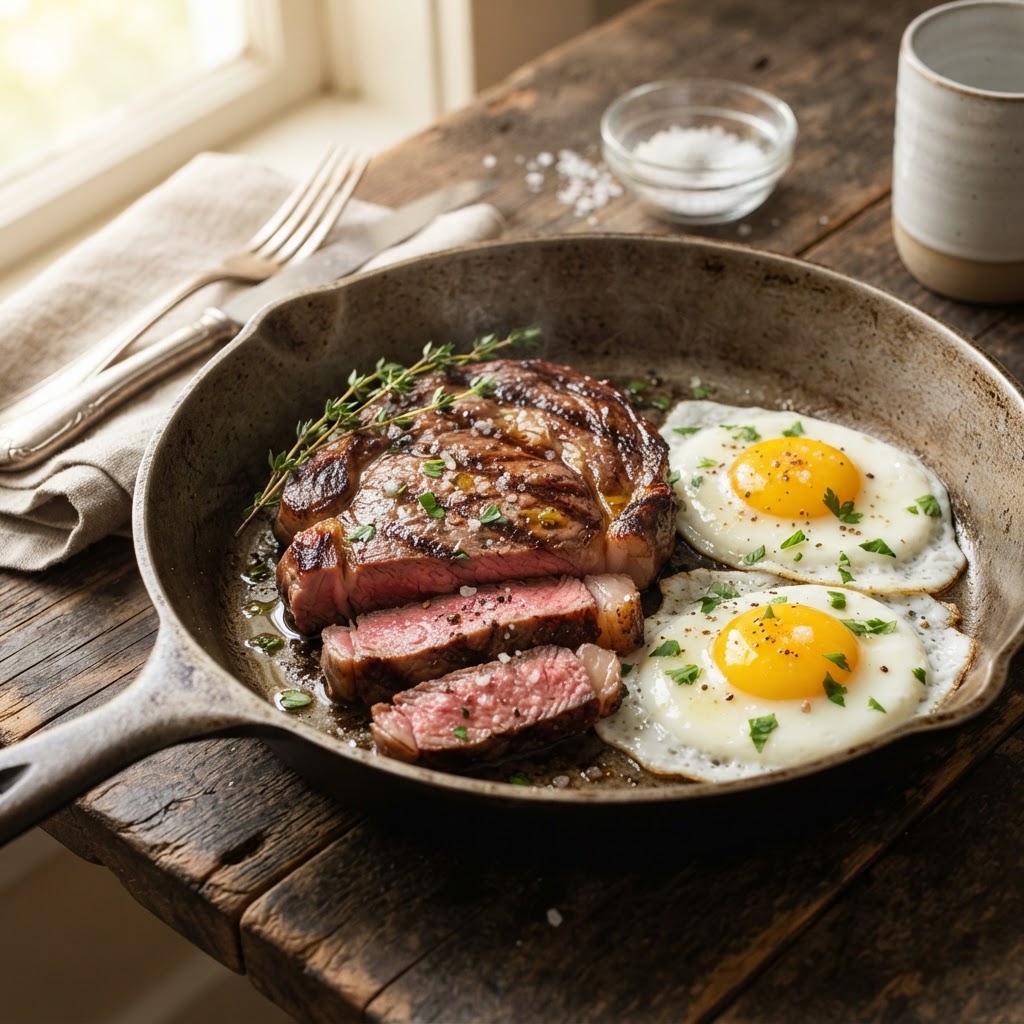
The key to a great steak and eggs is the quality of the steak and the precision of the cooking. A ribeye is the most flavorful cut; its rich marbling gives a juicy, beefy steak that pairs with eggs. Flat iron or sirloin are leaner alternatives. The steak should be seared at very high heat to develop a deep Maillard crust, then rested before slicing. The eggs, whether fried sunny-side up, over-easy, or poached, should have runny yolks that make a rich sauce when broken over the steak.
Ingredients (serves 4):
The Steak: - 4 ribeye steaks (or flat iron, sirloin, or New York strip), about 10 oz each, 1½ inches thick - 2 tablespoons olive oil - 2 tablespoons unsalted butter - 4 garlic cloves, smashed - 4 sprigs fresh thyme - 2 sprigs fresh rosemary - Flaky sea salt (Maldon or fleur de sel) - Coarsely cracked black pepper
The Eggs: - 8 large eggs (2 per serving) - 2 tablespoons unsalted butter - Salt and pepper
Optional Garnishes: - Fresh parsley, chopped - Hot sauce (Tabasco or Cholula) - Sautéed mushrooms - Breakfast potatoes or hash browns - Toast or biscuits
Preparing the Steak: Remove the steaks from the refrigerator 30–45 minutes before cooking to bring them to room temperature — this ensures even cooking. Pat completely dry with paper towels. Season generously with salt and cracked pepper on all sides. The seasoning should be visible — an under-seasoned steak is a common flaw.
Cooking the Steak (Pan-Sear Method): Heat a heavy cast-iron skillet over high heat until it is smoking hot. Add the olive oil. Carefully place the steaks in the pan and sear 3–4 minutes per side for medium-rare (internal temperature of 130°F / 129°F). During the last minute of cooking, add the butter, garlic, thyme, and rosemary to the pan. As the butter foams, tilt the pan and use a spoon to baste the steaks continuously with the aromatic butter — this is called "arroser" and it flavors the steak and helps develop the crust.
Remove the steaks to a cutting board or warmed plates. Rest for at least 5 minutes (10 minutes is better) — resting is non-negotiable, as it allows the juices to redistribute and the internal temperature to equalize. Do not slice the steak before resting or the juices will run onto the board.
The Eggs: While the steaks are resting, cook the eggs. In a clean skillet, melt 1 tablespoon butter over medium-low heat. Crack the eggs into the pan (work in batches if needed). For sunny-side-up: cook 3–4 minutes until the whites are set and the yolks are still runny. For over-easy: cook 2 minutes, flip carefully, and cook 30 more seconds. Season with salt and pepper.
Alternatively, fry the eggs in the same skillet used for the steak (after removing the steak and draining excess fat) — the residual steak fat and browned bits flavor the eggs beautifully.
Assembly: Place each rested steak on a plate. Top or serve alongside 2 eggs. Spoon any resting juices over the steak. Garnish with fresh parsley. Serve with hot sauce, breakfast potatoes, and toast or biscuits.
The Mimosa Pairing Logic: The rich, savory, beefy character of steak and eggs calls for a mimosa with bright acidity that cuts through the richness while complementing the eggs. A classic orange mimosa is the most natural pairing — the citrus refreshes the palate and the champagne's effervescence cleanses the rich, buttery steak fat. A grapefruit rosemary mimosa is exceptional — the slight bitterness of the grapefruit provides an elegant counterpoint to the savory steak, and the rosemary echoes the herbs used in basting. For a more structured pairing, a bloody mary-inspired mimosa (or simply a classic orange mimosa with a dash of hot sauce) adds a spicy kick that complements the hearty, masculine character of the dish. Avoid very sweet tropical mimosas — they clash with the savory, meaty flavors.
Reference Links: - Steak and eggs history: Wikipedia - Australian origins of steak and eggs: Tasting Table - Perfect pan-seared steak technique: Serious Eats - Reverse sear method: Serious Eats
Make-Ahead: Steak and eggs is a cook-to-order dish that cannot be made ahead. The steaks should be seasoned and brought to room temperature 30–45 minutes before cooking. Breakfast potatoes can be parboiled and refrigerated up to 1 day ahead. Everything else must be done à la minute.
Pro Tips: The steak must be bone-dry before searing — wet steaks steam rather than sear and never develop the Maillard crust that is the foundation of flavor. The pan must be smoking hot before adding the steak — a pan that is not hot enough produces gray, steamed meat rather than a dark, crusted steak. The basting technique (arroser) with butter, garlic, and herbs during the last minute of cooking flavors the steak and accelerates crust formation. The resting period is essential — slicing into the steak before 5 minutes of rest causes the juices to run out, leaving the meat dry. The eggs should be cooked in the same pan as the steak (or in the steak fat) for maximum flavor — the browned bits and fat from the steak season the eggs beautifully.
Rate this recipe
Be the first to rate this recipe
to submit your rating.
Recent Posts

Couscous Royale: North Africa's Grand Platter of Lamb, Chicken, and Merguez
October 14, 2026

Seattle Cream Cheese Dog Bites: Hadley Long's 1989 Pioneer Square Invention
October 14, 2026

Khao Soi: Chiang Mai's Northern Thai Coconut Curry Noodles
October 13, 2026

Korean Bibimbap: Jeonju's Joseon Dynasty Mixed Rice
October 11, 2026

Spaghetti alla Carbonara: Rome's World War II Pasta of Eggs, Guanciale, and Pecorino
October 9, 2026