Spanish Migas: The Shepherd's Breadcrumb Breakfast of Extremadura and Andalusia
September 5, 2026
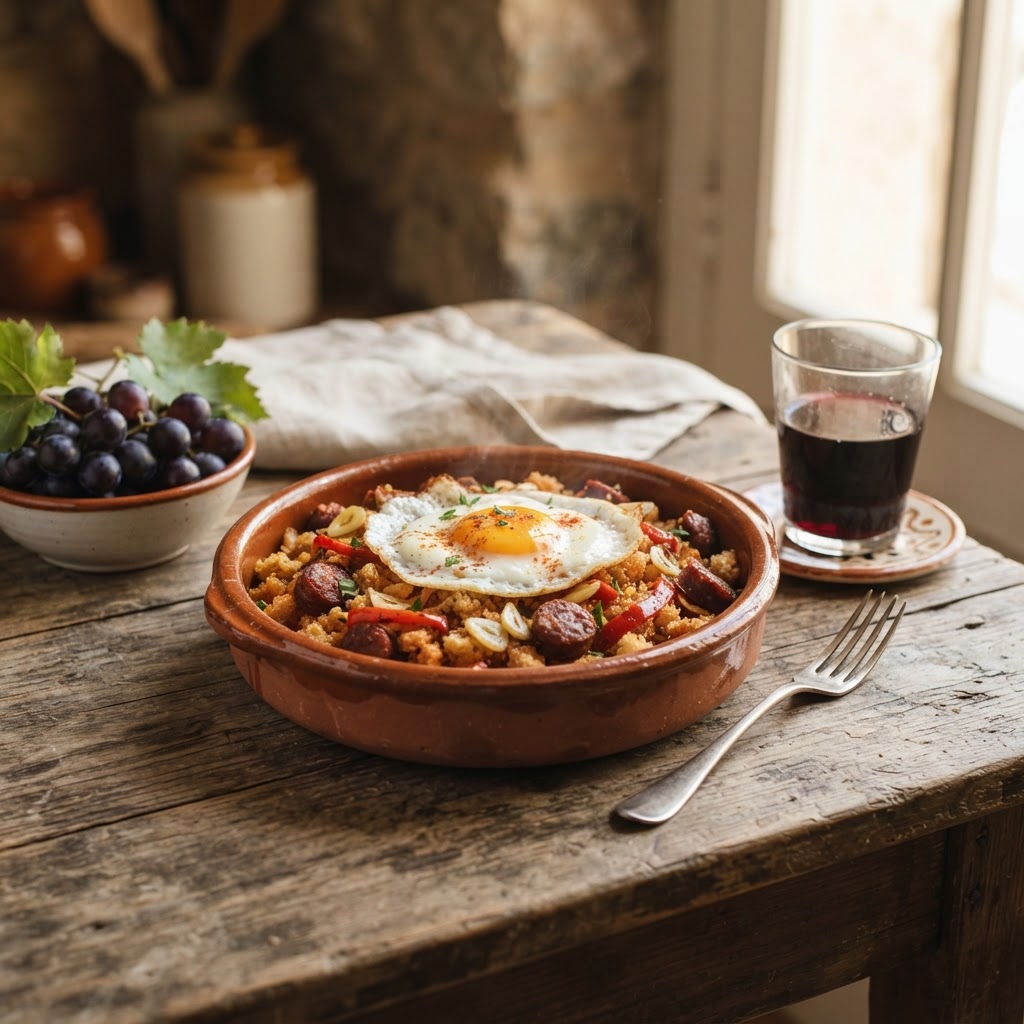
Migas, meaning "crumbs" in Spanish, is a rustic dish of stale bread torn into pieces, moistened with water or broth, and fried in olive oil with garlic, pork fat, and paprika, served with fried eggs, grapes, or fried peppers. According to Wikipedia, migas is a traditional dish in Spanish cuisine, originally a breakfast dish among shepherds that made use of leftover bread or tortas, and the name comes from the Spanish word for crumbs. Caroline's Cooking confirms that while the exact origin of migas is unknown, the dish is believed to have come from farmers and shepherds who needed a hearty, filling meal from whatever was available, and that it is strongly associated with the regions of Extremadura and Andalusia, where it remains a staple of the winter table.
The genius of migas is the transformation of waste into feast. The bread, two or three days old and too hard to eat, is torn, soaked briefly in salted water until just damp, and then fried in olive oil or pork fat with sliced garlic and strips of cured pork. The crumbs crisp and separate in the hot fat, each one becoming a golden, savory nugget that is part crouton and part hash. Seasoned with pimentón and served with a fried egg on top, whose yolk runs into the crumbs, and a handful of fresh grapes that provide a cold, sweet counterpoint, migas is the most resourceful and most satisfying breakfast in Spain, a dish that turns nothing into everything.
About the Ingredients
Stale bread — a dense country loaf, 2 to 3 days old, torn by hand into small pieces. The bread must be stale enough to be dry but not rock hard. A rustic *pan de pueblo* is traditional.
Olive oil — good Spanish extra-virgin olive oil, for frying the crumbs and garlic.
Garlic — whole cloves of garlic, sliced lengthwise, fried until golden in the oil before the bread is added.
Pork — strips of *panceta* (cured pork belly), chorizo, or pork fat, rendered in the oil to flavor the crumbs. This is the savory heart of the dish.
Pimentón — Spanish smoked paprika, either sweet (dulce) or hot (picante), stirred into the crumbs at the end, the spice that gives migas its character.
Eggs — fresh eggs, fried sunny-side up, one per person, served on top of the crumbs.
Grapes — fresh grapes, served on the side, the traditional cold, sweet contrast to the hot, savory crumbs.
Water and salt — salted water, for briefly moistening the stale bread before frying.
Ingredients (serves 4): - 1 lb stale country bread, torn into small pieces (about 8 cups) - 1 cup salted warm water (approximately) - 1/2 cup olive oil - 6 cloves garlic, sliced lengthwise - 4 oz panceta, chorizo, or thick-cut bacon, cut into small strips - 1 tsp pimentón (Spanish smoked paprika, sweet or hot) - 4 large eggs - 1 cup seedless grapes - Salt to taste
Instructions: Place the torn bread in a large bowl. Sprinkle with the salted warm water and toss gently with your hands until the bread is evenly dampened but not soaked. Let it rest for 30 minutes so the bread absorbs the moisture evenly and softens.
Heat the olive oil in a large skillet or a wide *cazuela* over medium heat. Add the garlic slices and cook until just golden, about 2 minutes. Add the pork strips and cook until the fat renders and the meat is crisp at the edges, about 4 minutes.
Add the dampened bread to the skillet. Cook, stirring and breaking up the pieces with a wooden spoon, until the crumbs are golden, crisp, and separate, about 10 minutes. The bread should fry, not steam, so adjust the heat to keep it sizzling. Stir in the pimentón and cook for 1 minute more. Season with salt to taste.
In a separate skillet, fry the eggs sunny-side up in a little olive oil.
To serve, spoon the migas onto four plates. Top each with a fried egg. Serve the grapes on the side. Encourage your guests to break the egg yolk and stir it into the hot crumbs.
The Mimosa Pairing Logic: The savory, smoky, garlicky migas wants a bright, citrus-forward sparkling drink that can cut through the olive oil and echo the Spanish table. A pomegranate mimosa is the natural match, its tart pomegranate a lively companion to the pimentón and the grapes. A cava blood orange aperol mimosa is equally fine, its Spanish cava and bitter orange the most Iberian pairing possible. This pairing is a sparkling toast to the shepherds of Extremadura and the bread they would not waste.
Reference Links: - Migas (Spanish cuisine, shepherd's breakfast, leftover bread, traditional dish): Wikipedia - Spanish Migas Recipe (Extremadura, Andalusia, shepherd origin, breadcrumbs, garlic): Caroline's Cooking
Rate this recipe
Be the first to rate this recipe
to submit your rating.
Recent Posts

Couscous Royale: North Africa's Grand Platter of Lamb, Chicken, and Merguez
October 14, 2026

Seattle Cream Cheese Dog Bites: Hadley Long's 1989 Pioneer Square Invention
October 14, 2026

Khao Soi: Chiang Mai's Northern Thai Coconut Curry Noodles
October 13, 2026

Korean Bibimbap: Jeonju's Joseon Dynasty Mixed Rice
October 11, 2026

Spaghetti alla Carbonara: Rome's World War II Pasta of Eggs, Guanciale, and Pecorino
October 9, 2026