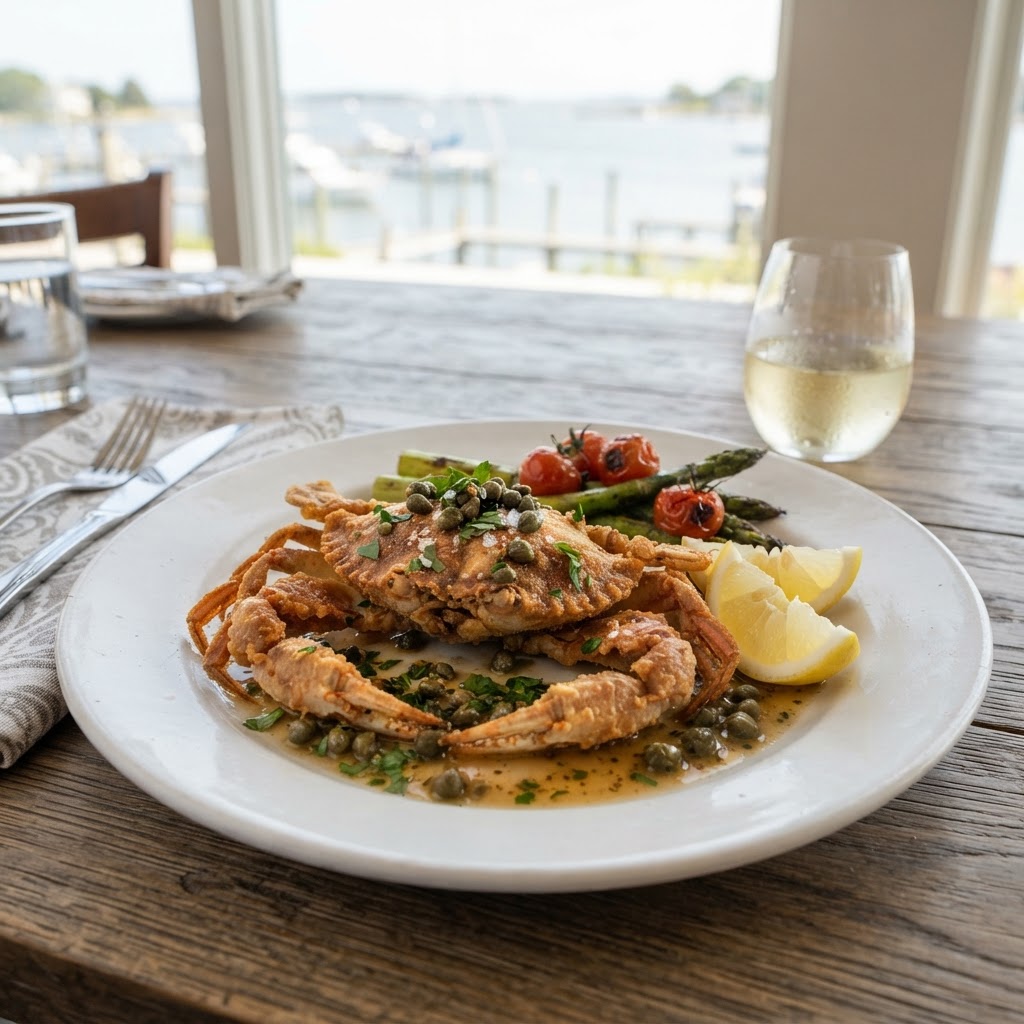
Pan-Fried Soft-Shell Crabs with Brown Butter, Capers, and Lemon
August 4, 2026
Soft-shell crabs are one of the great delicacies of the Chesapeake Bay and the American Mid-Atlantic coast — blue crabs that have molted their hard shells and are, for a brief window of a few hours, entirely soft and entirely edible, shell and all. The dish is a celebration of seasonality and place — the soft-shell crab season runs from late spring to early fall, with the peak in May and June, and the crabs are a fixture of coastal restaurants, crab houses, and fine dining from Maryland to Florida. When properly prepared — lightly dredged, pan-fried until crisp, and finished with a nutty brown butter sauce with capers and lemon — the soft-shell crab is one of the most delicious and distinctive seafood preparations in American cuisine.
The blue crab (Callinectes sapidus, meaning "beautiful swimmer savory") is the signature crustacean of the Chesapeake Bay, and the soft-shell crab is its most prized form. The crabs molt their shells as they grow, and watermen harvest the crabs just before molting and hold them in shedding tanks, watching for the moment they emerge from their old shells soft and vulnerable. The soft crabs must be cleaned (the gills, eyes, and mouth removed) and cooked within hours, as the new shell begins to harden almost immediately. This brief window of availability and the labor-intensive harvesting process make soft-shell crabs one of the most seasonal and sought-after seafood items on the East Coast.
The classic preparation is simple and respects the delicacy of the crab: the cleaned crabs are lightly dredged in seasoned flour, pan-fried in butter until golden and crisp, and finished with a nutty brown butter (beurre noisette) sauce with capers, lemon juice, and parsley. The crisp, delicate crunch of the soft shell, the sweet, briny meat within, and the rich, nutty, tangy sauce create one of the finest seafood dishes in American cooking.
Ingredients (serves 6 as a main course or 8 as a first course):
The Crabs: - 12 soft-shell blue crabs, cleaned (ask your fishmonger to clean them — the cleaning involves removing the gills, eyes, mouth, and apron; the rest is entirely edible) - ¾ cup all-purpose flour, seasoned with salt and pepper - 4 tablespoons unsalted butter - 2 tablespoons olive oil
The Brown Butter Sauce: - 8 tablespoons unsalted butter (European-style, 84% fat) - 3 tablespoons capers, rinsed and drained - Juice of 1 lemon (about 3 tablespoons) - 2 tablespoons fresh parsley, finely chopped - 1 garlic clove, minced (optional) - Flaky sea salt and freshly ground black pepper
Garnish: - Lemon wedges - Fresh parsley sprigs - Flaky sea salt
To Serve: - Crusty bread or lemon risotto - A simple green salad
Cleaning the Crabs: If the crabs are not already cleaned, clean them: with scissors, snip off the face (eyes and mouth) about ½ inch behind the eyes. Lift the pointed sides of the top shell and cut out the gills (the spongy, finger-like structures underneath). Flip the crab and cut off the apron (the triangular flap on the underside). Rinse briefly and pat completely dry. (Most fishmongers will clean them for you.)
Dredging: Pat the crabs completely dry with paper towels — dry crabs sear properly; wet crabs steam. Season lightly with salt and pepper. Dredge lightly in seasoned flour, shaking off all excess — the crabs should have the thinnest possible dusting, not a thick coating. Too much flour creates a pasty, gummy layer rather than a crisp, golden one.
Pan-Frying: Heat 2 tablespoons butter and 1 tablespoon olive oil in a large skillet over medium-high heat. When the butter foams and just begins to brown, add the crabs, top-shell down (work in batches — do not crowd). Cook 3–4 minutes per side until deeply golden and crisp. The crabs are done when the shell is crisp and the meat is just opaque — do not overcook. Remove to a warmed platter and keep warm. Repeat with the remaining crabs, adding more butter and oil as needed.
The Brown Butter (Beurre Noisette): After all the crabs are cooked, wipe the skillet clean. Add the remaining 8 tablespoons butter to the clean skillet over medium heat. Cook, swirling constantly, until the foam subsides and the butter turns a deep golden-amber color with a nutty, toasted aroma — about 3–4 minutes. Watch carefully — the butter goes from perfectly browned to burnt in seconds. Add the capers and minced garlic (if using); cook 30 seconds until the capers crisp slightly. Remove from heat and add the lemon juice immediately — this stops the cooking and creates a bright, emulsified sauce. Stir in the parsley. Season with salt and pepper.
Service: Arrange the crabs on warmed plates. Spoon the brown butter sauce generously over each crab, making sure the capers are distributed. Garnish with lemon wedges and parsley sprigs. Serve immediately — the sauce must be poured at the last moment so the crabs are still hot and the butter is still bubbling.
To eat: the entire crab is edible — shell, claws, legs, and all. The crisp shell provides a delicate, satisfying crunch, and the sweet, briny meat is the reward within. This is one of the few preparations where you eat the shell, and the contrast of textures is the point of the dish.
The Mimosa Pairing Logic: The crisp, briny, buttery character of the soft-shell crabs calls for a mimosa with bright acidity that cuts through the richness of the brown butter while complementing the crab's sweetness. A classic orange mimosa is the most natural pairing — the citrus echoes the lemon in the sauce and the champagne's acidity balances the butter. A blood orange mimosa is exceptional — the slight bitterness of the blood orange provides an elegant counterpoint to the briny crab and the nutty butter. For a more aromatic pairing, a grapefruit rosemary mimosa offers a bright, herbal contrast that refreshes the palate between bites. Avoid very sweet tropical mimosas — they overwhelm the delicate crab flavor.
Reference Links: - Soft-shell crab guide: Serious Eats - Blue crab and the Chesapeake Bay: Wikipedia - How to clean soft-shell crabs: The Spruce Eats - Brown butter (beurre noisette) technique: Serious Eats
Make-Ahead: Soft-shell crabs cannot be made ahead — they must be cooked and served immediately. The crabs should be purchased fresh and cleaned the day of service (or up to 4 hours ahead and refrigerated). The parsley can be chopped ahead. The lemon can be juiced ahead. The frying and sauce-making must be done à la minute — the dish takes less than 15 minutes to cook and should be served while the butter is still bubbling.
Pro Tips: The crabs must be completely dry before dredging — wet crabs produce a soggy, gummy coating rather than a crisp, golden one. The flour dredge must be minimal — the crabs should have the thinnest possible dusting, not a thick, breaded coating. The brown butter must be watched constantly — it goes from golden and nutty to dark and bitter in seconds, and once it burns, it cannot be saved. Adding the lemon juice off the heat stops the browning immediately and creates a bright, emulsified sauce. The capers should be added to the brown butter to crisp slightly — this releases their briny flavor and adds a textural contrast. The crabs must be served immediately — the brown butter sauce separates and the crabs cool within minutes, so have everything else ready before you begin cooking. Soft-shell crabs are one of the most seasonal seafood items — seek them out from May to September when they are at their peak, and do not accept frozen crabs if fresh are available.
Rate this recipe
Be the first to rate this recipe
to submit your rating.
Recent Posts

Couscous Royale: North Africa's Grand Platter of Lamb, Chicken, and Merguez
October 14, 2026

Seattle Cream Cheese Dog Bites: Hadley Long's 1989 Pioneer Square Invention
October 14, 2026

Khao Soi: Chiang Mai's Northern Thai Coconut Curry Noodles
October 13, 2026

Korean Bibimbap: Jeonju's Joseon Dynasty Mixed Rice
October 11, 2026

Spaghetti alla Carbonara: Rome's World War II Pasta of Eggs, Guanciale, and Pecorino
October 9, 2026