Sachertorte al Brachetto

April 5, 2026
The Sachertorte was invented in 1832 by Franz Sacher, a sixteen-year-old apprentice in the Vienna kitchen of Prince Klemens von Metternich, the Austrian Empire's chancellor, when the head chef fell ill before a dinner for important guests and the task fell to the boy. Sacher made a dense chocolate sponge, modeled on the class of chocolate "biscuit" sponges baked once rather than twice, and it entered the Metternich household's repertoire. One account says the prince had asked for a dry, "masculine" cake rather than the fluffy, "feminine" cakes then common, and another that Sacher first sought his sister's advice before baking it.
The Sachertorte was invented in 1832 by Franz Sacher, a 16-year-old apprentice chef working for Prince Klemens von Metternich, the Austrian Empire's powerful chancellor. According to the most widely accepted account, Prince Metternich instructed his kitchen to prepare a special dessert for a dinner with important guests. The head chef fell ill, and the task fell to the young Sacher, who was in his second year of apprenticeship. Sacher created a dense chocolate sponge cake — modeled, according to food historians, on the class of chocolate "biscuit" sponge cakes that were baked once rather than twice. The cake was a success, and Sacher's creation entered the Metternich household repertoire. Some accounts elaborate that Sacher first sought advice from his sister before creating the cake, and that the prince had specifically requested a dry, "masculine" cake rather than the fluffy, "feminine" cakes that were then common (en.wikipedia.org/wiki/Sachertorte).
Franz Sacher's son, Eduard Sacher, refined the recipe and, when he opened Hotel Sacher in Vienna in 1876, he placed the Sachertorte on the hotel's menu, where it has been served continuously ever since. The cake was added to the Austrian food codex in 1894, which legally defined what constitutes a Sachertorte. In the late 19th and early 20th centuries, Sachertorte was being shipped to cities across Europe — Paris, Berlin, London — and overseas, making it one of the first internationally famous Viennese desserts (sacher.com/en/original-sacher-torte/).
The most famous chapter in the Sachertorte's history is the "cake war" — a seven-year legal battle between Hotel Sacher and Demel, a rival Vienna bakery, over who had the right to use the name "Original Sachertorte" and what the correct recipe was. Hotel Sacher makes its Sachertorte with two layers of sponge separated by a thin layer of apricot jam, while Demel's version has only one layer of sponge with the apricot jam spread on top. In 1963, the dispute was settled: Hotel Sacher won the exclusive right to the name "The Original Sachertorte" with the circular chocolate seal, while Demel was allowed to call their cake "Eduard Sacher-Torte" with a triangular seal. The recipes themselves remain closely guarded secrets to this day (en.wikipedia.org/wiki/Sachertorte).
A proper Sachertorte has a dense, slightly dry chocolate sponge — it is not a light, fluffy cake — layered with thin apricot jam (both between the layers and coating the entire cake before glazing), and covered in a smooth, glossy dark chocolate glaze. The cake is traditionally served with a dollop of unsweetened whipped cream (Schlagobers) on the side, which provides a creamy counterpoint to the dense, chocolatey cake. In Austria, the word "Sacher" is often written across the top of the cake in chocolate.
Our Mimosavated version adds a splash of Brachetto d'Acqui to the apricot jam layer — the sweet, lightly sparkling red wine from Piedmont with intense strawberry and rose aromas has a natural affinity for both chocolate and apricot, adding a subtle berry note that complements the traditional flavor profile.
Ingredients (serves 12):
The Chocolate Sponge: - 5 ¼ oz dark chocolate (60% cocoa), chopped - 5 ¼ oz unsalted butter, room temperature - 4 ¼ oz powdered sugar - 4 large eggs, separated - 3 ½ oz granulated sugar - 4 ¼ oz all-purpose flour - 1 teaspoon vanilla extract - A pinch of salt
The Brachetto Apricot Jam: - 7 oz apricot jam (good quality) - 2 ⅔ tbsp Brachetto d'Acqui - 1 tablespoon water
The Chocolate Glaze: - 7 oz dark chocolate (60% cocoa), chopped - ⅔ cup heavy cream - 1 oz unsalted butter - 1 tablespoon light corn syrup (optional, for shine)
Making the Chocolate Sponge: Preheat the oven to 338°F (340°F). Butter and flour a 9 in (9-inch) round springform pan and line the bottom with parchment paper.
Melt the chocolate in a double boiler or in the microwave in 30-second increments. Let cool slightly.
In a large bowl, beat the butter and powdered sugar until light and fluffy. Add the egg yolks one at a time, beating well after each addition. Stir in the melted chocolate and vanilla.
In a clean, dry bowl, whip the egg whites with the salt to soft peaks. Gradually add the granulated sugar and whip to stiff, glossy peaks. Gently fold the egg whites into the chocolate mixture in three additions, alternating with the sifted flour in two additions. Be gentle — overmixing will deflate the egg whites and make the cake dense.
Pour the batter into the prepared pan and smooth the top. Bake for 45–50 minutes, until a skewer inserted into the center comes out with a few moist crumbs (not wet). Let cool in the pan for 15 minutes, then turn out onto a wire rack to cool completely.
Making the Brachetto Apricot Jam: In a small saucepan, combine the apricot jam, Brachetto, and water. Heat gently until bubbling, then strain through a fine sieve to remove any fruit pieces. Keep warm.
Making the Chocolate Glaze: Heat the cream until just below boiling. Place the chopped chocolate in a heatproof bowl and pour the hot cream over it. Let sit for 2 minutes, then stir until smooth and glossy. Stir in the butter and corn syrup (if using) until completely incorporated. Let cool until it reaches a spreadable but still pourable consistency — about 10–15 minutes.
Assembling: If the cake has domed, level it with a serrated knife. Cut the cake horizontally into two equal layers. Place the bottom layer on a wire rack set over a baking sheet. Brush the bottom layer generously with the warm Brachetto apricot jam. Place the top layer on and brush the entire outside of the cake with the remaining jam — this seals the cake and provides a smooth surface for the glaze.
Pour the chocolate glaze over the cake in one smooth motion, allowing it to flow down the sides. Use an offset spatula to quickly smooth the top and sides — work fast, as the glaze sets quickly. Let the glaze set for at least 1 hour at room temperature.
Serving: Slice with a hot, clean knife — dip in hot water and wipe between every cut for pristine slices. Serve with a dollop of unsweetened whipped cream, as is traditional in Vienna.
The Mimosa Pairing Logic: Since the apricot jam contains Brachetto, pair with a strawberry mimosa — strawberry purée and Prosecco. The strawberry echoes the Brachetto and complements the dark chocolate. A peach mimosa is also excellent — the peach echoes the apricot jam. Avoid heavy or creamy mimosas — Sachertorte is dense and intensely chocolatey, and you need something bright and fruity to balance it.
Reference Links: - Sachertorte on Wikipedia (Franz Sacher, 1832, Hotel Sacher vs Demel): Wikipedia - Original Sacher-Torte from Hotel Sacher Vienna (1832, Prince Metternich): Hotel Sacher - Sachertorte history and the Sacher-Demel legal battle: Vienna Unwrapped - Brachetto d'Acqui wine guide: Wine Folly
Make-Ahead: Sachertorte is traditionally made 1–2 days ahead — the cake actually improves after a day as the apricot jam and chocolate flavors meld and the sponge absorbs moisture from the jam. Store at room temperature, covered with a cake dome. The cake can be stored at room temperature for up to 5 days. Do not refrigerate — refrigeration causes the chocolate glaze to dull and the sponge to dry out. The cake can be frozen for up to 2 months — thaw at room temperature overnight.
Pro Tips: The sponge is intentionally dense and slightly dry — this is not a light, fluffy cake. The density comes from the high proportion of chocolate and butter, and the slightly dry texture is the traditional character of the cake, which is why it's served with whipped cream. Whip the egg whites properly — they provide the only leavening in the cake, and under-whipped whites will result in a leaden cake. Fold gently — overmixing deflates the egg whites and ruins the texture. The apricot jam coating on the outside of the cake is essential — it seals the cake, provides a smooth surface for the glaze, and adds a layer of flavor. Pour the glaze in one smooth motion — this creates the smooth, professional finish that is the hallmark of a proper Sachertorte. Work quickly with the glaze — once it starts to set, it cannot be re-spread without leaving marks. Use a hot knife for slicing — dip in hot water and wipe between every cut to maintain the glaze's glossy appearance on every slice.
Rate this recipe
Be the first to rate this recipe
to submit your rating.
Recent Posts
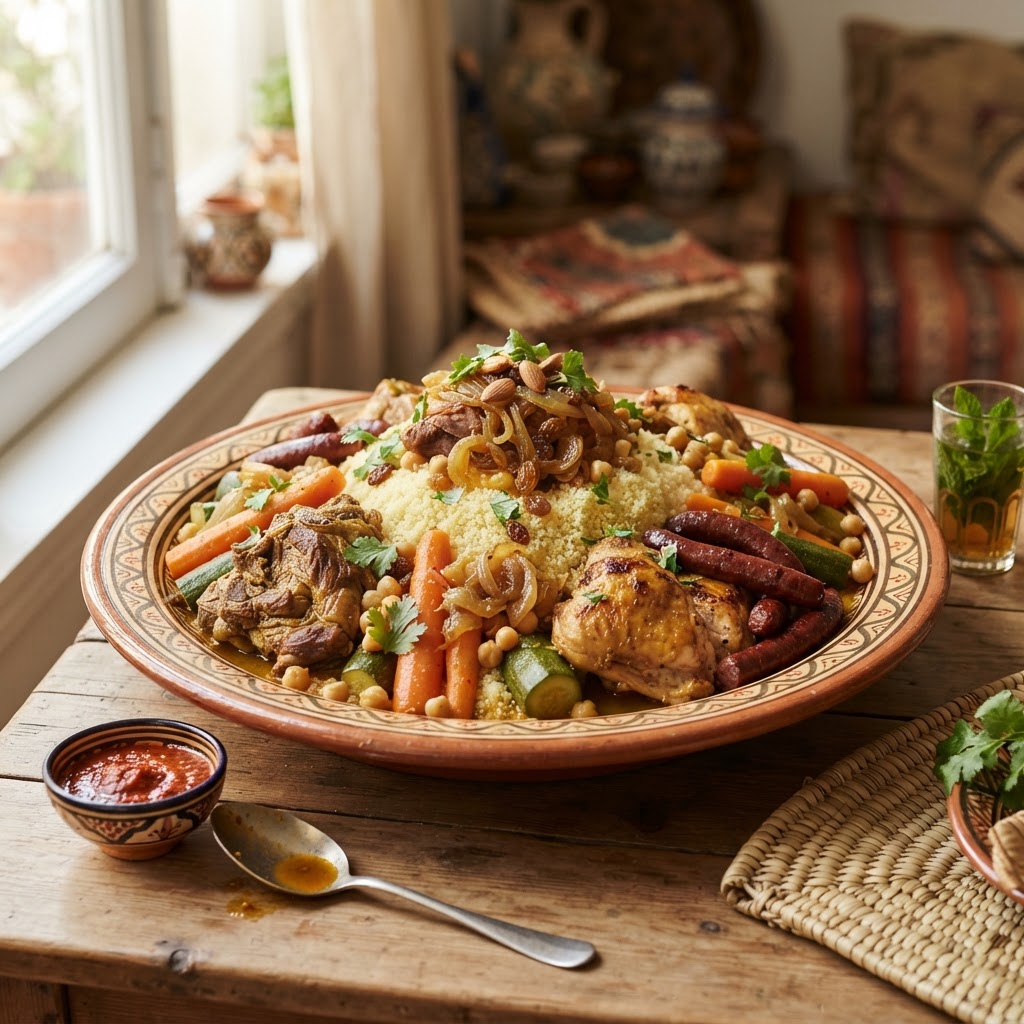
Couscous Royale: North Africa's Grand Platter of Lamb, Chicken, and Merguez
October 14, 2026
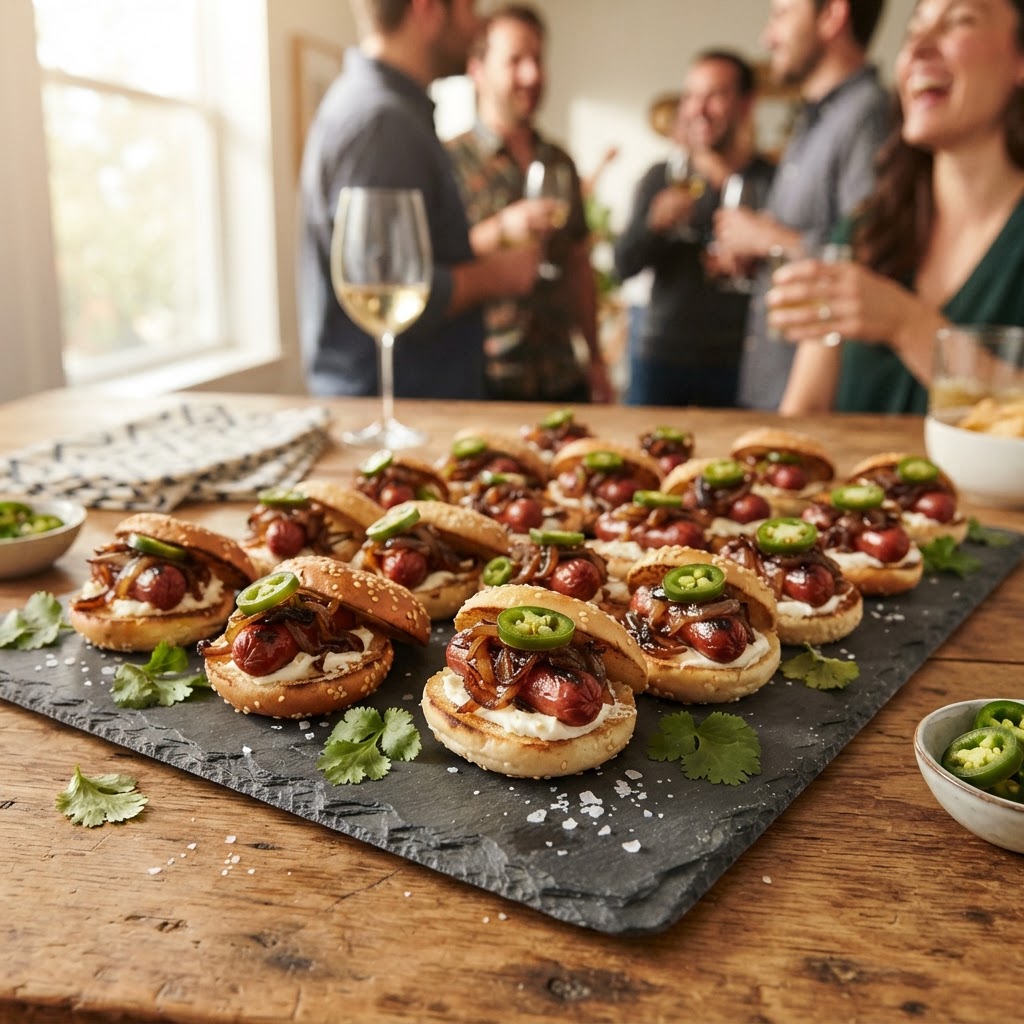
Seattle Cream Cheese Dog Bites: Hadley Long's 1989 Pioneer Square Invention
October 14, 2026
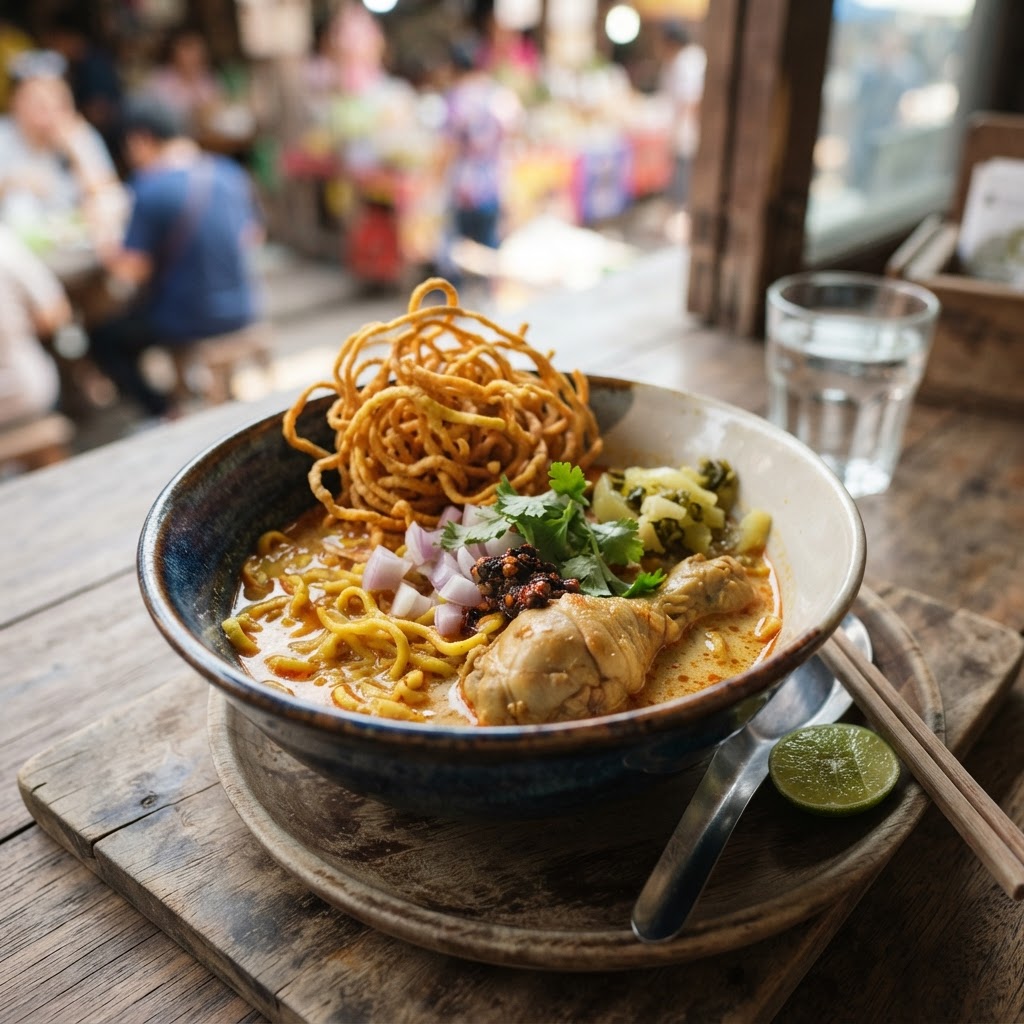
Khao Soi: Chiang Mai's Northern Thai Coconut Curry Noodles
October 13, 2026
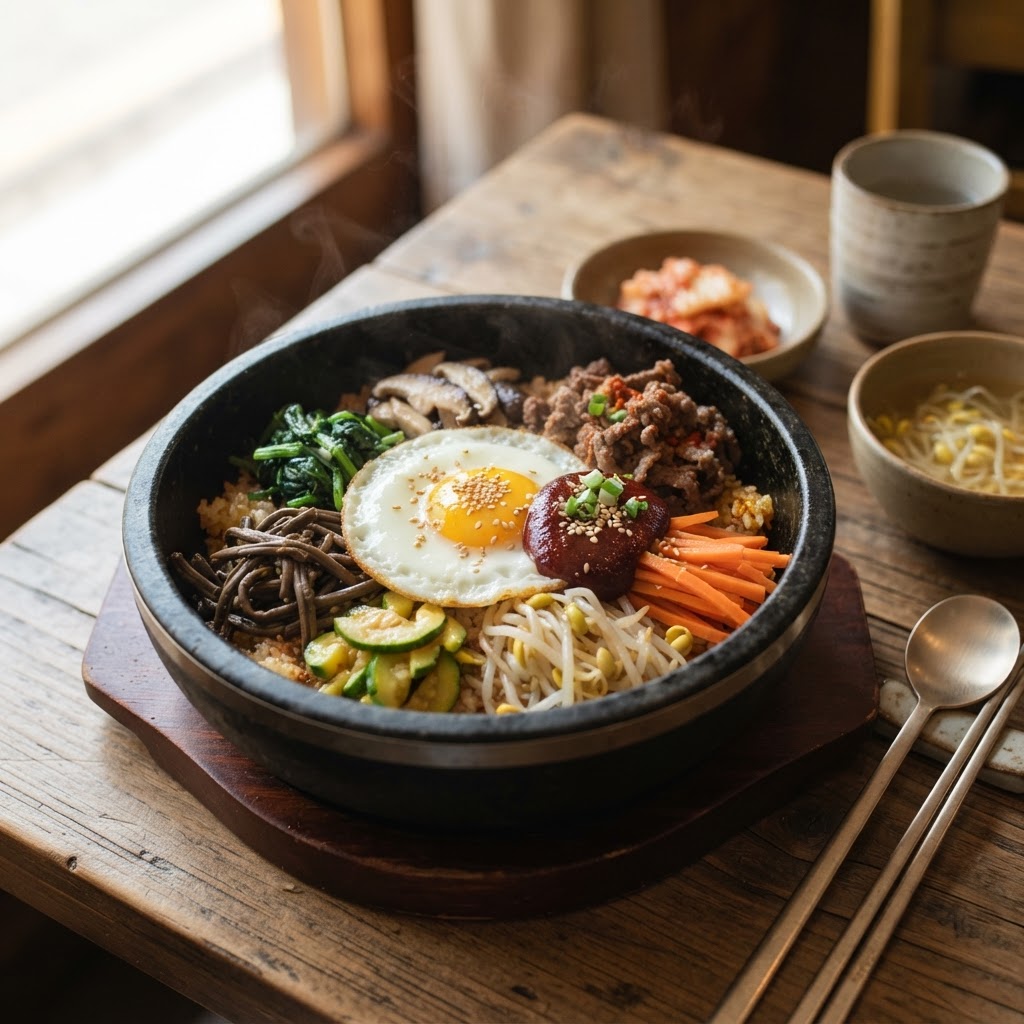
Korean Bibimbap: Jeonju's Joseon Dynasty Mixed Rice
October 11, 2026
Spaghetti alla Carbonara: Rome's World War II Pasta of Eggs, Guanciale, and Pecorino
October 9, 2026