Rhubarb Rosemary Fizz: A Seasonal Spring Sparkler
April 29, 2026
Rhubarb is one of the most underappreciated ingredients in the beverage world — a vegetable (yes, botanically a vegetable, though legally classified as a fruit in the United States since 1947) that produces one of the most vivid, complex, and sophisticated flavours available to a drink maker. Its natural tartness — sharper than lemon, more complex than cranberry — makes it the perfect foundation for a sparkling mocktail that tastes like spring itself.
The combination of rhubarb and rosemary is inspired by the modern Nordic and British restaurant traditions, where rhubarb's bright acidity is paired with woody, resinous herbs to create a flavour profile that is simultaneously fresh, tart, and deeply savoury. Rosemary's pine-like aromatics complement rhubarb's tartness in a way that mint or basil cannot — the herb adds a grown-up complexity that makes the drink feel like a serious cocktail rather than a children's beverage.
Rhubarb (*Rheum rhabarbarum*) has been cultivated for thousands of years — originally in Asia for its medicinal root (rhubarb root was a valued laxative in traditional Chinese medicine and was traded along the Silk Road). It was not until the 18th century that rhubarb stalks began to be used as a culinary ingredient in Europe, and the practice of pairing rhubarb with sugar — essential, as raw rhubarb is aggressively tart — was established in Britain, where rhubarb crumble became a national dish. The famous "rhubarb triangle" in West Yorkshire was once the centre of the world's rhubarb production, where the crop was "forced" in dark sheds to produce tender, sweet, bright-pink stalks.
About the Ingredients
Rhubarb should be fresh, firm, and brightly coloured. Field-grown rhubarb (deep red) produces the most vivid colour; forced rhubarb (paler pink) produces a more delicate flavour and colour. Green rhubarb is perfectly good to eat but produces a less attractive drink. Never eat rhubarb leaves — they contain toxic levels of oxalic acid.
Fresh rosemary should be the standard culinary variety (*Salvia rosmarinus*). The herb is steeped in the hot syrup to release its aromatic oils, then removed before service. McCormick fresh rosemary is widely available, but any garden-grown or farmers' market rosemary works beautifully.
Ingredients (serves 6): - 1 lb fresh rhubarb stalks (about 6–8 stalks), chopped into 1-inch pieces - 2 cups water - 1 cup granulated sugar - 3 large sprigs fresh rosemary (plus extra for garnish) - 2 tablespoons fresh lemon juice - 16 oz chilled sparkling water (San Pellegrino or Topo Chico) - Ice - Fresh rosemary sprigs and thin rhubarb ribbons (raw, shaved with a vegetable peeler) for garnish
For the Rhubarb Rosemary Syrup: Combine rhubarb, water, sugar, and rosemary sprigs in a medium saucepan. Bring to a simmer over medium heat, stirring to dissolve sugar. Simmer gently for 15–20 minutes, until the rhubarb has completely broken down and the liquid is a vivid pink. Remove from heat and let steep for 30 minutes (the longer it steeps, the more rosemary flavour develops — but do not exceed 45 minutes or the rosemary becomes bitter).
Strain through a fine-mesh sieve lined with cheesecloth, pressing gently to extract the liquid (do not press too hard or the syrup will become cloudy). Discard the solids. Stir in lemon juice. The resulting syrup should be a clear, vivid pink. Cool completely, then chill. Keeps refrigerated for up to 1 week.
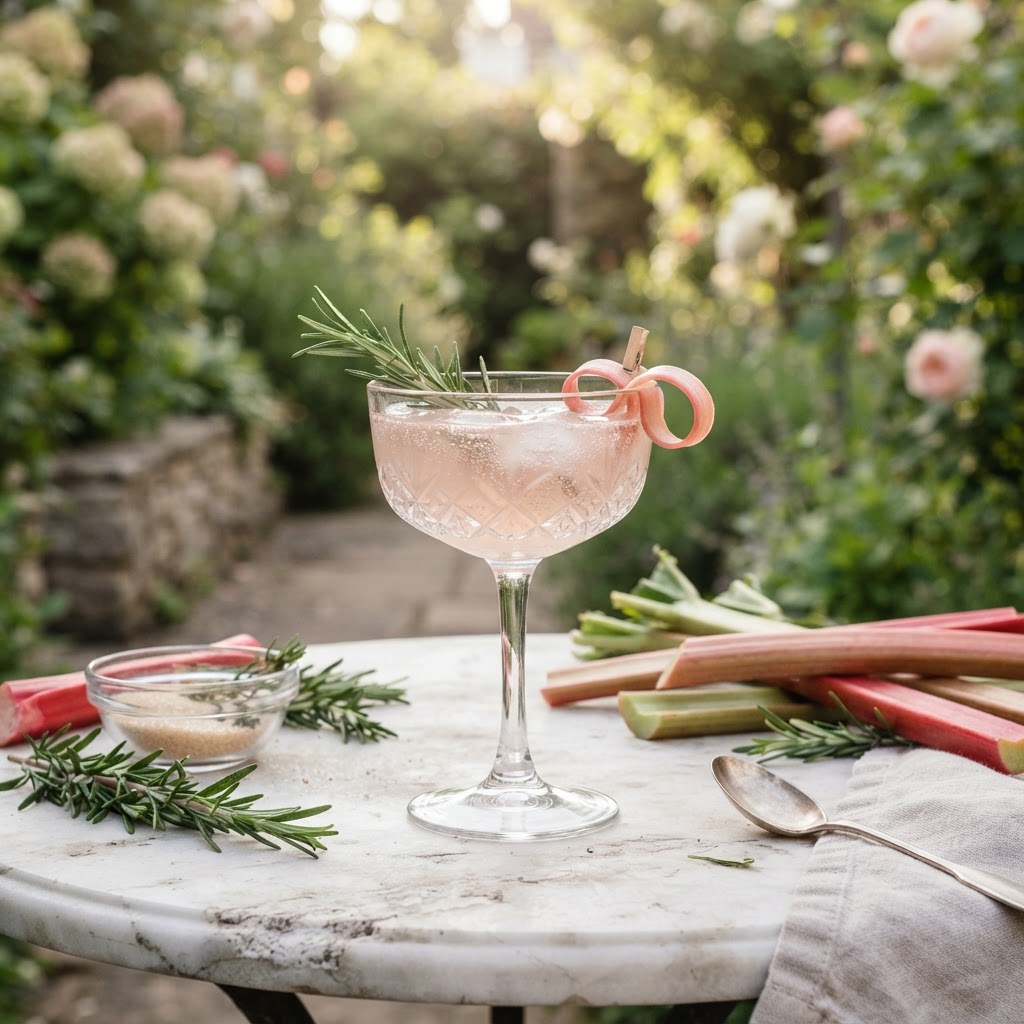
Instructions: Chill coupe glasses or champagne flutes for 5 minutes. Pour 2 oz rhubarb rosemary syrup into each glass. Top slowly with 2¾ oz chilled sparkling water, pouring down the side of the glass. The vivid pink syrup will bloom upward through the clear water in a beautiful gradient. Garnish with a fresh rosemary sprig and, if desired, a thin ribbon of raw rhubarb curled on the rim.
Batch (serves 12): - Double the syrup recipe - 32 oz sparkling water, added at service - Set out a pitcher of syrup alongside a chilled bottle of sparkling water and a vase of rosemary sprigs.
Variations: - Replace rosemary with fresh thyme for a Rhubarb Thyme Fizz with a gentler, more floral herbal note. - Add 1 tablespoon of fresh ginger juice to the syrup for a Rhubarb Ginger Rosemary Fizz with warming spice. - Replace sparkling water with tonic water for a Rhubarb Tonic with pleasant bitter complexity.
Pairing: Rhubarb Rosemary Fizz pairs beautifully with spring brunch dishes — asparagus dishes, goat cheese tarts, smoked salmon, and any preparation that celebrates the season. Its tartness and herbal complexity make it equally good alongside rich, fatty dishes like eggs Benedict and cheese boards. The savoury rosemary note makes it work surprisingly well with roasted meats and grilled vegetables.
Pro Tips: The colour of the syrup depends entirely on the rhubarb — deep red stalks produce a vivid magenta; pale pink stalks produce a delicate blush. For the most dramatic colour, seek out field-grown red rhubarb in season (April through June in most of the United States). The rosemary must be steeped, not blended — blending rosemary releases chlorophyll that turns the syrup an unappealing khaki-green. The syrup can be made well in advance and keeps for a full week refrigerated; the flavours actually improve over the first 48 hours as the rosemary continues to infuse.
Reference Links: - Wikipedia — Rhubarb: en.wikipedia.org/wiki/Rhubarb - BBC Good Food — Rhubarb Guide: bbcgoodfood.com/howto/guide/rhubarb-guide - Wikipedia — Rhubarb Triangle: en.wikipedia.org/wiki/Rhubarb_triangle - Royal Horticultural Society — Rhubarb: rhs.org.uk/advice/grow-your-own/vegetables/rhubarb - McCormick Rosemary: mccormick.com
Rate this recipe
Be the first to rate this recipe
to submit your rating.
Recent Posts

Couscous Royale: North Africa's Grand Platter of Lamb, Chicken, and Merguez
October 14, 2026

Seattle Cream Cheese Dog Bites: Hadley Long's 1989 Pioneer Square Invention
October 14, 2026

Khao Soi: Chiang Mai's Northern Thai Coconut Curry Noodles
October 13, 2026

Korean Bibimbap: Jeonju's Joseon Dynasty Mixed Rice
October 11, 2026

Spaghetti alla Carbonara: Rome's World War II Pasta of Eggs, Guanciale, and Pecorino
October 9, 2026