Portuguese Pastéis de Nata (Custard Tarts)
June 9, 2026
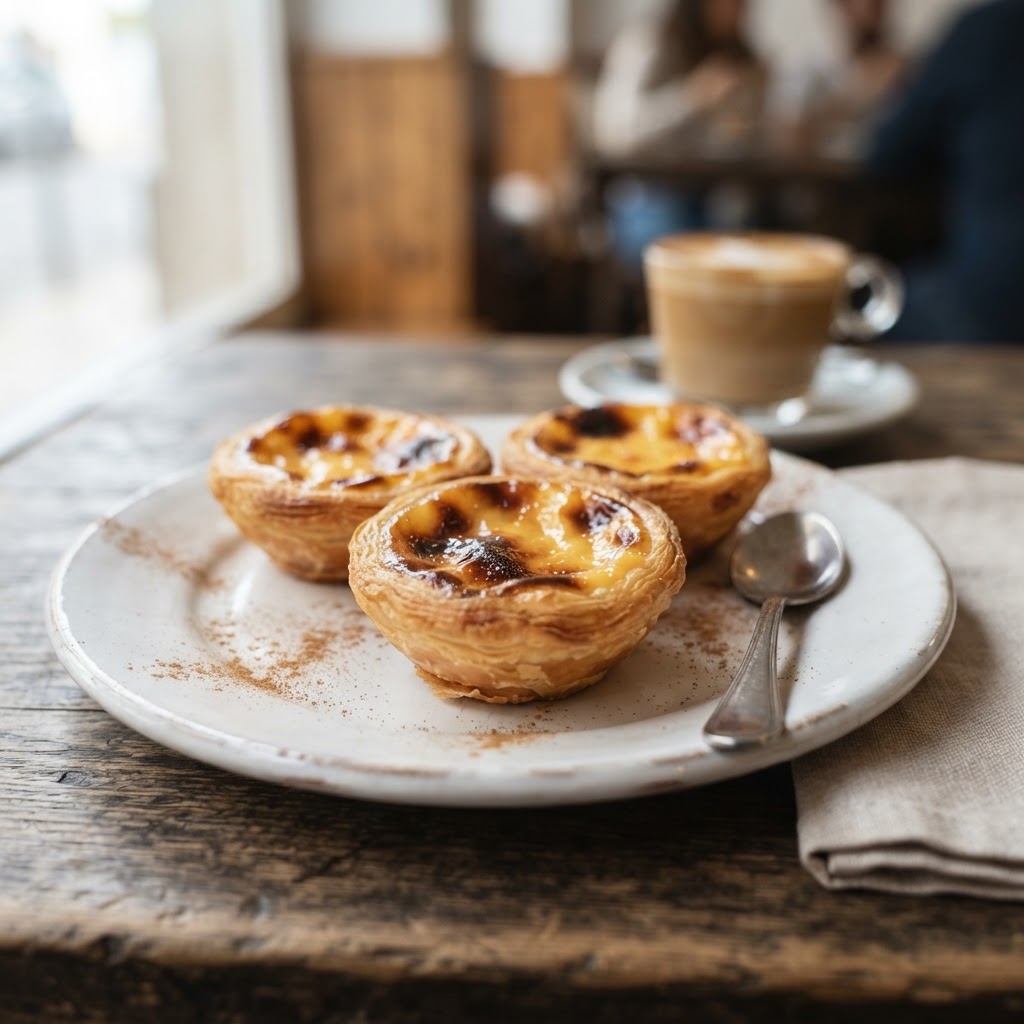
Pastéis de Nata (also known as Pastéis de Belém) are Portugal's most popular pastry — small, golden custard tarts with a shatteringly crisp, flaky pastry shell and a rich, creamy egg custard filling with a characteristic blistered, caramelized top. The tarts are traditionally dusted with cinnamon and served warm, often alongside a shot of strong espresso. Pastéis de Nata are a fixture of Portuguese cafés and pastelarias (pastry shops) from Lisbon to Porto, and they have become one of the most famous food exports of Portugal.
The history of Pastéis de Nata is one of the most fascinating stories in all of pastry. The tarts were invented in the 18th century by Catholic monks at the Jerónimos Monastery in the Belém district of Lisbon. At the time, egg whites were used in large quantities for starching clothes (particularly the nuns' and monks' habits) and for clarifying wine, which left the monasteries with a vast surplus of egg yolks. The resourceful monks and nuns developed recipes using these surplus yolks, creating a tradition of rich egg-yolk pastries that became a hallmark of Portuguese convent sweets (doces conventuais). The Pastel de Nata was one of these creations.
In 1820, the Liberal Revolution in Portugal led to the closure of many monasteries, and the Jerónimos Monastery faced financial ruin. To survive, the monks began selling their pastries to a nearby sugar refinery. In 1834, when the monastery was finally closed, the monks sold their secret recipe to the sugar refinery owner, Domingo Rafael Alves. In 1837, Alves opened the Pastéis de Belém bakery, just a short walk from the monastery, and began selling the tarts under the name "Pastéis de Belém." The original recipe, which is still a closely guarded secret, is known only to a handful of master pastry chefs who sign non-disclosure agreements. The Pastéis de Belém bakery still operates today in the same location, producing over 20,000 tarts daily, and it is one of the most popular food destinations in Lisbon.
Ingredients (makes 12 tarts):
The Pastry: - 1 sheet (about 8 ⅞ oz) store-bought puff pastry (or homemade, if you are ambitious — the traditional pastry is massa folhada, a laminated dough similar to puff pastry) - Thawed if frozen, kept cold
The Custard: - 1 cup whole milk - 1 cinnamon stick - Strip of lemon peel (from ½ lemon, avoiding the bitter white pith) - 5 ¼ oz granulated sugar - 3 ⅓ tbsp water - 1 ¼ oz all-purpose flour - 4 large egg yolks (at room temperature) - ½ teaspoon vanilla extract
To Finish: - Ground cinnamon (for dusting) - Powdered sugar (optional, for dusting)
Making the Custard: In a saucepan, combine the milk, cinnamon stick, and lemon peel. Bring to a simmer over medium heat, then remove from heat and let steep for 15 minutes. Remove and discard the cinnamon stick and lemon peel.
In a small saucepan, combine the sugar and water. Bring to a boil over medium-high heat and cook without stirring until the syrup reaches 220°F (221°F) — about 3–4 minutes. Remove from heat.
In a bowl, whisk the flour with a few tablespoons of the warm milk to form a smooth paste (this prevents lumps). Gradually whisk in the remaining warm milk. Pour this mixture into the sugar syrup and whisk to combine. Return to low heat and cook, whisking constantly, for 2–3 minutes until the mixture thickens slightly. Remove from heat and let cool for 5 minutes.
In a separate bowl, whisk the egg yolks and vanilla. Gradually whisk a few tablespoons of the warm milk mixture into the yolks to temper them (this prevents the yolks from scrambling). Then pour the tempered yolk mixture back into the saucepan and whisk to combine. Strain through a fine sieve to remove any cooked egg bits. The custard should be smooth and pourable. Cover with plastic wrap touching the surface (to prevent a skin from forming) and let cool to room temperature.
Preparing the Pastry Shells: Preheat oven to 500°F (500°F) — a very hot oven is essential for the characteristic blistered, caramelized tops. Lightly grease a 12-cup muffin tin.
Roll the puff pastry into a log (starting from the long edge). Cut the log into 12 equal pieces. Take each piece and, with the cut side facing up, press it into a round disc using your thumbs. Press each disc into a muffin cup, pressing the pastry up the sides to form a shell. The pastry should be thin and extend slightly above the rim of the cup.
Filling and Baking: Pour the cooled custard into the pastry shells, filling each about ¾ full. Do not overfill — the custard will puff and brown dramatically.
Bake at 500°F (500°F) for 10–12 minutes until the pastry is deep golden brown and the custard tops are blistered and darkly caramelized in spots. Watch carefully — the line between perfectly caramelized and burnt is thin. The tops should have dark, almost black spots (this is the caramelized sugar — it is what gives the tarts their characteristic flavor).
Cooling and Serving: Remove from the oven and let cool in the muffin tin for 5 minutes (they are very fragile when hot). Carefully remove the tarts from the tin and transfer to a wire rack. Serve warm, dusted with ground cinnamon and powdered sugar. The traditional Portuguese way is to eat them warm with a shot of espresso (bica) or a galão (Portuguese latte).
The Mimosa Pairing Logic: The sweet, creamy, caramelized character of Pastéis de Nata calls for a mimosa with bright acidity that cuts through the richness while complementing the cinnamon and caramel. A classic orange mimosa is the most natural pairing — the citrus provides a bright contrast to the rich, sweet custard and the champagne's effervescence refreshes the palate. A lavender elderflower mimosa is inspired — the floral notes create a beautiful resonance with the cinnamon dusting and the gentle sweetness balances the caramelized tops. For a more structured pairing, a blood orange mimosa provides a slightly bitter, complex counterpoint that echoes the caramelization of the tart tops. Avoid very sweet tropical mimosas — they amplify the sweetness rather than providing contrast.
Reference Links: - Pastel de Nata history: Wikipedia - Pastéis de Belém official site: Pastéis de Belém - Pastéis de Nata recipe: Leite's Culinaria - Jerónimos Monastery history: UNESCO World Heritage
Make-Ahead: The custard can be made up to 2 days ahead and refrigerated (bring to room temperature before using). The pastry shells can be prepared and pressed into the muffin tin up to 4 hours ahead and refrigerated. The baked tarts are best served warm from the oven but can be reheated in a 350°F oven for 5 minutes. Do not refrigerate baked tarts — the pastry loses its crispness.
Pro Tips: The oven must be very hot (500°F / 500°F) — this is what creates the characteristic blistered, caramelized tops that are the hallmark of authentic Pastéis de Nata. A cooler oven produces pale, un-caramelized tops that lack the complex, slightly burnt sugar flavor. The custard should be strained to remove any cooked egg bits — this ensures a perfectly smooth, silky filling. The tarts should be watched carefully during the last 2 minutes of baking — the line between perfectly caramelized and burnt is thin, and the dark spots on the custard are caramelized sugar, not burnt custard. The tarts are best eaten warm, within a few hours of baking — the pastry loses its crispness over time. Store-bought puff pastry is perfectly acceptable — making laminated dough from scratch is a day-long project and the store-bought version produces excellent results. Ground cinnamon is the traditional accompaniment — it should be dusted on top just before eating, not baked in.
Rate this recipe
Be the first to rate this recipe
to submit your rating.
Recent Posts

Couscous Royale: North Africa's Grand Platter of Lamb, Chicken, and Merguez
October 14, 2026

Seattle Cream Cheese Dog Bites: Hadley Long's 1989 Pioneer Square Invention
October 14, 2026

Khao Soi: Chiang Mai's Northern Thai Coconut Curry Noodles
October 13, 2026

Korean Bibimbap: Jeonju's Joseon Dynasty Mixed Rice
October 11, 2026

Spaghetti alla Carbonara: Rome's World War II Pasta of Eggs, Guanciale, and Pecorino
October 9, 2026