Peruvian Causa Limeña (Potato Towers)
May 13, 2026
Causa limeña is one of Peru's most popular dishes — a layered terrine of seasoned mashed yellow potato filled with chicken, tuna, or crab salad, served cold as an appetizer. The name "causa" is said to derive from the Quechua word *kausay*, meaning "what nurtures you" — a reference to the nourishing potato-and-chile dish eaten by the Incas. The modern version, layered with fillings and shaped into elegant towers, emerged in Lima (hence "limeña") during the colonial era and has been refined into one of the most elegant and colorful dishes in Peruvian cuisine.
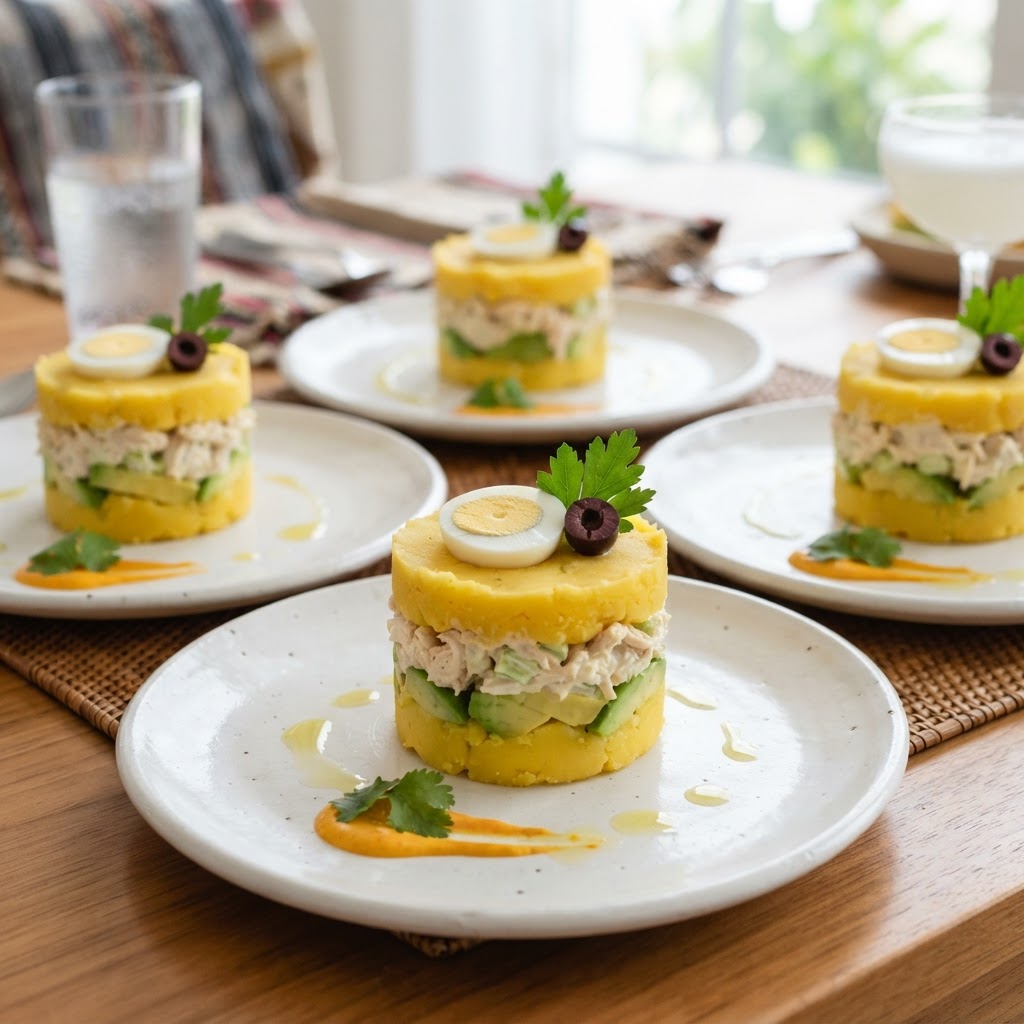
The three foundational ingredients of causa are: Peruvian yellow potatoes (papa amarilla), which have a dense, buttery, slightly sweet texture unlike any other potato; ají amarillo (yellow chili pepper), which provides both the vibrant golden color and a gentle, fruity heat; and lime juice, which adds brightness and acidity. The potato is mashed and seasoned with oil, lime, and ají amarillo, then layered with a filling — classically chicken salad with mayonnaise, or tuna, or crab — and garnished with hard-boiled egg, black olives, and avocado.
Potatoes originated in Peru — the country has over 4,000 native varieties. The yellow potato used in causa is specific to the Andes and has a unique, sandy-yet-creamy texture. Outside Peru, Yukon Gold potatoes are the closest substitute.
About the Ingredients
Yellow potatoes — Peruvian papa amarilla is ideal, but Yukon Gold potatoes are the best substitute available outside Peru. They have a similar golden color and creamy texture. Avoid starchy Russets — they become too mealy.
Ají amarillo (yellow chili pepper) is the most important chile in Peruvian cooking. It provides a vibrant golden-orange color and a fruity, moderately spicy flavor. Fresh ají amarillo is hard to find outside Peru, but jarred ají amarillo paste is widely available at Latin American markets and online. Goya and Inca's Food make reliable pastes. If unavailable, a mixture of habanero and orange bell pepper is an approximation, but the flavor will differ.
Lime juice — Peruvian *limón sutil* (similar to Key lime) is traditional. Standard lime juice is an acceptable substitute. The acidity is essential — it brightens the dense potato and balances the richness of the filling.
Filling — chicken salad with mayonnaise is the most classic filling, but tuna with mayonnaise is equally traditional and easier for a party. The filling can be customized — crab, shrimp, or a vegetarian version with avocado are all common.
Ingredients (makes 12 individual causa towers):
Potato layer: - 3 lbs Yukon Gold potatoes (or Peruvian yellow potatoes) - 3 tablespoons ají amarillo paste (adjust to taste) - ¼ cup vegetable oil - Juice of 3 limes - Salt to taste
Filling: - 2 cups cooked chicken, shredded (or 2 cans tuna, drained) - ½ cup mayonnaise - 1 avocado, diced - Salt and pepper to taste - 1 tablespoon lime juice
Garnish: - 4 hard-boiled eggs, sliced - 12 black olives - 1 tomato, seeded and diced - Fresh parsley, chopped - 1 ear corn, cooked and kernels sliced (optional)
Equipment: - 12 ring molds (or a 3-inch cookie cutter or pastry ring) - Parchment paper
Instructions: Boil the potatoes in salted water until tender, about 20–25 minutes. Drain. While still hot, peel and mash thoroughly — a potato ricer produces the smoothest result. Add the ají amarillo paste, vegetable oil, lime juice, and salt. Mix until smooth and well-seasoned. Taste and adjust — the potato should be distinctly tangy and mildly spicy. Let cool to room temperature.
For the filling: combine the shredded chicken (or tuna) with mayonnaise, diced avocado, lime juice, salt, and pepper. Mix gently.
To assemble: line each ring mold with a strip of parchment paper. Press a layer of seasoned potato (about ¾ inch) into the bottom. Add a layer of the chicken filling. Top with another layer of potato, smoothing the surface. Chill in the refrigerator for at least 1 hour to set.
To serve: carefully remove the ring mold and parchment. Garnish with a slice of hard-boiled egg, a black olive, diced tomato, and a sprig of parsley. Serve cold.
The Mimosa Pairing Logic: The bright, tangy, slightly spicy potato and the rich, creamy filling call for a mimosa with complementary acidity and fruit notes. A classic Champagne mimosa or a passionfruit mimosa is ideal — the passionfruit pays homage to causa's Peruvian origins (passionfruit, or *maracuyá*, is a popular Peruvian fruit), while the citrus echoes the lime in the potato. The wine's effervescence cleanses the palate between bites of this rich, layered dish, and the bright fruit provides a refreshing contrast to the ají amarillo's gentle heat.
Reference Links: - Peruvian causa recipe: Peru Delights - Causa limeña history: Fresh off the Stack - Peruvian cuisine guide: TasteAtlas
Make-Ahead: The potato mixture can be made 1 day ahead and refrigerated. The filling can be prepared 1 day ahead. The assembled causa towers can be chilled for up to 4 hours before serving — garnish just before serving to keep them looking fresh. Do not assemble more than 4 hours ahead — the potato will absorb the filling's moisture and become soggy.
Pro Tips: The potatoes must be mashed while still hot — cold potatoes will not mash smoothly and will become gummy. The potato mixture should be distinctly tangy and well-seasoned — when cold, the flavors mute, so season aggressively while warm. The ají amarillo paste varies in heat — taste it before adding and adjust to your preference. The ring molds make for elegant presentation, but you can also use a small bowl lined with plastic wrap and invert onto a plate. The causa must be served cold — the flavors and textures are best when chilled. Do not skip the garnishes — the egg, olive, and tomato are traditional and add both visual appeal and flavor contrast.
Rate this recipe
Be the first to rate this recipe
to submit your rating.
Perfect Mimosa Pairings
Mimosas that pair perfectly with this dish
Recent Posts

Couscous Royale: North Africa's Grand Platter of Lamb, Chicken, and Merguez
October 14, 2026

Seattle Cream Cheese Dog Bites: Hadley Long's 1989 Pioneer Square Invention
October 14, 2026

Khao Soi: Chiang Mai's Northern Thai Coconut Curry Noodles
October 13, 2026

Korean Bibimbap: Jeonju's Joseon Dynasty Mixed Rice
October 11, 2026

Spaghetti alla Carbonara: Rome's World War II Pasta of Eggs, Guanciale, and Pecorino
October 9, 2026