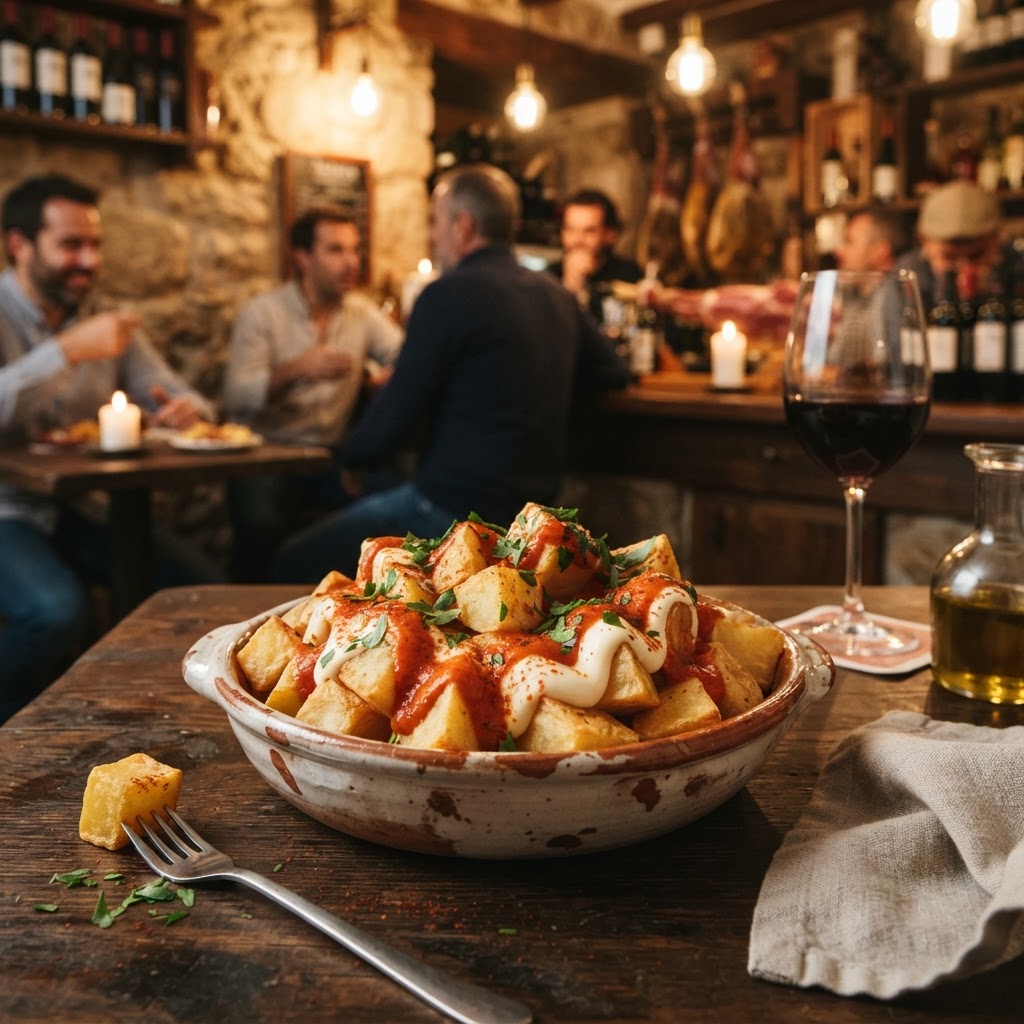
Patatas Bravas with Smoked Paprika Aioli
July 12, 2026
Order a drink in almost any bar in Spain and, within a minute or two, a plate of patatas bravas will land in front of you. The name means "brave potatoes," the bravery being in the sauce, a smoky, slightly sweet, gently fiery relish that is spooned over crisp fried cubes of potato, often with a pale ribbon of garlic aioli drawn across the top. The potato is the vehicle; the sauce is the point. It is one of the few tapas that crosses every regional line in the country, and it is the dish most often called for as a first round, the thing to have on the table before anything else arrives.
Where it began is argued over, but the clearest thread runs back to Madrid in the years after the Civil War, when taverns needed to feed hungry patrons on almost nothing and turned to cheap fried potatoes dressed with a spicy sauce to do it. The potato itself is an older story: it came to Spain from the Americas in the sixteenth century, and the Spanish made a frying tradition of it that runs through the tortilla and the fried fish of the coast. The sauce is where regions part company. In Madrid it is a roux-thickened sauce of tomato, paprika, and broth, dark and clinging. In Barcelona it is more often a simple emulsion of olive oil and paprika, lighter and looser. Both are correct, and both are claimed as the original.
About the Ingredients
Potatoes should be a firm, waxy variety — Yukon Gold or a yellow-fleshed potato. Avoid russets, which are too starchy and break apart when fried twice. The traditional Spanish potato is the *Monalisa* variety; Yukon Gold is the closest American equivalent.
Pimentón de la Vera — smoked Spanish paprika from the La Vera region of Extremadura — is the defining ingredient of the brava sauce. It is made from peppers smoked over oak fires for 15 days and then stone-ground. It comes in three varieties: *dulce* (sweet), *agridulce* (bittersweet), and *picante* (hot). For brava sauce, the *dulce* or *agridulce* variety is traditional. La Chinata and El Avión are two of the most respected brands; both are available at Spanish specialty shops and online.
Aioli — *all i oli*, meaning "garlic and oil" in Catalan — is a traditional emulsion of crushed garlic and olive oil. Modern versions often use egg as an emulsifier, which makes a more stable sauce. The Spanish are particular about this: purists insist that true *all i oli* contains no egg, only garlic and oil pounded in a mortar.
Ingredients (serves 6–8 as a tapa): - 3 lbs Yukon Gold potatoes, peeled and cut into ¾-inch cubes - Vegetable oil for frying (or olive oil, if budget allows) - Flaky sea salt
For the brava sauce: - 3 tablespoons extra-virgin olive oil - 1 small onion, finely diced - 2 cloves garlic, minced - 1 cup crushed tomatoes (San Marzano or high-quality canned) - 1 tablespoon smoked paprika (pimentón de la Vera, dulce or agridulce) - 1 teaspoon hot paprika or cayenne (adjust to taste) - 1 teaspoon all-purpose flour - ½ cup chicken or vegetable broth - 1 teaspoon sherry vinegar - Salt to taste
For the aioli: - 1 large egg yolk - 2 cloves garlic, crushed to a paste with salt - 1 tablespoon fresh lemon juice - ¾ cup mild olive oil or grapeseed oil - Salt to taste
Instructions: For the brava sauce: heat the olive oil in a saucepan over medium heat. Add the onion and cook until soft, about 5 minutes. Add the garlic and cook for 1 minute more. Stir in the flour and paprikas and cook for 30 seconds to remove the raw flour taste. Add the crushed tomatoes and broth, bring to a simmer, and cook for 10 minutes until thickened. Stir in the sherry vinegar and salt to taste. The sauce should be rich, smoky, and moderately spicy. Blend smooth with an immersion blender if desired. Keep warm.
For the aioli: in a bowl, whisk the egg yolk, garlic paste, and lemon juice together. Slowly drizzle in the oil while whisking constantly, building a thick emulsion (or use a food processor for ease). Season with salt. Refrigerate until needed.
For the potatoes: heat 2 inches of oil to 325°F (320°F). Blanch the potato cubes in batches for 4–5 minutes until tender but not browned. Drain on paper towels. Increase the oil temperature to 375°F (374°F) and fry the potatoes a second time in batches for 2–3 minutes until deep golden and crispy. Drain on fresh paper towels and season immediately with salt.
To serve: pile the hot potatoes on a plate. Drizzle generously with the warm brava sauce and the aioli. Serve immediately.
The Mimosa Pairing Logic: The smoky, spicy brava sauce and the rich garlic aioli demand a bright, fruit-forward sparkling wine. A pomegranate mimosa or a classic Champagne mimosa is ideal — the citrus acidity cuts through the fried potato and the rich sauces, while the fruit sweetness balances the smoky paprika and the garlic heat. The bubbles provide a palate-cleansing effect between each bite of this intensely flavoured tapa.
Reference Links: - Pimentón de la Vera DOP: pimentondelavera.com - Spanish tapas guide: Spain.info - Brava sauce technique: Serious Eats
Make-Ahead: The brava sauce can be made up to 3 days in advance and refrigerated; gently reheat before serving. The aioli can be made 2 days ahead. The potatoes can be blanched (first fry) up to 4 hours ahead and held at room temperature; the second fry must be done just before serving.
Pro Tips: The double-fry technique is essential — the first fry at a lower temperature cooks the potato through, and the second fry at a higher temperature creates the crisp exterior. Skipping either step produces a soggy or improperly cooked potato. The brava sauce should be warm when served — cold sauce on hot potatoes is jarring. Serve the aioli in a separate dollop or drizzle, not mixed into the brava sauce; the two sauces are meant to be distinct.
Rate this recipe
Be the first to rate this recipe
to submit your rating.
Recent Posts
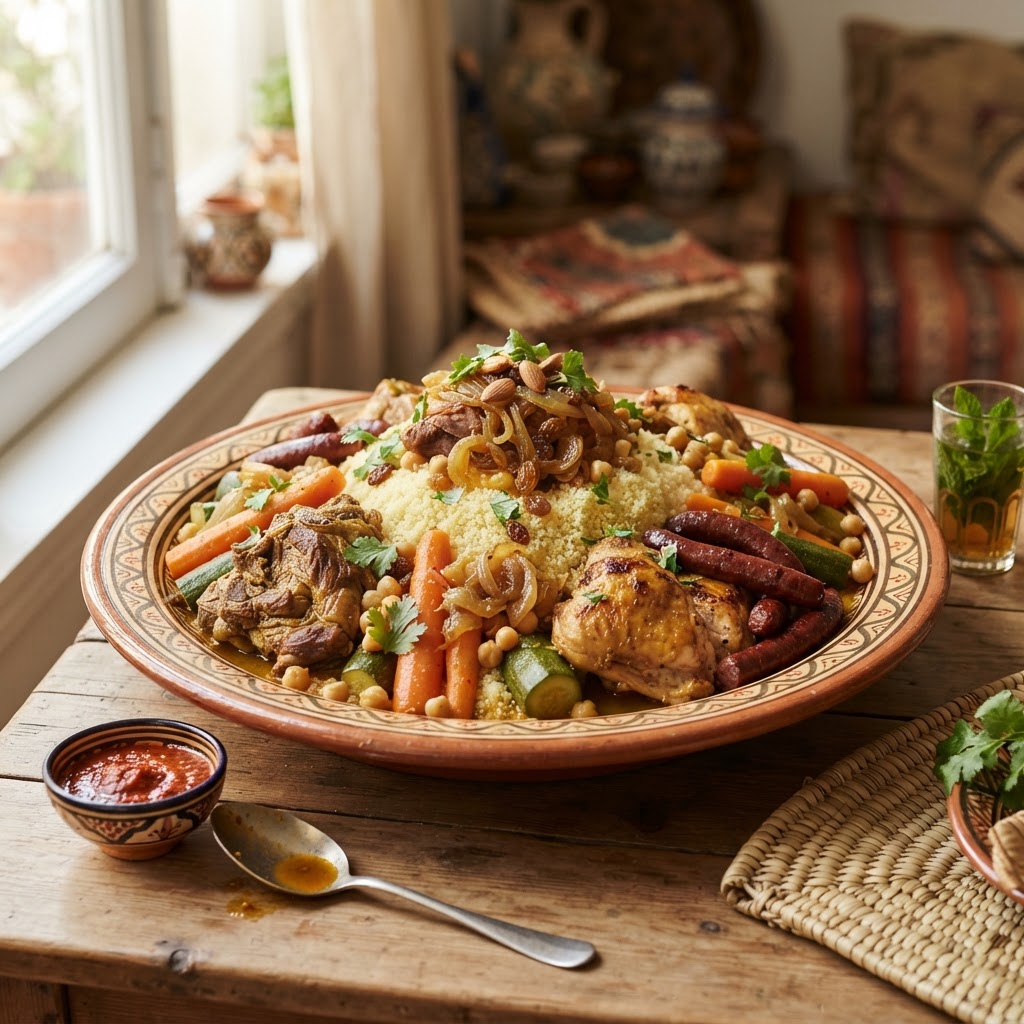
Couscous Royale: North Africa's Grand Platter of Lamb, Chicken, and Merguez
October 14, 2026
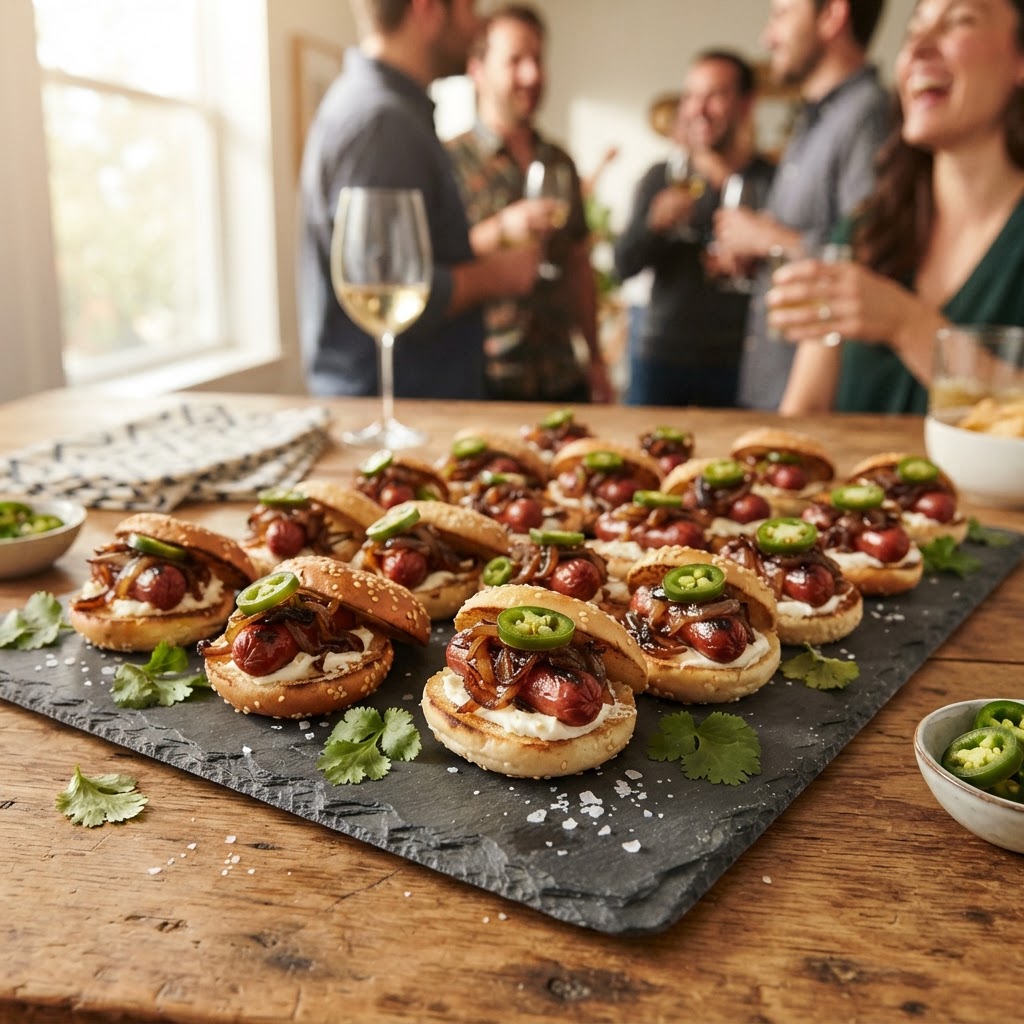
Seattle Cream Cheese Dog Bites: Hadley Long's 1989 Pioneer Square Invention
October 14, 2026
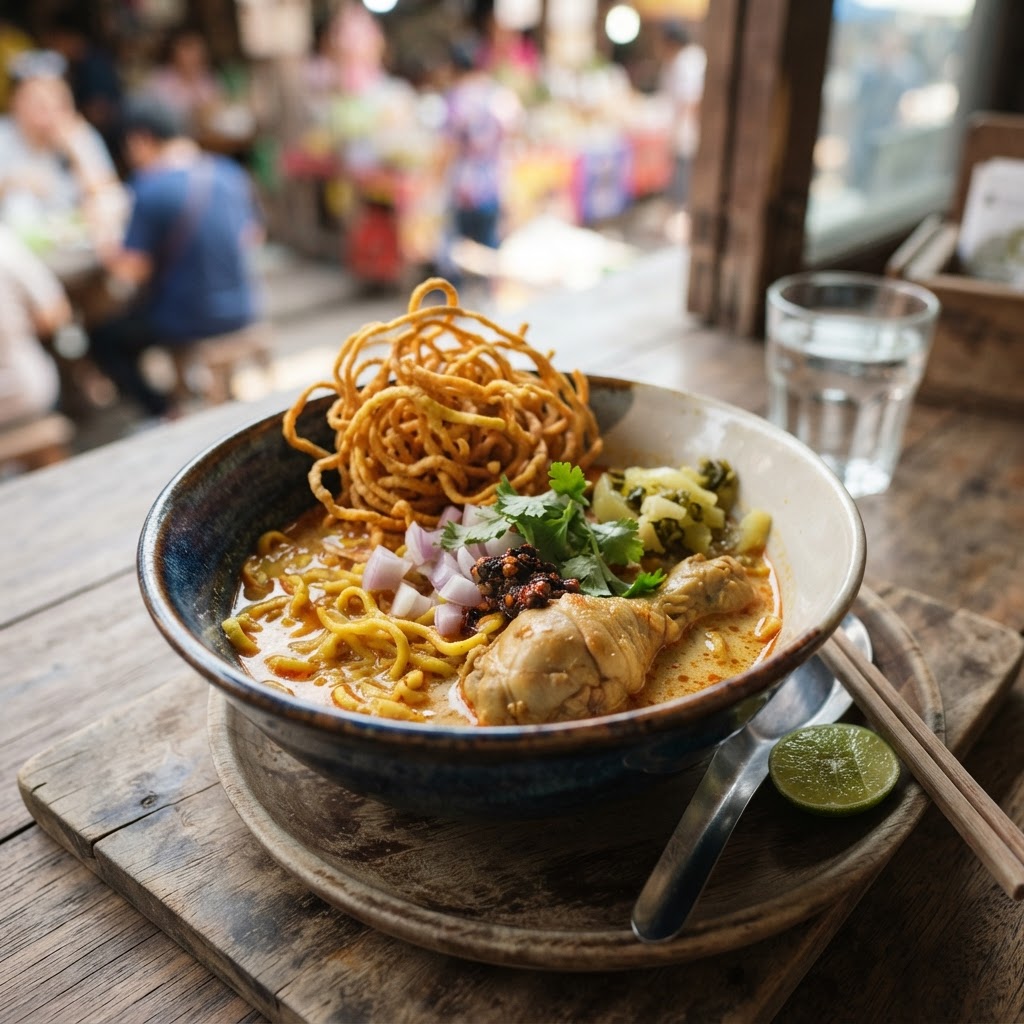
Khao Soi: Chiang Mai's Northern Thai Coconut Curry Noodles
October 13, 2026
Korean Bibimbap: Jeonju's Joseon Dynasty Mixed Rice
October 11, 2026
Spaghetti alla Carbonara: Rome's World War II Pasta of Eggs, Guanciale, and Pecorino
October 9, 2026