Parker House Rolls: Boston's Legendary Hotel Bread
April 16, 2026
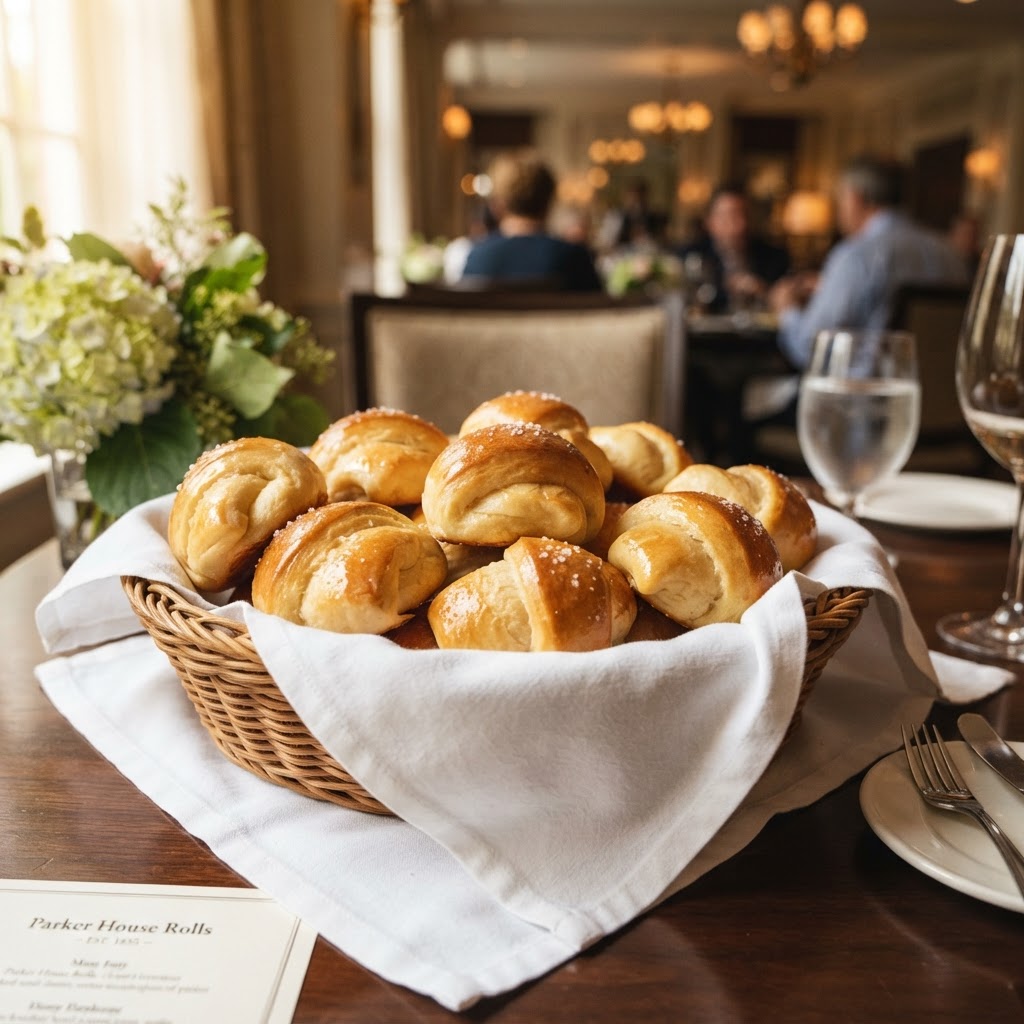
The Parker House roll is the great American hotel bread — a soft, enriched, folded dinner roll with a glossy egg-washed crown and a buttery, almost crustless crumb, invented at the Parker House Hotel in Boston in the 1870s. According to Wikipedia, Parker House rolls were invented at the Parker House Hotel in Boston during the 1870s; the main ingredients are flour, milk, butter or margarine, eggs, and sugar. Allrecipes notes that in the 1870s a German baker working at the Parker House created the recipe for soft, crustless rolls. Yankee Magazine's New England adds the legend that a disgruntled hotel baker threw a batch of unfinished rolls into the oven after an altercation with a hotel guest, and the rolls came out folded, soft, and buttery — and so a classic was born.
The roll is defined by its fold: a circle of enriched dough is brushed with butter, folded in half (like a pocketbook), and baked so the top crisps slightly golden while the fold stays soft and pulls apart in a buttery seam. It is the bread of the grand hotel dining room and the Thanksgiving table alike.
About the Ingredients
Enriched dough — flour, milk, butter, egg, a little sugar and salt, and yeast; the butter and milk are what make the roll soft and keeping.
The fold — each roll is rolled to a circle, brushed with melted butter, and folded in half before baking, so it bakes into the signature pocketbook shape that pulls open in a buttery seam.
Egg wash — a brush of egg and milk gives the glossy golden crown.
Ingredients (makes 24 rolls): - 1 cup warm milk (110°F / 113°F) - 2 1/4 tsp (1 packet) active dry yeast - 1/4 cup sugar - 1/3 cup (5 tbsp) butter, melted, plus more for brushing - 1 egg, beaten - 1 tsp salt - 3 1/2 to 4 cups all-purpose flour - 1 egg beaten with 1 tbsp milk, for egg wash
Instructions: In a large bowl, dissolve the yeast and sugar in the warm milk; let stand 5 minutes until foamy. Stir in the melted butter, egg, and salt. Add the flour 1 cup at a time, mixing to a soft dough. Knead 8 minutes until smooth and elastic. Place in a buttered bowl, cover, and let rise 1 hour until doubled.
Punch down. Roll the dough to 1/4 inch thick and cut into 3-inch rounds. Brush each round with melted butter and fold in half (like a pocketbook), pressing the fold lightly. Place on a buttered baking sheet, cover, and let rise 30–45 minutes until puffed.
Preheat the oven to 375°F (374°F). Brush the rolls with egg wash. Bake 12–15 minutes until golden and glossy. Brush the hot rolls with more melted butter. Serve warm.
The Mimosa Pairing Logic: The soft, buttery Parker House rolls want a bright, refreshing drink that can cut the richness and echo the butter. A classic Champagne mimosa is the safe and perfect choice — the citrus lifts the buttery bread, and the wine's effervescence refreshes the palate. A lemon verbena mimosa is equally lovely, the bright herbal lemon a beautiful partner for the soft rolls. This pairing is, in its way, the brunch equivalent of a Parker House roll and a cup of Boston hotel coffee — a sparkling toast to the grand hotel table.
Reference Links: - Parker House Roll (Boston, 1870s, Parker House Hotel): Wikipedia - What Makes a Parker House Roll Different From a Dinner Roll?: Allrecipes - Parker House Rolls: Recipe and History: Yankee Magazine / New England
Make-Ahead: The dough can be made and refrigerated overnight after the first rise; the cold slow rise deepens the flavor. The shaped rolls can be assembled and frozen unbaked, then thawed and risen before baking. The baked rolls are best the day they are made, warm from the oven; reheat leftovers briefly in a warm oven. Brush the hot rolls with butter twice — once in the fold and once on the baked roll — for the true Parker House finish.
Pro Tips: Use warm, not hot, milk to proof the yeast; too hot and the yeast dies. Knead the full 8 minutes; the enriched dough needs the development to rise light. Brush the rounds generously with butter before folding — the butter in the fold is what makes the rolls pull apart in a buttery seam. Brush twice with butter: once in the fold, once on the baked roll. Serve warm; a cold Parker House roll is a lesser thing. The fold, not the round, is the signature — don't skip it.
Rate this recipe
Be the first to rate this recipe
to submit your rating.
Recent Posts

Couscous Royale: North Africa's Grand Platter of Lamb, Chicken, and Merguez
October 14, 2026

Seattle Cream Cheese Dog Bites: Hadley Long's 1989 Pioneer Square Invention
October 14, 2026

Khao Soi: Chiang Mai's Northern Thai Coconut Curry Noodles
October 13, 2026

Korean Bibimbap: Jeonju's Joseon Dynasty Mixed Rice
October 11, 2026

Spaghetti alla Carbonara: Rome's World War II Pasta of Eggs, Guanciale, and Pecorino
October 9, 2026