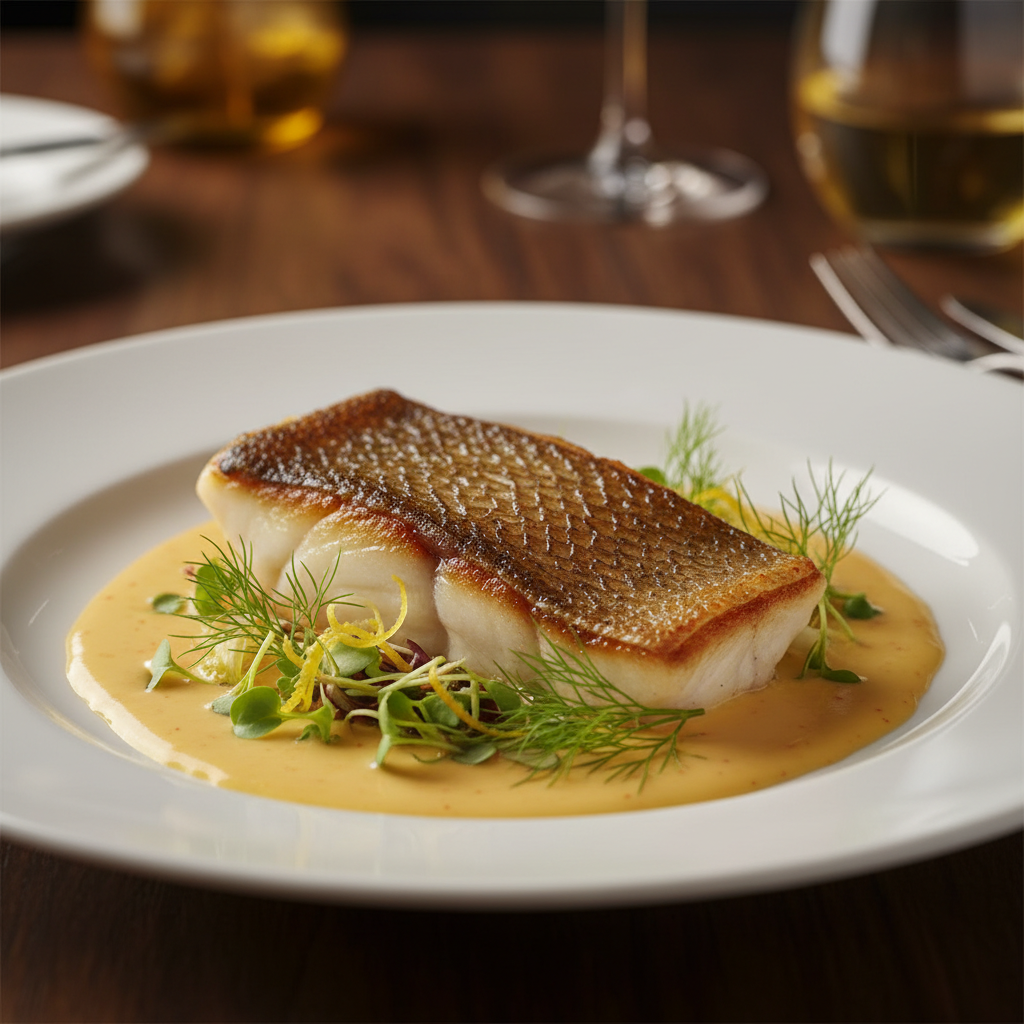
Pan-Seared Chilean Sea Bass with Saffron Beurre Blanc
February 18, 2026
Chilean sea bass — marketed under that name since 1977, when American fish merchant Lee Lantz renamed the Patagonian toothfish to make it commercially appealing — is now one of the most prized fish in fine dining worldwide. Its extraordinary fat content (more than any other common white fish) produces a buttery, silky texture when pan-seared that is genuinely unlike any other species. The thick, snow-white flakes part in clean layers and practically melt on the tongue.
Saffron beurre blanc is the sauce that was built for this fish: the delicate floral-metallic aroma of Crocus sativus, the most expensive spice in the world by weight, dissolved into a classic French butter sauce with white wine, shallots, and cream. The golden hue contrasts brilliantly with the ivory-white fish, and the flavor — complex, aromatic, slightly sweet — complements the bass's natural richness without competing.
Ingredients (serves 10–12 as a plated main): - 10–12 portions Chilean sea bass fillet (6 oz each), skin on or removed (skin-on produces a more dramatic presentation) - 2 tablespoons neutral oil - 2 tablespoons unsalted butter - Salt and white pepper - Fennel fronds, lemon zest, and microgreens for garnish
Saffron Beurre Blanc: - ½ teaspoon good-quality saffron threads (Spanish La Mancha or Iranian Negin — avoid powdered saffron, which is often adulterated) - 3 tablespoons warm water (to bloom the saffron) - 4 shallots, very finely minced - ⅞ cup dry white wine (Sancerre, Chablis, or Vermentino) - ½ cup white wine vinegar - 3 tablespoons heavy cream (helps emulsification stability) - 10.6 oz cold unsalted butter, cut into ⅓ in cubes - Salt, white pepper, and fresh lemon juice
Saffron Beurre Blanc: Bloom saffron threads in warm water for 10 minutes — the water will turn brilliant amber-gold.
Combine shallots, white wine, and white wine vinegar in a small, heavy saucepan. Bring to a boil and reduce until approximately 3 tablespoons of liquid remain and the shallots are very soft and the liquid is syrupy. Add cream and the bloomed saffron with its water. Reduce briefly until slightly thickened.
Over the very lowest possible heat (the bottom of the pan should be barely warm), add cold butter cubes two or three at a time, whisking constantly and allowing each addition to melt completely and emulsify before adding more. The sauce should be thick, creamy, and a deep golden-amber color. Season with salt, white pepper, and a few drops of lemon juice. Pass through a fine sieve if a smooth sauce is preferred (or leave the shallots in for texture). Keep warm over a bain-marie — never let it boil.
Sea Bass: Pat fillets completely dry with paper towels — any surface moisture will prevent the crust from forming. Season generously with salt and white pepper on both sides.
Heat neutral oil in a heavy, ovenproof skillet (cast iron or stainless) over high heat until just beginning to smoke. Place fillets presentation-side down (or skin-side down for skin-on). Press gently for 10 seconds to prevent curling. Reduce heat to medium-high and cook undisturbed for 4–5 minutes until a golden crust forms and the fish has turned opaque two-thirds of the way through the fillet. Flip, add butter, and baste for 1–2 minutes until just cooked through — the interior should be opaque but still trembling slightly when pressed.
Rest 2 minutes before plating.
Plating: Spoon a generous pool of saffron beurre blanc onto the center of each warm plate. Place the sea bass on the sauce. Arrange 3–4 fennel fronds alongside. Scatter a pinch of lemon zest over the fish. Add a small cluster of microgreens for color and height. Serve immediately.
Reference Links: - Chilean sea bass (Patagonian toothfish) naming history: Wikipedia — Patagonian toothfish - Beurre blanc technique: Serious Eats
Make-Ahead: Saffron beurre blanc can be made up to 45 minutes ahead and held warm in a bain-marie, whisking occasionally. The sea bass must be cooked to order — it degrades rapidly once cooked.
Pro Tips: The key to perfectly cooked sea bass is confidence at the sear and early removal. Its high fat content means it continues cooking significantly from residual heat — remove from the pan slightly underdone. Sea bass skin, when dried and seared correctly, becomes one of the finest things to eat — delicate, crispy, and deeply flavored. Do not discard it.
Rate this recipe
Be the first to rate this recipe
to submit your rating.
Recent Posts

Couscous Royale: North Africa's Grand Platter of Lamb, Chicken, and Merguez
October 14, 2026

Seattle Cream Cheese Dog Bites: Hadley Long's 1989 Pioneer Square Invention
October 14, 2026

Khao Soi: Chiang Mai's Northern Thai Coconut Curry Noodles
October 13, 2026

Korean Bibimbap: Jeonju's Joseon Dynasty Mixed Rice
October 11, 2026

Spaghetti alla Carbonara: Rome's World War II Pasta of Eggs, Guanciale, and Pecorino
October 9, 2026