Moroccan Lamb Tagine with Apricots, Almonds, and Saffron
April 18, 2026
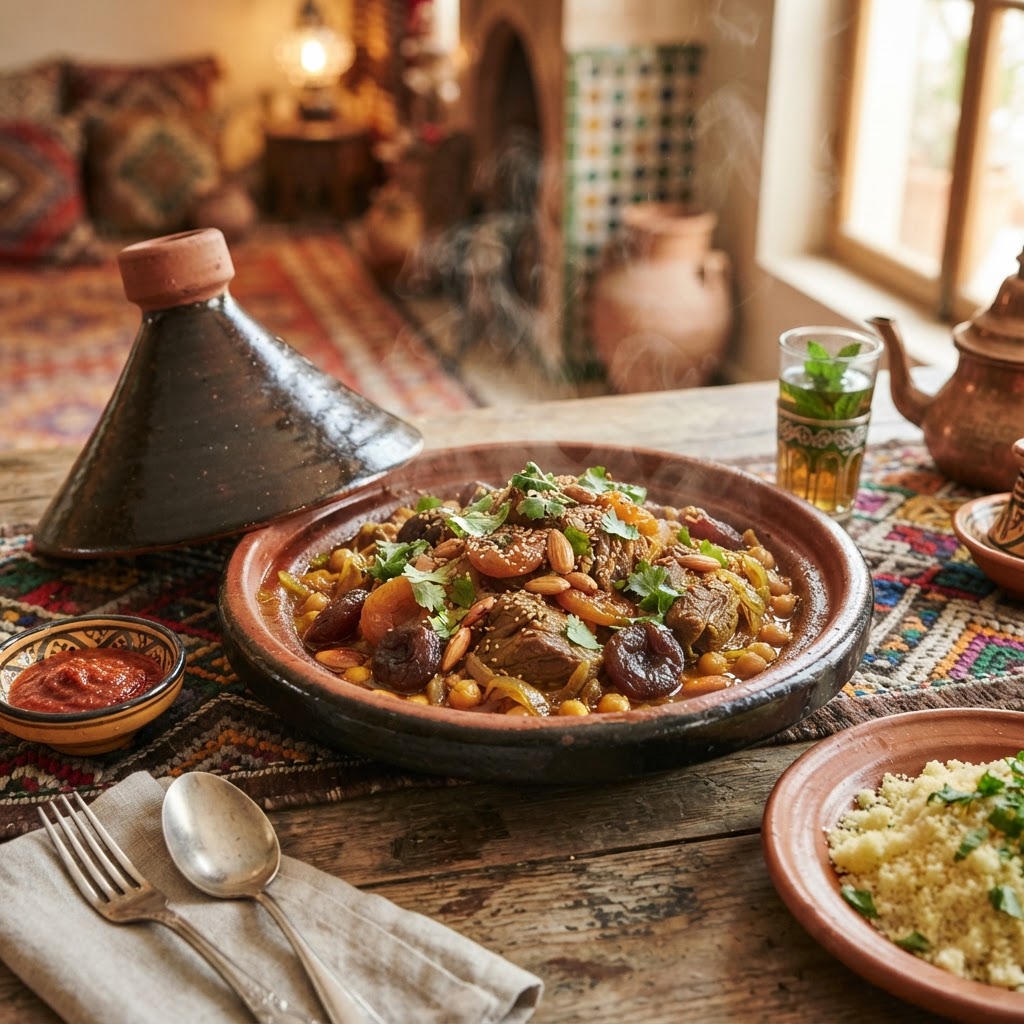
The tagine — both the conical clay cooking vessel and the slow-cooked stew that bears its name — is the defining dish of Moroccan cuisine. A lamb tagine with apricots, almonds, and saffron is one of the most widely known and famous preparations — a fragrant, sweet-savory stew that combines tender, falling-off-the-bone lamb shoulder with dried apricots, toasted almonds, onions preserved with saffron, and a warm spice blend of ginger, cinnamon, turmeric, and Ras el Hanout. The dish is a masterpiece of Moroccan flavor balance: the savory depth of the slow-cooked lamb, the sweet burst of the rehydrated apricots, the crunch of the almonds, and the aromatic complexity of the spices all woven into a single, harmonious dish.
The tagine vessel itself is essential to the dish's character. The conical clay lid traps the steam and returns it to the stew, creating a moist, gentle cooking environment that tenderizes the toughest cuts of meat and allows the spices to infuse deeply. Traditional tagines are made of earthenware and cooked over a low charcoal fire or a diffuser on a gas stove. The slow, even heat and the steam circulation produce a texture and depth of flavor that cannot be replicated in a Dutch oven or heavy pot. For a home cook without a tagine, a heavy Dutch oven with a tight-fitting lid is an acceptable substitute, but the conical clay vessel remains the authentic choice.
Lamb and dried fruit is one of the great flavor pairings of Moroccan cuisine, rooted in the Berber and Arab traditions that have shaped the country's food for over a thousand years. The combination of savory meat and sweet fruit — apricots, prunes, figs, dates — is a hallmark of festive Moroccan cooking, served at weddings, Eid celebrations, and special gatherings. The almonds, toasted and added at the end, provide a textural contrast and a nutty depth that completes the dish.
Ingredients (serves 8 as a main course):
The Lamb: - 3 lbs lamb shoulder, bone-in or boneless, trimmed of excess fat and cut into 2-inch cubes - 2 tablespoons extra-virgin olive oil - 1 large onion, sliced - 4 garlic cloves, minced - 1 tablespoon fresh ginger, grated
The Spice Blend: - 1 teaspoon ground cinnamon - 1 teaspoon ground ginger - 1 teaspoon ground turmeric - ½ teaspoon black pepper - 1 teaspoon Ras el Hanout (a Moroccan spice blend available at specialty shops — or substitute a mix of cinnamon, cumin, coriander, and cardamom) - 1 generous pinch saffron threads, crumbled and steeped in ¼ cup warm water for 10 minutes - 1 teaspoon salt
The Fruit and Nuts: - 7 oz dried apricots (Turkish or California — choose unsulfured for deeper flavor) - 3 ½ oz whole almonds, blanched - 1 tablespoon butter - 1 tablespoon honey (optional, for a sweeter tagine) - 1 cinnamon stick
The Liquid: - 2 ⅛ cups chicken or lamb stock (or water) - 1 tablespoon fresh lemon juice - 1 tablespoon fresh cilantro, chopped - 1 tablespoon fresh parsley, chopped
To Serve: - Couscous or crusty bread - Fresh cilantro and parsley for garnish - Toasted sesame seeds (optional)
Toasting the Almonds: In a dry skillet over medium heat, toast the almonds 4–5 minutes, stirring frequently, until golden and fragrant. Set aside. (Can be done 1 day ahead.)
Browning the Lamb: Heat the olive oil in a tagine or heavy Dutch oven over medium-high heat. Season the lamb with salt. Working in batches, brown the lamb on all sides until deeply golden, 5–6 minutes per batch. Remove to a plate. Do not crowd the pan — browning in batches is essential for proper Maillard development.
The Aromatics: Reduce heat to medium. Add the sliced onion to the tagine; cook 5 minutes until softened and beginning to caramelize. Add the garlic and grated ginger; cook 1 minute. Add the ground cinnamon, ground ginger, turmeric, black pepper, and Ras el Hanout; cook 30 seconds until fragrant. Add the saffron with its steeping water.
Braising: Return the lamb to the tagine. Add the stock, cinnamon stick, and lemon juice. The liquid should come about halfway up the lamb — add more if needed. Bring to a simmer. Cover with the conical tagine lid (or a tight-fitting lid) and reduce heat to the lowest possible setting. Cook 1 hour 30 minutes, stirring occasionally, until the lamb is beginning to get tender.
Adding the Apricots: Add the dried apricots to the tagine. If the apricots are very dry, soak them in warm water for 10 minutes first. Continue cooking, covered, 30 minutes until the lamb is falling-off-the-bone tender and the sauce is thick and glossy. If the sauce is too thin, uncover and increase the heat to reduce. If it is too thick, add a splash of stock. Stir in the honey (if using) for a sweeter tagine.
Finishing: Stir in the toasted almonds, fresh cilantro, and parsley. Taste and adjust seasoning — the tagine should be deeply savory, gently sweet from the apricots, and warm with spice. Remove the cinnamon stick.
Service: Bring the tagine to the table in its vessel — the presentation is part of the ceremony. Serve directly from the tagine onto plates of couscous or with crusty bread. Garnish with additional cilantro, parsley, and toasted sesame seeds if desired.
The Mimosa Pairing Logic: The warm, sweet-savory, spiced character of the lamb tagine calls for a mimosa with aromatic complexity and bright fruit that complements the apricots and saffron. A peach bellini mimosa is the most natural pairing — the peach's sweetness echoes the apricots and the prosecco's fruitiness complements the lamb. A cardamom orange blossom mimosa is inspired — the cardamom creates a beautiful resonance with the Ras el Hanout, and the orange blossom echoes the North African flavor profile. For a more structured pairing, a saffron honey champagne mimosa creates a direct flavor bridge with the saffron in the tagine. Avoid very dry or bitter mimosas — they clash with the dish's sweet, aromatic character.
Reference Links: - Tagine cooking history: Wikipedia - Moroccan lamb tagine with apricots: Serious Eats - Ras el Hanout guide: The Spruce Eats - Saffron guide: Serious Eats
Make-Ahead: The tagine is better on the second day — the flavors deepen and meld overnight. Make it 1–3 days ahead, refrigerate, and reheat gently. The almonds should be toasted separately and added just before service so they retain their crunch. The couscous should be made à la minute.
Pro Tips: The lamb shoulder is the authentic and best cut — its fat and connective tissue break down during the long braise, producing the tender, unctuous texture that characterizes the dish. Do not substitute lean lamb leg, which dries out. The conical tagine lid traps steam and returns it to the stew, creating the moist environment that tenderizes the meat — if using a Dutch oven, ensure the lid is tight-fitting. The dried apricots should be unsulfured for the deepest flavor — sulfured apricots are brighter orange but have a flatter taste. The almonds must be added at the end — if cooked in the tagine, they soften and lose their crucial textural contrast. The Ras el Hanout is the spice signature of the dish — seek out a quality blend or make your own; the pre-ground supermarket versions are often stale and flat.
Rate this recipe
Be the first to rate this recipe
to submit your rating.
Recent Posts

Couscous Royale: North Africa's Grand Platter of Lamb, Chicken, and Merguez
October 14, 2026

Seattle Cream Cheese Dog Bites: Hadley Long's 1989 Pioneer Square Invention
October 14, 2026

Khao Soi: Chiang Mai's Northern Thai Coconut Curry Noodles
October 13, 2026

Korean Bibimbap: Jeonju's Joseon Dynasty Mixed Rice
October 11, 2026

Spaghetti alla Carbonara: Rome's World War II Pasta of Eggs, Guanciale, and Pecorino
October 9, 2026