Loco Moco: Hawaii's Comfort Food Crown Jewel Born at the Lincoln Grill in 1949
January 12, 2026
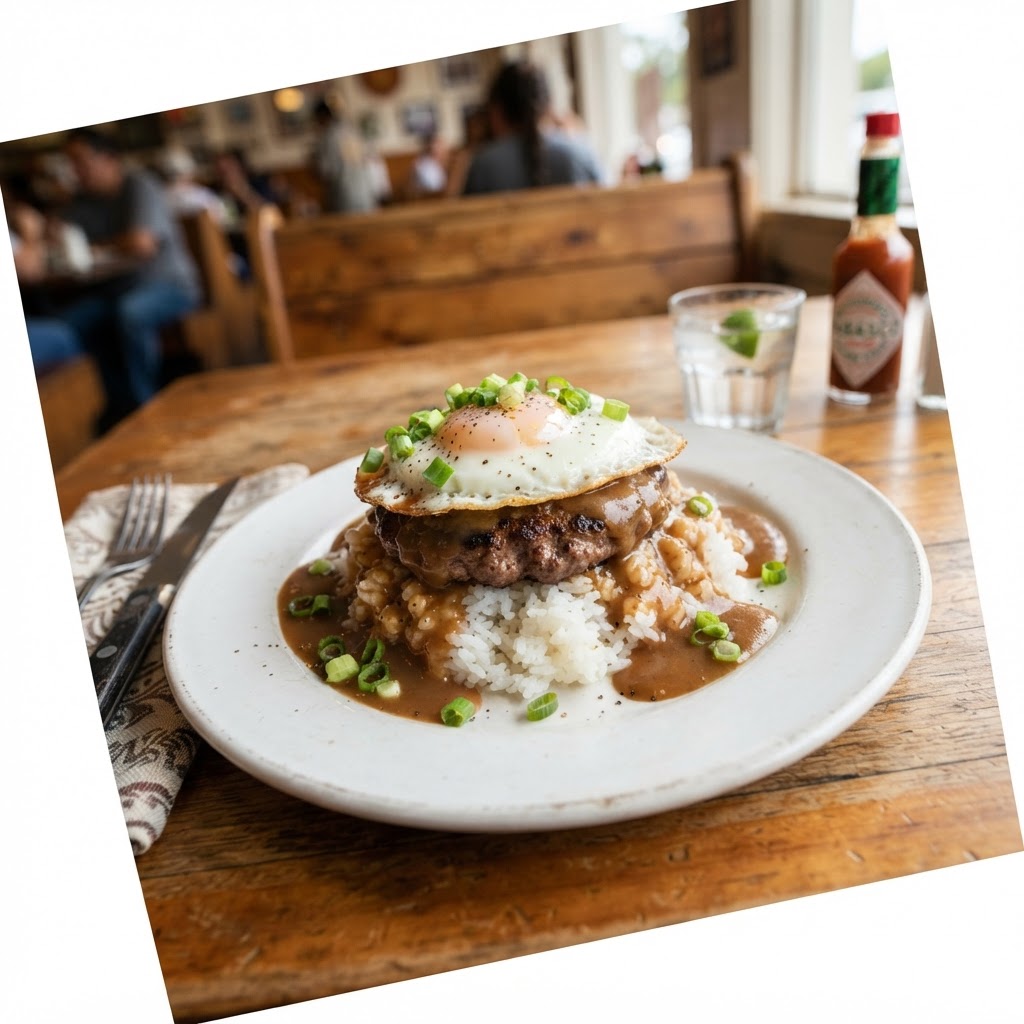
Loco moco is the crown jewel of Hawaiian comfort food — a bowl of steamed white rice topped with a hamburger patty, a sunny-side-up fried egg, and smothered in rich brown gravy. It's a dish that embodies the spirit of Hawaii itself: a beautiful, improbable fusion born of immigrant cultures, practicality, and the generous, unpretentious soul of island cooking. In the decades since its invention, the loco moco has become one of the most famous dishes in Hawaiian cuisine, served in diners, drive-ins, and plate lunch shops across the islands.
The loco moco was created in 1949 at the Lincoln Grill restaurant in Hilo, on the Big Island of Hawaii, by its proprietors Richard and Nancy Inouye. According to the most widely told origin story, a group of teenagers from the Lincoln Wreckers sports club came into the restaurant looking for something inexpensive, filling, different from a sandwich, and quick to prepare. Nancy Inouye came up with the solution: a bowl of rice, topped with a hamburger patty and brown gravy. The fried egg was added later. The teenagers named the dish "Loco Moco" after one of their members, George Okimoto, whose nickname was "Crazy" (loco in Spanish) because of his wild antics. George Takahashi, who was studying Spanish at Hilo High School, suggested "loco," and they tacked on "moco" because it rhymed and "sounded good."
The cultural roots of the loco moco reflect Hawaii's plantation-era melting pot. The rice base comes from the Japanese and Chinese plantation workers who brought rice as a staple to the islands. The hamburger patty reflects American influence. The brown gravy has European roots. And the combination of all these elements on a single plate embodies the plate lunch tradition — Hawaii's working-class meal that combines rice, macaroni salad, and a protein in a single, generous portion. The food historian Rachel Laudan, in her landmark book "The Food of Paradise: Exploring Hawaii's Culinary Heritage," traces the loco moco as a classic example of Hawaii's unique culinary fusion.
The loco moco became a staple of Hawaiian plate lunch shops and diners throughout the 1950s and 1960s. In 1983, it sold for about $1 to $1.75 at the Lincoln Grill. By 2015, a loco moco special at a Hawaiian diner cost around $16. The dish has been featured on the Travel Channel's "Girl Meets Hawaii" with Samantha Brown and on "Man v. Food," where host Adam Richman tried it at the Hukilau Café in Laie. Today, loco moco is served at virtually every plate lunch shop in Hawaii, from roadside stands to resort restaurants, and its influence has spread to the mainland and internationally.
The key to a great loco moco is the gravy. The gravy should be rich, savory, and slightly thick — made from beef broth, caramelized onions, and a roux — and it should generously cover the rice, the patty, and the egg. The hamburger patty should be seasoned simply (salt, pepper, maybe a little Worcestershire) and cooked to juicy perfection. The egg should be sunny-side up with a runny yolk that mixes with the gravy when you cut into it. And the rice should be short or medium-grain white rice, slightly sticky, providing the neutral base that ties everything together.
Our Mimosavated version makes a classic Hilo-style loco moco with a rich onion-brown gravy, a juicy hamburger patty, a sunny-side-up egg, and steamed short-grain rice.
Ingredients (serves 4):
The Rice: - 14 ⅛ oz short-grain white rice (Calrose or Japanese rice) - 2 ⅛ cups water - A pinch of salt
The Hamburger Patties: - 1 lb 2 oz ground beef (80% lean, 20% fat) - 1 teaspoon salt - ½ teaspoon black pepper - 1 teaspoon Worcestershire sauce - 1 tablespoon vegetable oil (for cooking)
The Brown Gravy: - 2 tablespoons unsalted butter - 1 medium onion, thinly sliced - 2 tablespoons all-purpose flour - 1 ¼ cups beef broth - 1 tablespoon soy sauce - 1 teaspoon Worcestershire sauce - ½ teaspoon garlic powder - Salt and black pepper to taste
The Eggs: - 4 large eggs - 1 tablespoon vegetable oil (for frying)
Garnishes: - 2 spring onions (scallions), sliced - Furikake (Japanese rice seasoning, optional)
Making the Rice: Rinse the rice in cold water until the water runs clear. Combine the rice, water, and salt in a pot. Bring to a boil, then reduce heat to low, cover, and cook for 15–18 minutes, until the water is absorbed and the rice is tender. Let rest, covered, for 5 minutes. Fluff with a rice paddle.
Making the Hamburger Patties: Divide the ground beef into 4 equal portions and shape into patties about ⅔ in (½ inch) thick. Season both sides with salt, pepper, and Worcestershire sauce. Heat the oil in a large skillet over medium-high heat. Cook the patties for 4–5 minutes per side, until browned and cooked through (medium to medium-well is traditional). Remove the patties to a plate and keep warm.
Making the Brown Gravy: In the same skillet (don't wash it — the beef drippings add flavor), add the butter and the sliced onion. Cook over medium heat for 5–7 minutes, until the onions are soft and golden brown. Sprinkle the flour over the onions and cook, stirring, for 1–2 minutes to make a roux. Gradually whisk in the beef broth, stirring constantly to prevent lumps. Add the soy sauce, Worcestershire sauce, and garlic powder. Simmer for 5–7 minutes, until the gravy thickens to a coating consistency. Taste and adjust the seasoning with salt and pepper.
Frying the Eggs: In a separate skillet, heat the oil over medium heat. Crack the eggs into the skillet and fry sunny-side up — the whites should be set and the yolks should be runny. Cook for about 3 minutes, or until the whites are completely set.
Assembling: Divide the rice among 4 large bowls. Place a hamburger patty on top of the rice in each bowl. Pour the gravy generously over the patty and the rice. Top each patty with a sunny-side-up egg. Pour a little more gravy over the egg. Garnish with sliced scallions and a sprinkle of furikake if desired.
Serving: Serve immediately. The traditional way to eat a loco moco is to cut into the egg so the runny yolk runs into the gravy and the rice, then mix everything together. The combination of the savory gravy, the juicy beef, the rich egg yolk, and the neutral rice is one of the most satisfying comfort food experiences in the world.
The Mimosa Pairing Logic: Loco moco is rich, savory, and hearty. The ideal mimosa pairing is a classic Prosecco mimosa — orange juice and Prosecco. The bright, acidic citrus cuts through the richness of the gravy and the beef, while the Prosecco's effervescence cleanses the palate between bites. A tropical mango mimosa is also excellent — the tropical fruit echoes the Hawaiian origin of the dish. Avoid heavy or sweet mimosas — the dish is already rich and savory, and you need something bright and acidic to balance it.
Reference Links: - Loco moco on Wikipedia (Lincoln Grill, Hilo, 1949, Richard and Nancy Inouye): Wikipedia - The Food of Paradise: Exploring Hawaii's Culinary Heritage by Rachel Laudan: University of Hawaii Press - What Is a Loco Moco? The History of Hawaii's Famous Dish (Lincoln Grill, 1949): Onolicious Hawaii - History of the Loco Moco (Hilo, Lincoln Wreckers, George Okimoto): Hawaii Magazine - Loco Moco: A Folk Dish in the Making by James Kelly (1983, Social Process in Hawai'i): University of Hawaii ScholarSpace
Make-Ahead: The rice can be made up to 2 hours ahead and kept warm. The gravy can be made up to 1 day ahead and refrigerated — reheat gently with a splash of beef broth to loosen. The hamburger patties can be formed up to 1 day ahead and refrigerated — cook just before serving. The eggs should be fried just before serving. Assemble at the last minute — the dish is at its best when the gravy is hot, the patty is juicy, the egg yolk is runny, and the rice is steaming. Leftover loco moco can be refrigerated for up to 2 days and reheated in a skillet or microwave — the egg will not be runny after reheating, but the dish will still be delicious. Do not freeze.
Pro Tips: Use short-grain or medium-grain rice (Calrose or Japanese rice) — long-grain rice doesn't have the right sticky texture for a loco moco; the rice should be slightly sticky so it holds together when mixed with the gravy. Don't skip the gravy — the gravy is the soul of the dish, and it should be rich, savory, and generous. Use the beef drippings from cooking the patties to flavor the gravy — the browned bits in the skillet (the fond) add tremendous depth of flavor. Cook the onions until golden brown — caramelized onions give the gravy its sweetness and depth. The egg must be sunny-side up with a runny yolk — the runny yolk mixing with the gravy and the rice is the defining moment of the dish. If you don't like runny yolks, you can cook the egg over-easy, but the classic version is sunny-side up. Season the patties simply — salt, pepper, and a little Worcestershire is all you need; the gravy carries the main flavor. Don't overcook the patties — medium to medium-well is traditional; a dry, overcooked patty ruins the dish. Serve in a wide, shallow bowl — the bowl shape allows the gravy to pool around the rice, and it makes mixing and eating easier. Add a side of macaroni salad if you want the full plate lunch experience — it's the traditional accompaniment in Hawaii.
Rate this recipe
Be the first to rate this recipe
to submit your rating.
Recent Posts

Couscous Royale: North Africa's Grand Platter of Lamb, Chicken, and Merguez
October 14, 2026

Seattle Cream Cheese Dog Bites: Hadley Long's 1989 Pioneer Square Invention
October 14, 2026

Khao Soi: Chiang Mai's Northern Thai Coconut Curry Noodles
October 13, 2026

Korean Bibimbap: Jeonju's Joseon Dynasty Mixed Rice
October 11, 2026

Spaghetti alla Carbonara: Rome's World War II Pasta of Eggs, Guanciale, and Pecorino
October 9, 2026