Korean Sujeonggwa: The Cinnamon and Persimmon Punch of the Joseon Court
January 21, 2026
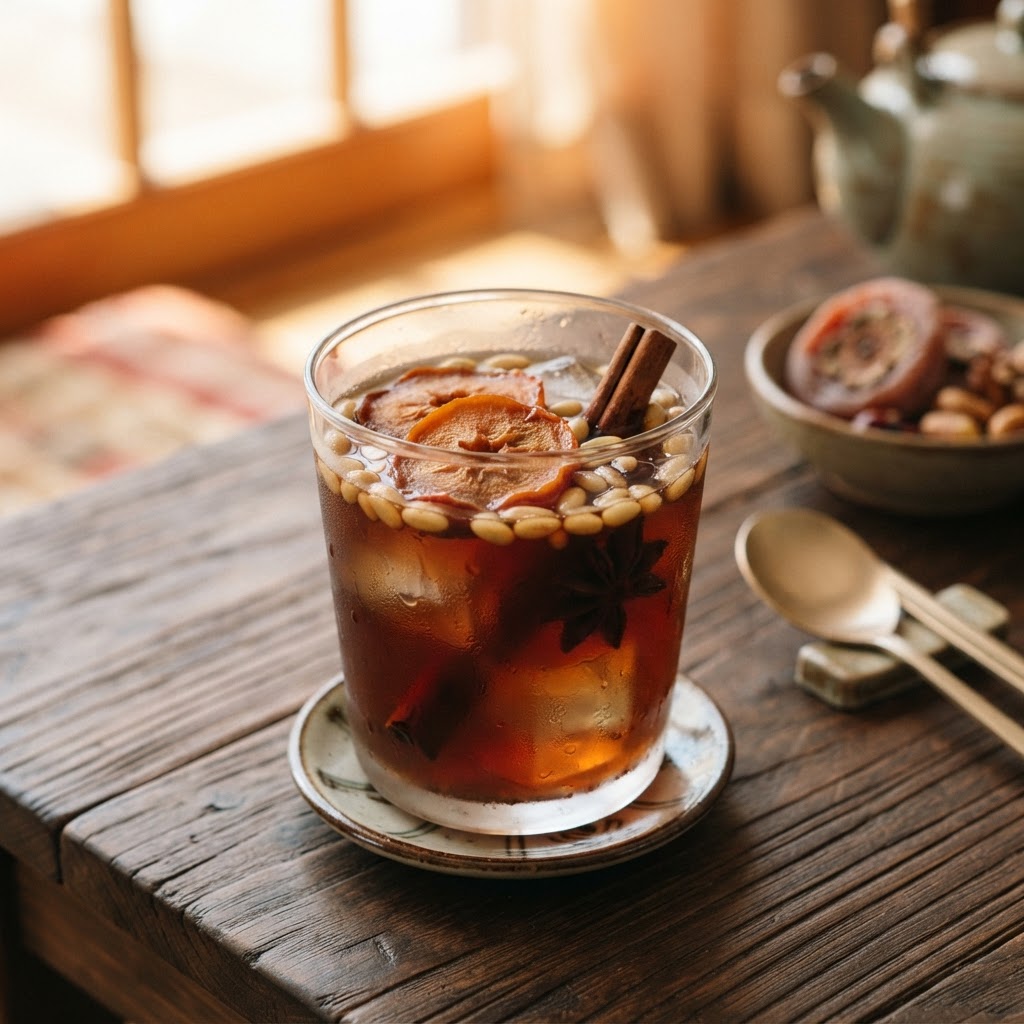
Sujeonggwa (수정과) is one of the oldest and most elegant non-alcoholic beverages in the Korean tradition — a deep, amber-brown cinnamon and ginger punch served ice-cold, finished with soft, sweet dried persimmon slices and a scatter of pine nuts. It is a drink of extraordinary complexity: warming spices, the gentle heat of ginger, the deep sweetness of dried fruit, and the resinous fragrance of pine, all layered into a beverage that tastes like nothing else in the world. It is traditionally served as a dessert drink at the end of Korean meals, and it is one of the most popular *hwachae* (traditional Korean punch) varieties.
The history of sujeonggwa stretches back to the Joseon Dynasty (1392–1910). The drink is recorded in the *Siuijeonseo*, a Korean cookbook compiled in the late nineteenth century, though the recipe is believed to be far older, originating in the royal court kitchens where elaborate punches and infused drinks were a mark of sophistication. The name "sujeonggwa" is derived from the Korean words for "water" (su) and "crystal" (jeong), a reference to the drink's jewel-like clarity and its traditional connection to crystallised persimmon.
The key technique is simmering cinnamon bark and ginger in water to create a deeply spiced infusion, sweetening it, and then steeping dried persimmons (*gotgam*) in the warm liquid until they soften and release their honeyed sweetness. The persimmons become plump and tender and are served floating in the cold drink. A few pine nuts are scattered on top as a garnish — their buttery richness and slight resinous quality complete the flavour profile.
About the Ingredients
Cinnamon should be Ceylon cinnamon (*Cinnamomum verum*), known in Korea as *gyepi*. Ceylon cinnamon is milder and more complex than the cassia cinnamon common in American supermarkets. Simply Organic Ceylon cinnamon sticks are widely available. Korean markets sell *gyepi* specifically for this purpose.
Dried persimmons (*gotgam*) are made by peeling fresh persimmons and drying them in the autumn wind, a traditional Korean preservation method. They become dark, wrinkled, and intensely sweet, with a texture like soft dried fruit. Available at any Korean or Asian grocery. Wang Korean Dried Persimmon is a reliable brand.
Pine nuts should be fresh, pale, and plump. Korean pine nuts are preferred for their delicate, buttery flavour.
Ingredients (serves 6): - 2 cinnamon sticks (Ceylon, about 4 inches each) - 1 (3-inch) piece of fresh ginger, sliced - 6 cups water - ½ cup brown sugar or honey (adjust to taste) - 6 dried persimmons (gotgam), stems removed - 2 tablespoons pine nuts - Ice
For the Sujeonggwa: Combine cinnamon sticks, ginger, and water in a saucepan. Bring to a boil, then reduce heat and simmer gently for 30 minutes. The liquid will become a deep amber-brown and the kitchen will fill with the fragrance of cinnamon. Remove from heat and strain through a fine-mesh sieve, discarding the cinnamon and ginger. Stir in brown sugar or honey until dissolved. While still warm, add the dried persimmons and let them steep for at least 2 hours (or overnight in the refrigerator). The persimmons will soften and plump, releasing their sweetness into the liquid. Remove the persimmons, slice them, and return the slices to the liquid. Chill thoroughly. Keeps refrigerated for up to 5 days.
Instructions: Fill small bowls or glasses with ice. Pour the cold sujeonggwa over the ice. Place 2–3 persimmon slices in each glass. Scatter 4–5 pine nuts on top of each serving. Serve immediately, while the pine nuts are still floating.
Batch (serves 12): - Double the recipe above - Set out a pitcher of chilled sujeonggwa alongside a bowl of persimmon slices and a small dish of pine nuts. Guests garnish their own.
Variations: - Add 2 dried jujubes (Korean red dates, *daechu*) to the simmering liquid for added depth and sweetness. - Add a strip of dried tangerine peel to the simmer for a citrus-fragrant variation. - For a sparkling version, top each glass with 2 oz chilled sparkling water just before serving.
Pairing: Sujeonggwa is traditionally a dessert drink — it pairs beautifully with Korean sweets like *tteok* (rice cakes) and *yakgwa* (honey cookies). Its warm spice also makes it excellent alongside autumn and winter brunch dishes — cinnamon rolls, gingerbread, and spiced pastries. The cinnamon and ginger complement savoury Korean food as a palate cleanser.
Pro Tips: The dried persimmons must steep in the warm liquid for at least 2 hours — this is when the drink develops its characteristic depth. Overnight is ideal. Do not boil the cinnamon and ginger too vigorously or the liquid becomes cloudy and slightly bitter. The pine nuts should be added at the moment of service — if added in advance, they sink and become soggy. For the most authentic experience, serve sujeonggwa only slightly chilled (not ice-cold), as the Koreans traditionally prefer it cool rather than frigid.
Reference Links: - Wikipedia — Sujeonggwa: en.wikipedia.org/wiki/Sujeonggwa - Korean Bapsang — Sujeonggwa Recipe: koreanbapsang.com/sujeonggwa-cinnamon-punch - Simply Organic Ceylon Cinnamon: simplyorganic.com - TasteAtlas — Sujeonggwa: tasteatlas.com/sujeonggwa
Rate this recipe
Be the first to rate this recipe
to submit your rating.
Recent Posts
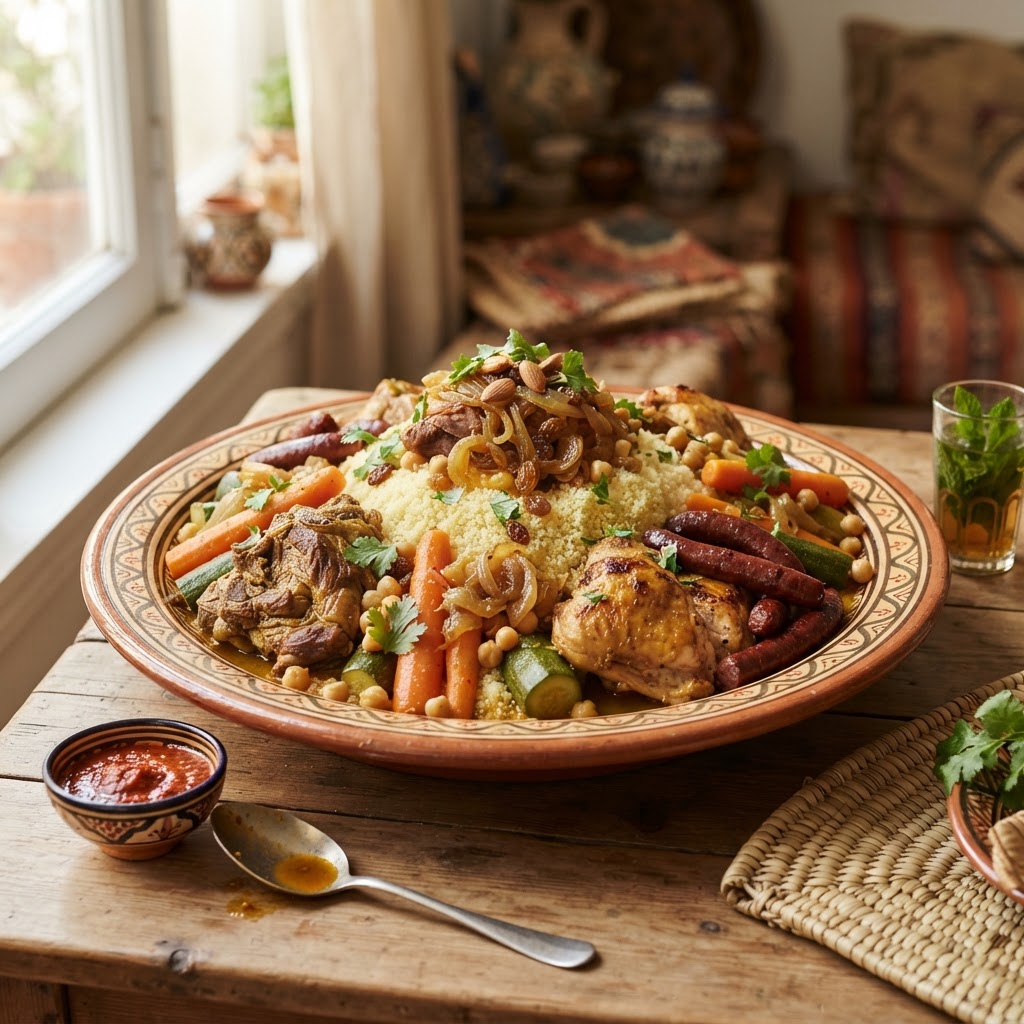
Couscous Royale: North Africa's Grand Platter of Lamb, Chicken, and Merguez
October 14, 2026

Seattle Cream Cheese Dog Bites: Hadley Long's 1989 Pioneer Square Invention
October 14, 2026
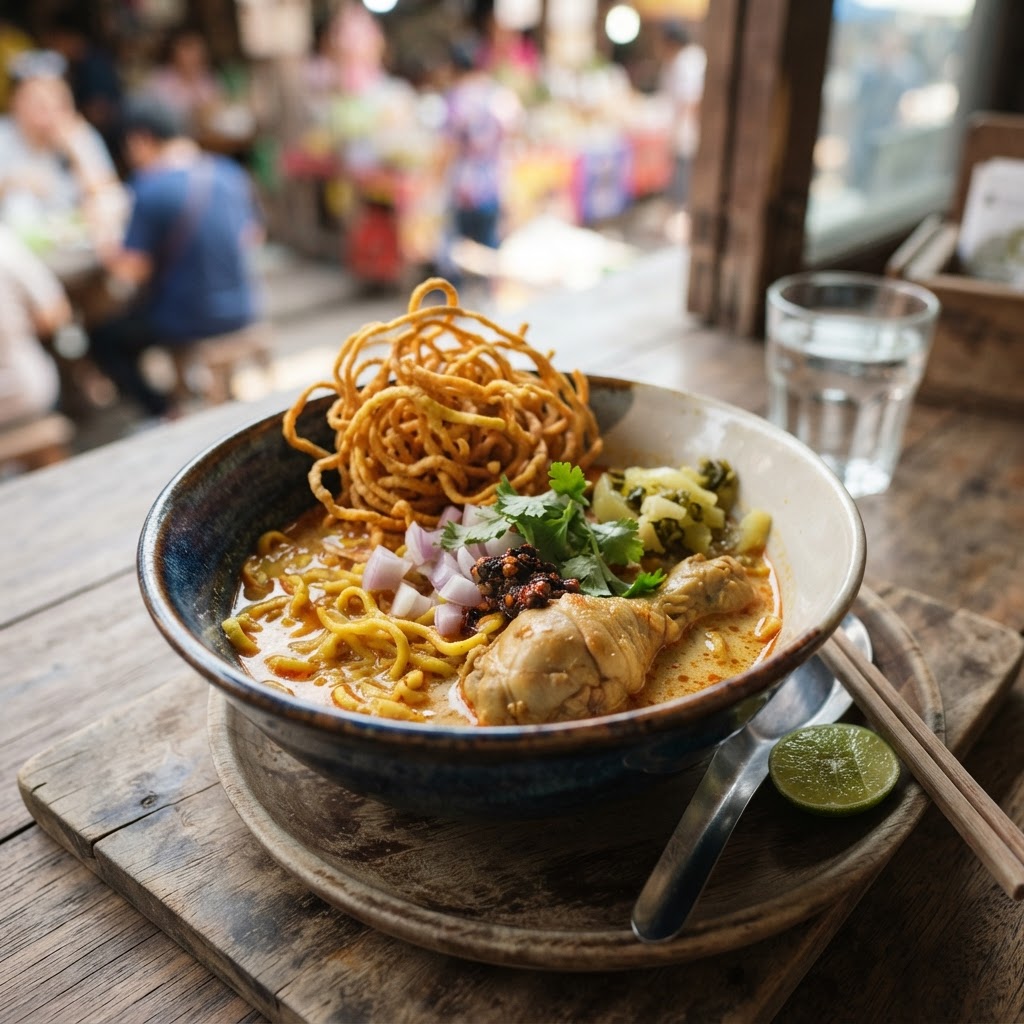
Khao Soi: Chiang Mai's Northern Thai Coconut Curry Noodles
October 13, 2026
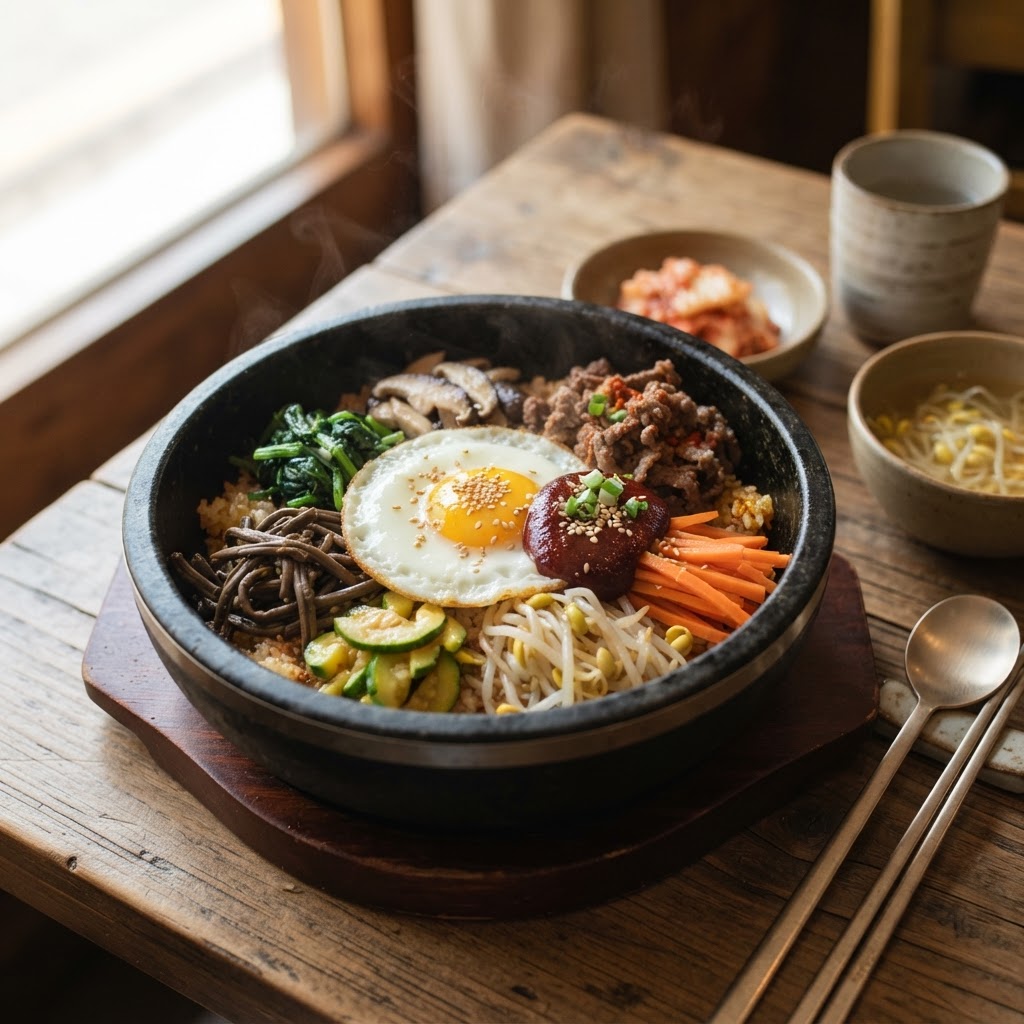
Korean Bibimbap: Jeonju's Joseon Dynasty Mixed Rice
October 11, 2026
Spaghetti alla Carbonara: Rome's World War II Pasta of Eggs, Guanciale, and Pecorino
October 9, 2026