Jianbing: China's 2,000-Year-Old Street Breakfast from the Three Kingdoms to Tianjin
June 12, 2026
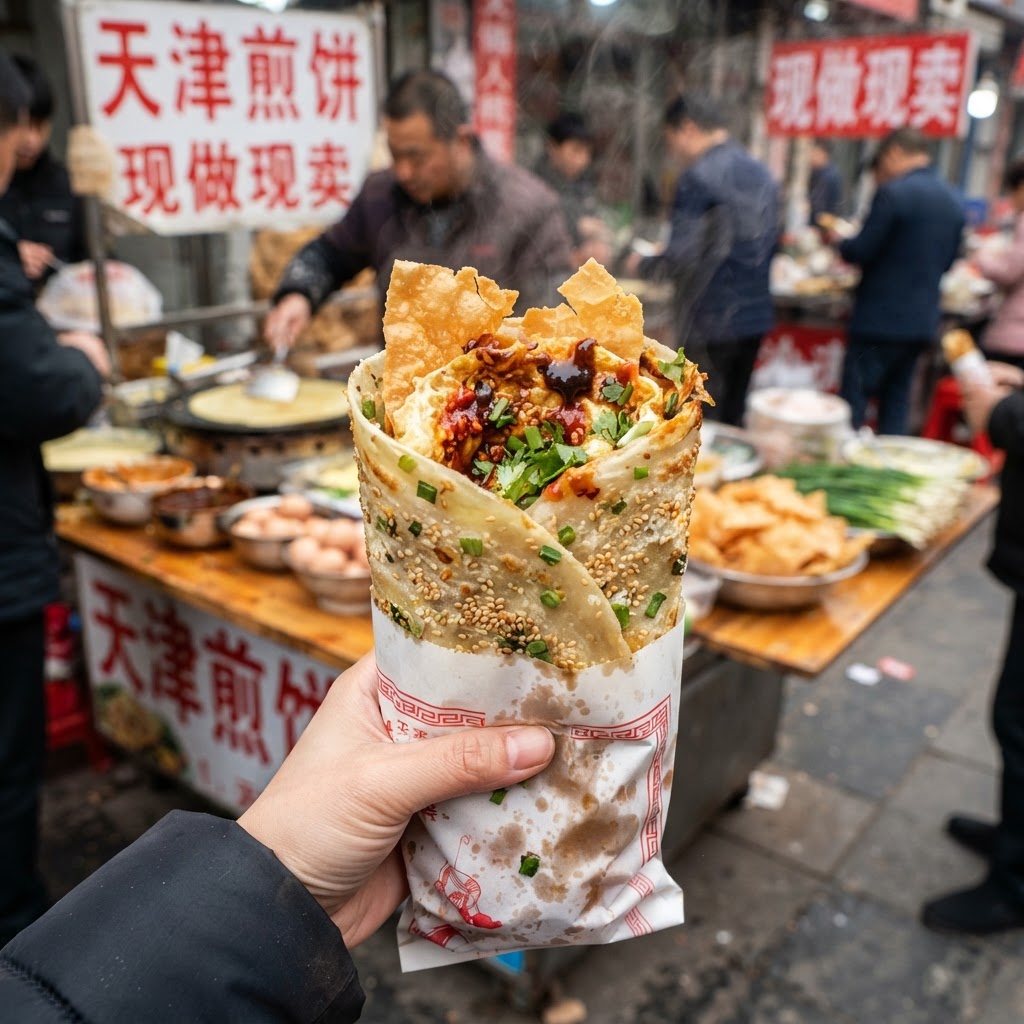
Jianbing — China's most popular street breakfast — is a savory crepe made from a thin batter spread on a circular griddle, topped with egg, scallions, cilantro, sesame seeds, and a variety of sauces, then folded around a crispy fried cracker (baocui) or a youtiao (fried dough stick). It's a breakfast that's been eaten in China for over 2,000 years, with a history that stretches from the Three Kingdoms period to the modern streets of Tianjin and Beijing. And in recent years, jianbing has gone global, with vendors in London, New York, and San Francisco bringing this ancient breakfast to new audiences.
The history of jianbing is one of the oldest in Chinese cuisine. According to legend, jianbing originated in Shandong Province during the Three Kingdoms period (AD 220–280). The story goes that the brilliant military strategist Zhuge Liang, chancellor of the Shu Han state, encountered the problem of feeding his soldiers after they lost their woks during a military campaign. He ordered his cooks to mix water with wheat flour to make a batter, then spread it on shields or flat copper griddles over a flame to cook it into a thin pancake. The dish raised the soldiers' morale and helped them win the battle. After that, jianbing was passed down through generations in Shandong province and gradually spread to different parts of China.
Whether or not the Zhuge Liang legend is literally true, jianbing has been a part of northern Chinese cuisine for centuries. The traditional jianbing originated in Shandong and flourished in Tianjin, where it was transformed into the dish we know today. In Shandong, the crepe is made from wheat flour and is topped with crispy fried crackers called "baocui" (薄脆, literally "thin and crispy"). In Tianjin, the most famous variation — "jianbing guozi" — uses a crepe made from mung bean flour (which contains less gluten, making it softer) and is topped with youtiao (fried dough stick) instead of baocui.
Jianbing is one of the most popular street breakfasts in China, found in cities across the country. The dish is never pre-cooked — each jianbing is made to order on a circular griddle, with the batter spread in a thin circle, an egg cracked and spread over the top, and the toppings and sauces added while the crepe cooks. The entire process takes about 2–3 minutes, and the jianbing is served hot, folded into a neat package that you can eat with your hands while walking.
The key to a great jianbing is the batter and the sauces. The traditional Tianjin batter is made from mung bean flour, which gives the crepe a distinctive soft texture and slightly nutty flavor. The Shandong version uses wheat flour. The sauces are essential: sweet bean sauce (tianmianjiang), chili sauce, and sometimes hoisin or a fermented bean paste. The combination of the soft crepe, the savory egg, the fresh herbs, the sweet and spicy sauces, and the crispy filling creates a complex, satisfying breakfast that's both comforting and energizing.
In recent years, jianbing has gone international. Western vendors, inspired by the jianbing they tried in China, have started jianbing businesses in London, New York, San Francisco, and other cities. These international versions sometimes adapt the fillings — one shop in San Francisco uses dried tuna fish floss, while another uses millet flour and buckwheat flour in the batter. Some add fried chicken, char siu pork, or other fillings to make the jianbing a more substantial meal. But the basic technique — the thin crepe, the egg, the sauces, the crispy filling, and the fold — remains the same.
Our Mimosavated version makes a classic Tianjin-style jianbing with a mung bean flour batter, egg, scallions, cilantro, sesame seeds, sweet bean sauce, chili sauce, and crispy fried crackers.
Ingredients (makes 4 jianbing):
The Batter: - 3 ½ oz mung bean flour (available at Asian markets) - 1 ¾ oz all-purpose flour - 1 teaspoon salt - 1 cup water - 1 teaspoon vegetable oil
The Fillings and Toppings: - 4 large eggs - 4 spring onions (scallions), finely chopped - 1 small bunch fresh cilantro, chopped - 2 tablespoons toasted sesame seeds - 4 crispy fried crackers (baocui — available at Asian markets; or substitute with crispy wonton wrappers or tortilla chips)
The Sauces: - 4 tablespoons sweet bean sauce (tianmianjiang) - 2 tablespoons chili sauce (Lao Gan Ma chili crisp or sriracha) - 2 tablespoons hoisin sauce (optional) - 1 tablespoon sesame oil (for drizzling)
Optional Additional Toppings: - 1 tablespoon fermented black beans (douchi), chopped - Pickled vegetables (mustard greens or radish), chopped - Hot sauce to taste - Lettuce leaves (1 per jianbing, optional)
Making the Batter: In a bowl, whisk together the mung bean flour, all-purpose flour, salt, and water until smooth. The batter should be thin and pourable — like crepe batter. If it's too thick, add a little more water. Let the batter rest for 15–20 minutes.
*(Note: If you can't find mung bean flour, you can use all-purpose flour for the entire batter. The crepe will be slightly different in texture but still delicious.)*
Cooking the Jianbing: Heat a large, flat griddle or non-stick skillet over medium heat. Lightly oil the surface. Pour a ladle of batter (about ⅓ cup) onto the center of the griddle. Using the back of the ladle or a crepe spreader, spread the batter in a circular motion into a thin, even circle about 10 inches in diameter. Cook for about 30 seconds, until the batter is set but not yet browned.
Crack an egg over the center of the crepe. Using the back of a spoon or the ladle, spread the egg evenly over the entire surface of the crepe. Cook for about 1 minute, until the egg is mostly set.
Sprinkle the chopped scallions, cilantro, and sesame seeds over the egg. Drizzle with a little sesame oil. Flip the crepe — egg side down — and cook for 30 seconds. Flip back — egg side up.
Adding the Sauces and Filling: Spread the sweet bean sauce and chili sauce (and hoisin if using) over the surface of the crepe. Add the crispy fried cracker (baocui) to the center. Add any optional toppings (pickled vegetables, fermented black beans, lettuce).
Folding the Jianbing: Fold the crepe in half over the filling. Then fold in the sides to create a neat rectangle or square package. Transfer to a plate or a piece of parchment paper. The jianbing should be a neat, portable package with the crispy filling inside and the savory crepe and egg on the outside.
Serving: Serve immediately, while hot and crispy. The jianbing should be eaten with your hands — pick it up and bite into it, enjoying the contrast of the soft, savory crepe, the crispy cracker inside, and the sweet and spicy sauces. It's the ultimate Chinese street breakfast — portable, satisfying, and packed with flavor.
The Mimosa Pairing Logic: Jianbing is savory, aromatic, and slightly spicy. The ideal mimosa pairing is a classic Prosecco mimosa — orange juice and Prosecco. The bright, acidic citrus provides a refreshing contrast to the savory, saucy crepe, while the Prosecco's effervescence cleanses the palate between bites. A yuzu mimosa is also excellent — yuzu is a citrus used in East Asian cuisine that perfectly complements the Chinese flavors of the dish. Avoid heavy or sweet mimosas — jianbing is savory and aromatic, and you need something bright and clean to balance it.
Reference Links: - Jianbing on Wikipedia (Three Kingdoms, Zhuge Liang, Shandong, Tianjin): Wikipedia - Why Jianbing is China's Most Popular Street Breakfast (Shandong, 220–280 AD): Serious Eats - From Kongming to Tianjin: Jian Bing (Three Kingdoms, street food): Sandwich Tribunal - Jianbing: A Guide To China's Favorite Street Food (Shandong origin, Tianjin style): The World of Chinese
Make-Ahead: The batter can be made up to 1 day ahead and refrigerated — bring to room temperature before cooking. The sauces can be prepared up to 1 week ahead and refrigerated. The chopped scallions and cilantro can be prepared up to 1 day ahead and refrigerated. The crispy crackers (baocui) can be purchased ready-made and stored at room temperature for up to 1 month. Jianbing is best made and served immediately — the contrast between the soft crepe and the crispy filling is the whole point, and the crispness doesn't last. If you need to hold a jianbing for a few minutes, keep it warm in a 194°F/200°F oven — do not microwave, as it will become soggy. Leftover jianbing is not recommended — the crepe and the filling lose their texture when stored. Reheating in a dry skillet for 1 minute per side can partially restore the texture.
Pro Tips: Use a large, flat griddle or non-stick skillet — the surface needs to be large and flat so you can spread the batter into a thin, even circle. A crepe pan works well. Control the heat — the griddle should be medium-hot; too hot and the batter burns before the egg is cooked; too cool and the crepe doesn't get crispy. Spread the batter thin and even — use the back of the ladle or a crepe spreader to spread the batter in a circular motion; the thinner the batter, the crispier the crepe. Spread the egg evenly — crack the egg onto the crepe and spread it with the back of a spoon so it covers the entire surface; this ensures every bite has egg. Don't overcook — the jianbing should be cooked through but still soft; overcooking makes it tough and dry. Use good sauces — the sweet bean sauce (tianmianjiang) and the chili sauce are essential; they give the jianbing its characteristic flavor. If you can't find tianmianjiang, hoisin sauce is a reasonable substitute. Add the crispy filling just before folding — the cracker (baocui) or youtiao should be crispy when you bite into the jianbing; if you add it too early, it gets soggy from the sauces. Fold neatly — the jianbing should be a neat, portable package; fold it so the fillings stay inside and it's easy to eat with your hands. Serve immediately — jianbing is at its absolute best when freshly made, hot, and crispy; the contrast between the soft crepe and the crispy filling is the defining quality of the dish.
Rate this recipe
Be the first to rate this recipe
to submit your rating.
Recent Posts

Couscous Royale: North Africa's Grand Platter of Lamb, Chicken, and Merguez
October 14, 2026

Seattle Cream Cheese Dog Bites: Hadley Long's 1989 Pioneer Square Invention
October 14, 2026

Khao Soi: Chiang Mai's Northern Thai Coconut Curry Noodles
October 13, 2026

Korean Bibimbap: Jeonju's Joseon Dynasty Mixed Rice
October 11, 2026

Spaghetti alla Carbonara: Rome's World War II Pasta of Eggs, Guanciale, and Pecorino
October 9, 2026