Takoyaki: Osaka's Octopus Balls and the 1935 Street Food Genius of Tomekichi Endo
August 15, 2026
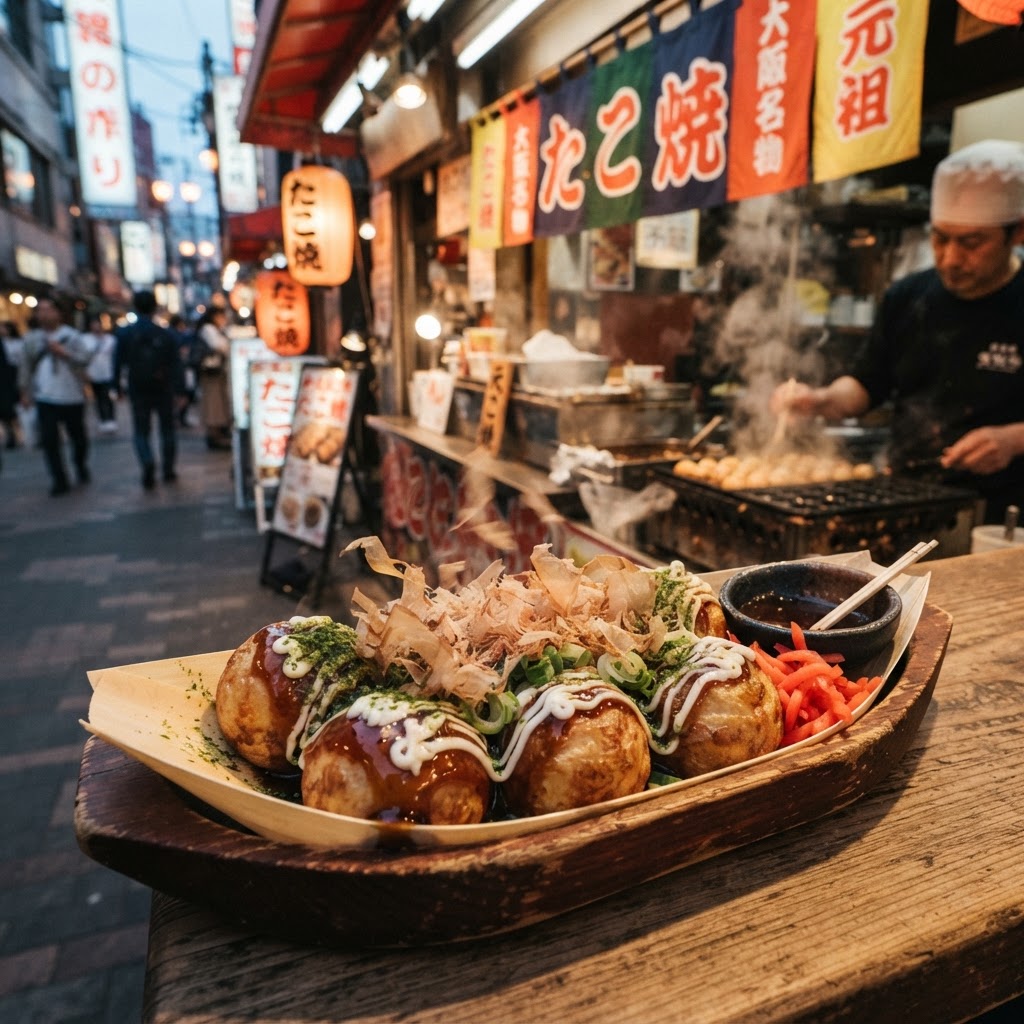
Takoyaki — "grilled octopus" — are the golden, globular street snack of Osaka: crisp-shelled balls of wheat batter, molten and custardy within, each hiding a chewy nugget of octopus, brushed with dark sweet-savory sauce, squiggled with mayonnaise, dusted with aonori seaweed, and crowned with bonito flakes that wave and dance in the steam. According to Wikipedia, the snack was first popularized in Osaka, where street vendor Tomekichi Endo is credited with its invention in 1935 — combining an existing egg-and-octopus snack from Akashi called akashiyaki with a wheat batter; his shop, Aizuya, still exists and serves the original style, without sauce or mayonnaise. The sauce-and-mayo style was established after the Pacific War, and today Osaka's sidewalk griddles turn out the balls by the millions. Just One Cookbook calls takoyaki the icon of Osaka's street food — crisp yet pillowy, made in a special cast-iron mold pan, and eaten dangerously hot off the pick.
Takoyaki is the perfect party food because it is theater: the molten balls are cooked in front of everyone with skewers and a practiced turn — four quarter-turns per ball until a sphere forms — and everyone at the party will want to try their hand at the flip.
About the Ingredients
The batter — a thin dashi-rich batter of flour, egg, dashi, and soy, loose enough to flow into the mold's channels; the dashi is what makes the inside set to custard instead of bread.
Octopus — boiled octopus, cut into 1/2-inch cubes; tender, briny, and the whole point — do not overdo the cube size or every bite is a chew.
Tenkasu and beni shoga — crisp tempura scraps for lightness inside the shell, and pickled red ginger for its sharp pink bite; both are traditional and both matter.
The finish — takoyaki sauce, Japanese mayonnaise, aonori, and katsuobushi bonito flakes that dance in the heat.
Ingredients (makes about 32 balls, serves 8): - 1 1/2 cups all-purpose flour - 2 eggs - 1 3/4 cups cold dashi (or chicken broth with a pinch of dashi powder) - 1 tsp soy sauce, 1/2 tsp salt - 8 oz boiled octopus, cut into 1/2-inch cubes - 1/3 cup tenkasu (tempura scraps) - 2 tbsp minced beni shoga (pickled red ginger) - 2 green onions, sliced - Takoyaki sauce, Japanese mayonnaise, aonori, katsuobushi to finish
Instructions: Whisk the flour, eggs, dashi, soy, and salt into a thin, lump-free batter — thinner than pancake batter — and let it rest 15 minutes. Heat a takoyaki pan (or an aebleskiver pan) over medium and oil the molds generously. Fill each hemisphere almost to overflowing with batter, then drop in a cube of octopus, a pinch of tenkasu, beni shoga, and green onion. Cook 3 minutes until the bottom sets and crisps, then use skewers to quarter-turn each ball, tucking the excess batter under so it forms a sphere; keep turning every minute or so, 4–6 minutes total, until the balls are evenly golden and crisp outside and still molten within. Brush with takoyaki sauce, squiggle with mayonnaise, shower with aonori and bonito, and serve immediately — with the traditional warning: they are lava-hot in the center.
The Mimosa Pairing Logic: Osaka's snack meets the sparkling brunch beautifully through yuzu. The yuzu honey mimosa is the born match — the yuzu's bright, floral citrus plays against the sauce's sweet-salt depth, and the honey rounds the octopus's brine. The toasted sesame yuzu sake mimosa is the full-Japan alternative, its toasted sesame echoing the savory pan and sparkling sake lifting the whole board. Both turn the takoyaki griddle into a brunch.
Reference Links: - Takoyaki (Osaka, Tomekichi Endo, 1935): Wikipedia - Takoyaki Recipe (Japanese Octopus Balls): Just One Cookbook
Make-Ahead: The batter can be made an hour ahead and kept cold (whisk before using); all the fillings and finishes can be prepped in advance. The balls themselves must be cooked to order — a reheated takoyaki is a dumpling-shaped apology. For a party, run the pan in waves and pass each batch hot.
Pro Tips: Keep the batter thin — thick batter makes bready, heavy balls. Oil the molds generously and let the batter overflow; the overflow is what becomes the sphere when you tuck it under. Turn in quarter steps and be patient — a rushed flip makes flat-bottomed eggs. Warn every guest about the molten center; the first bite is a rite of passage.
Rate this recipe
Be the first to rate this recipe
to submit your rating.
Recent Posts
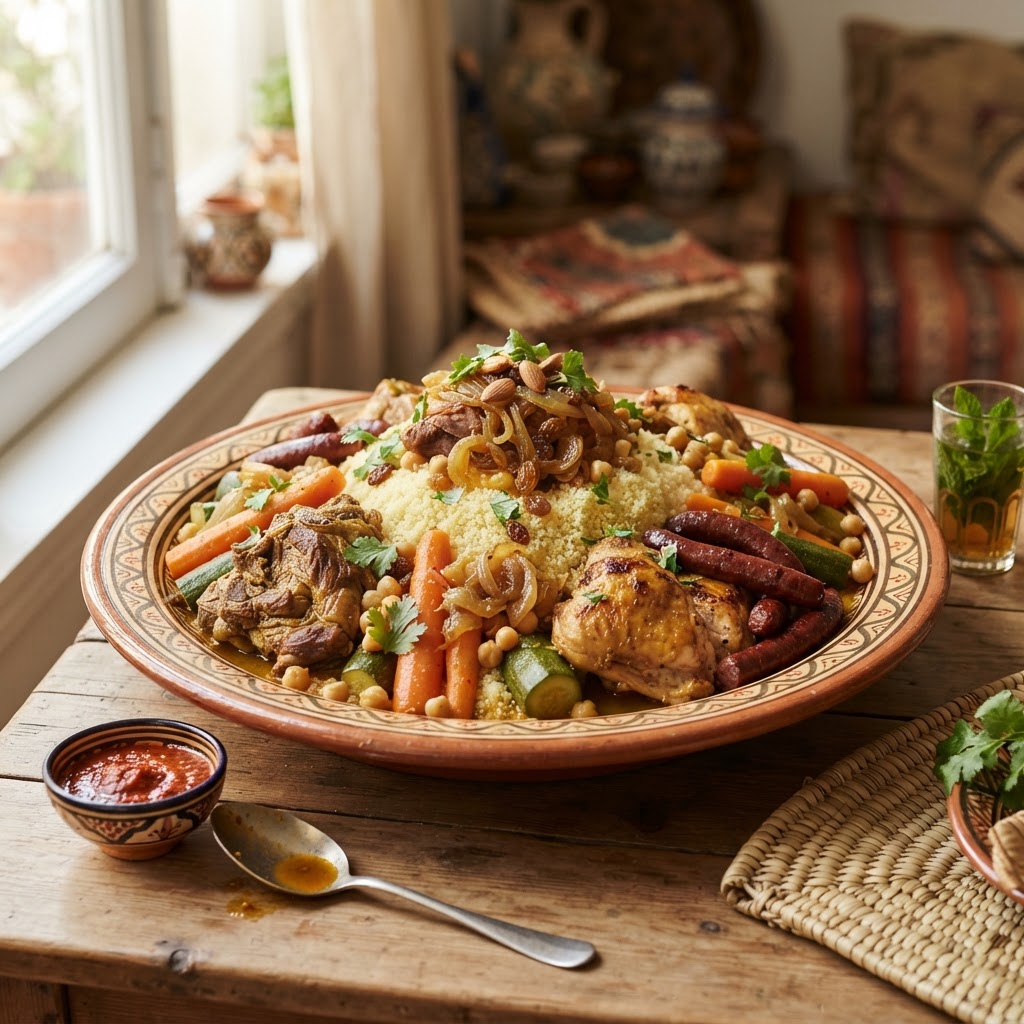
Couscous Royale: North Africa's Grand Platter of Lamb, Chicken, and Merguez
October 14, 2026
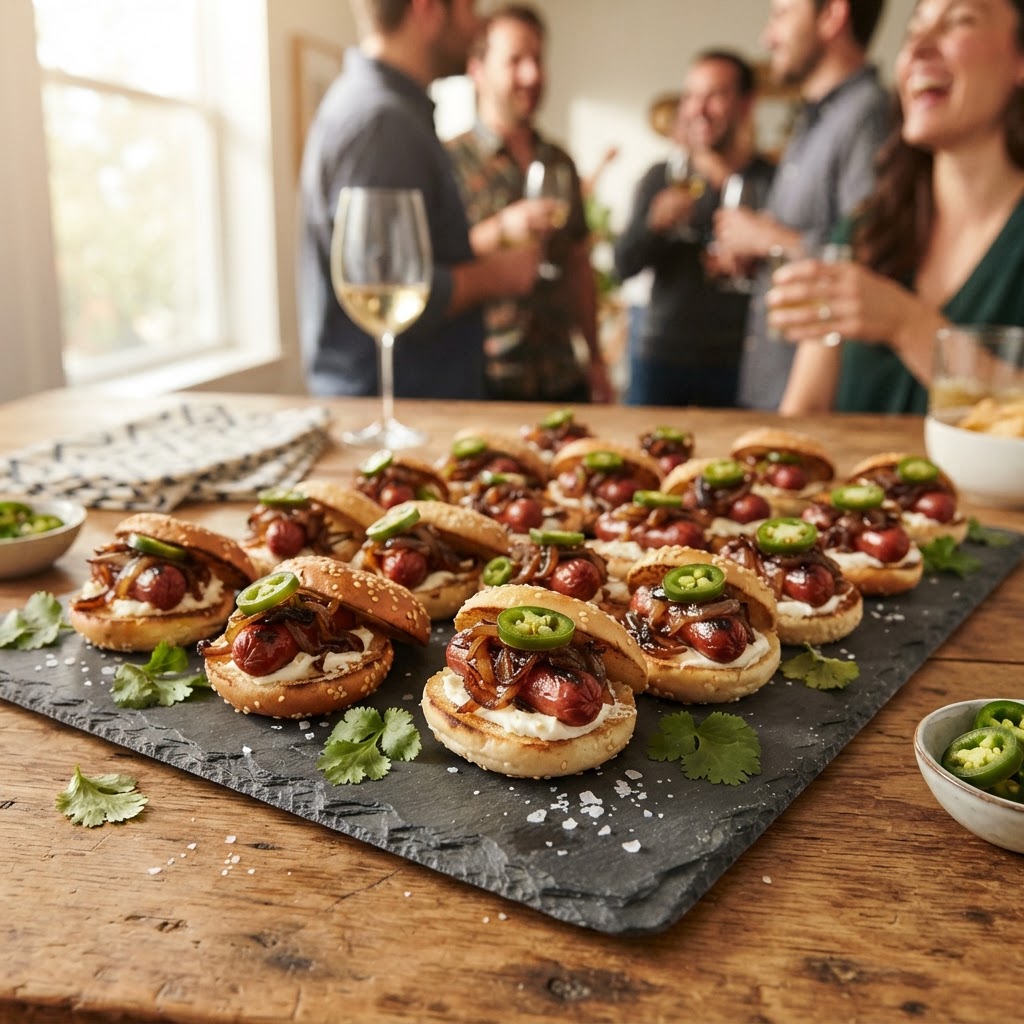
Seattle Cream Cheese Dog Bites: Hadley Long's 1989 Pioneer Square Invention
October 14, 2026
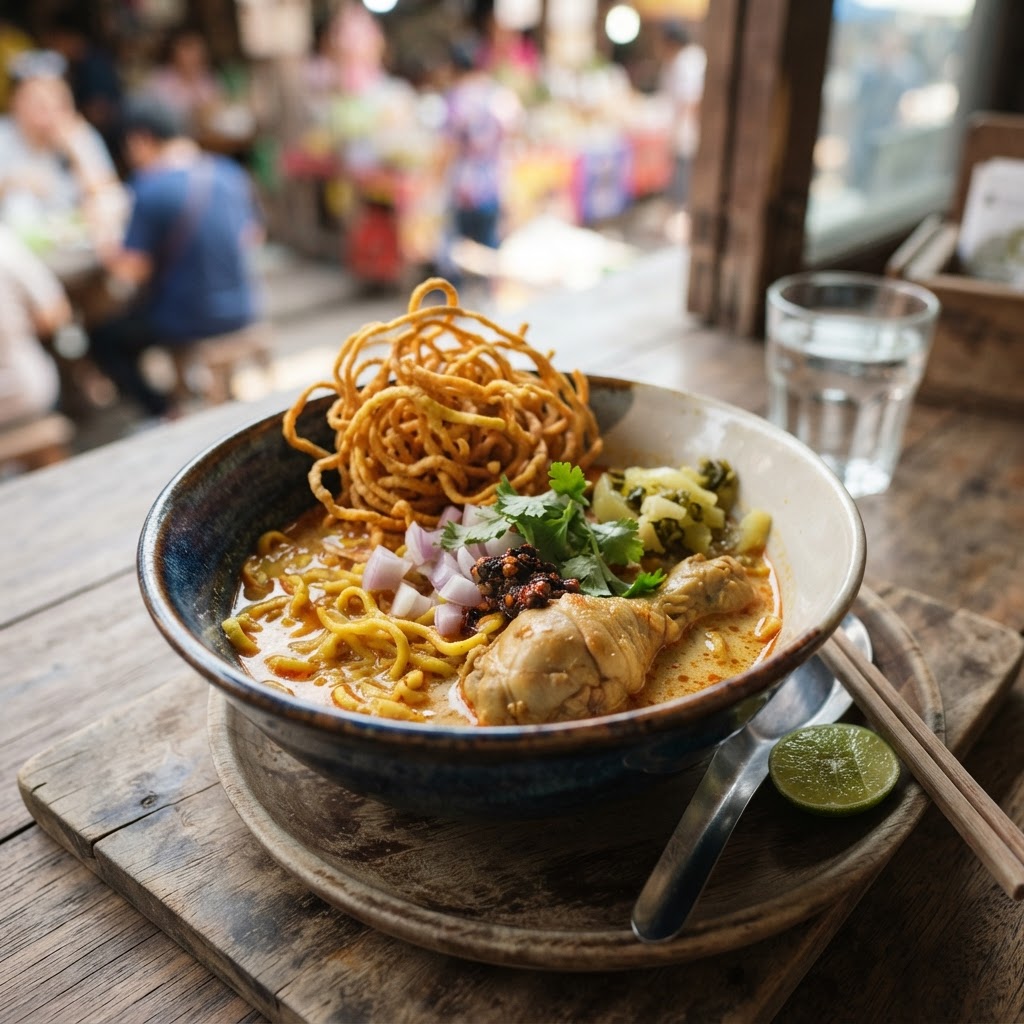
Khao Soi: Chiang Mai's Northern Thai Coconut Curry Noodles
October 13, 2026
Korean Bibimbap: Jeonju's Joseon Dynasty Mixed Rice
October 11, 2026
Spaghetti alla Carbonara: Rome's World War II Pasta of Eggs, Guanciale, and Pecorino
October 9, 2026