German Bienenstich: The Bee Sting Cake with a Honey-Almond Crown and a Custard Heart
July 25, 2026
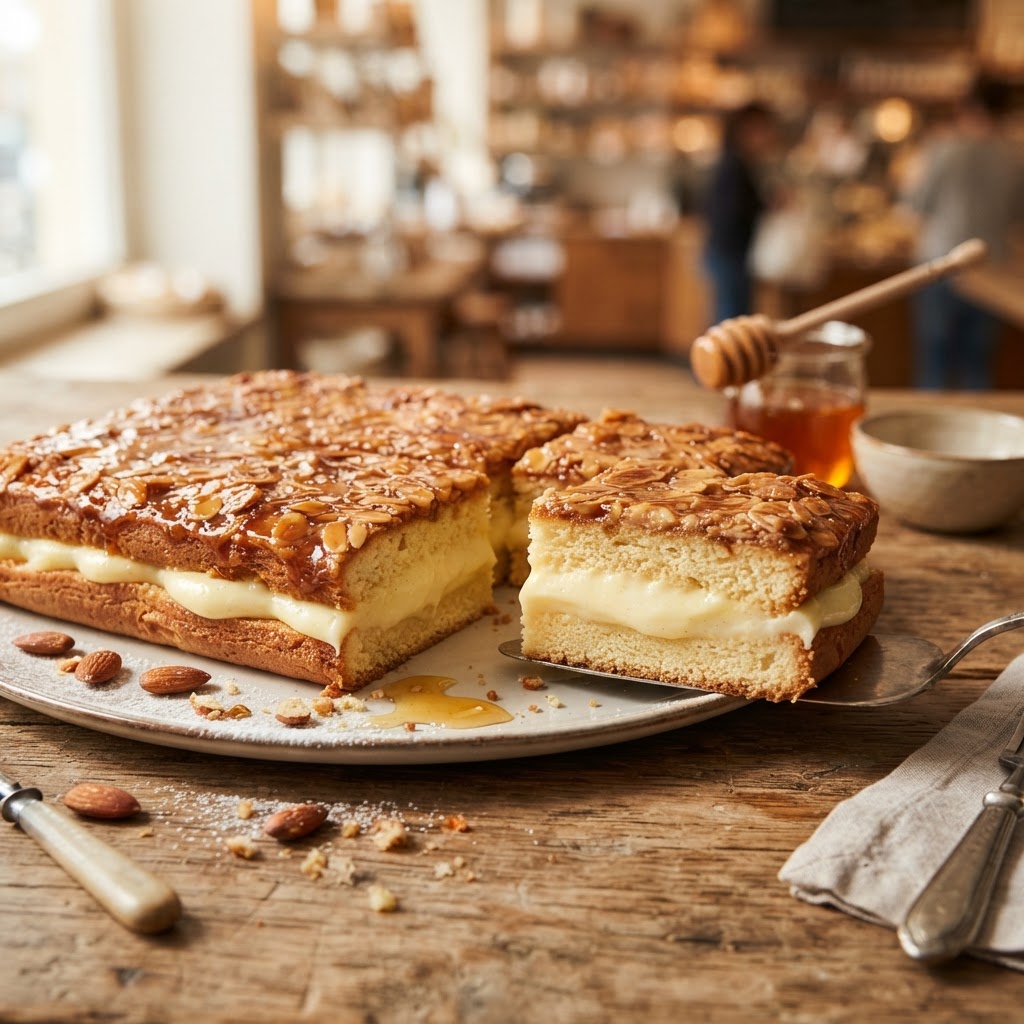
Bienenstich — the "bee sting cake" — is one of Germany's great celebration cakes: a soft, yeasted sheet cake crowned with a glossy, caramelized honey-almond topping and split and filled with thick vanilla custard. The name carries its legend. In the most-told version, bakers defending the Rhineland town of Andernach in the 15th century hurled beehives down on raiders and drove them off; one baker was stung, and the town baked a honey cake in victory. Wikipedia is more sober, noting that the earliest German and Swiss recipes date to the beginning of the 20th century, when reliable cool storage made a cream-filled cake practical. Either way, the cake endures: International Desserts Blog describes the classic structure — two layers of yeast cake, a vanilla cream filling, and a crunchy, gooey honey-almond topping — and it remains a café and Konditorei staple across Germany.
The genius of bienenstich is the contrast. The topping bakes onto the cake while hot — butter, honey, sugar, and cream bubbling over a blanket of sliced almonds, setting into something between praline and toffee. Then the cooled cake is sliced through its waist and filled with silky custard, so every forkful carries crunch, cream, and tender crumb at once.
About the Ingredients
Yeast dough — the traditional base, enriched with butter, milk, and a little sugar; lighter than a butter cake and sturdy enough to hold a custard filling.
Honey and almonds — the crown; the honey caramelizes with sugar and cream into a glossy, chewy praline, and the almonds toast into it.
Vanilla custard — the classic German filling is a cooked pastry cream or lightly sweetened whipped cream; pastry cream is the sturdier, more decadent choice.
Ingredients (serves 12): For the dough: - 3 cups all-purpose flour - 2 1/4 tsp (1 packet) active dry yeast - 1/4 cup sugar - 1/2 tsp salt - 1 cup warm milk - 6 tbsp butter, melted - 1 large egg For the topping: - 6 tbsp butter - 1/3 cup sugar - 1/4 cup honey - 1/4 cup heavy cream - 1 1/2 cups sliced almonds For the custard filling: - 2 cups whole milk - 1/2 cup sugar - 4 large egg yolks - 3 tbsp cornstarch - 1 tsp vanilla extract or the seeds of half a vanilla bean
Instructions: Make the dough: proof the yeast in the warm milk with a pinch of the sugar, then knead everything into a soft, slightly sticky dough. Cover and rise until doubled, about an hour. Press into a buttered 9×13 pan, rise again 20 minutes. Meanwhile, simmer the topping ingredients except the almonds in a saucepan until the sugar dissolves; stir in the almonds and spread over the dough. Bake at 350°F for 20–25 minutes, until the topping is deep golden and bubbling. Cool completely. Make the custard: heat the milk; whisk the yolks, sugar, and cornstarch, temper, and cook until thick; add vanilla, then chill with plastic wrap pressed to the surface. To assemble, flip the cake topping-down onto a board, split horizontally, spread the custard over the bottom half, and set the top back in place, topping up. Chill one hour; cut into squares with a sharp knife.
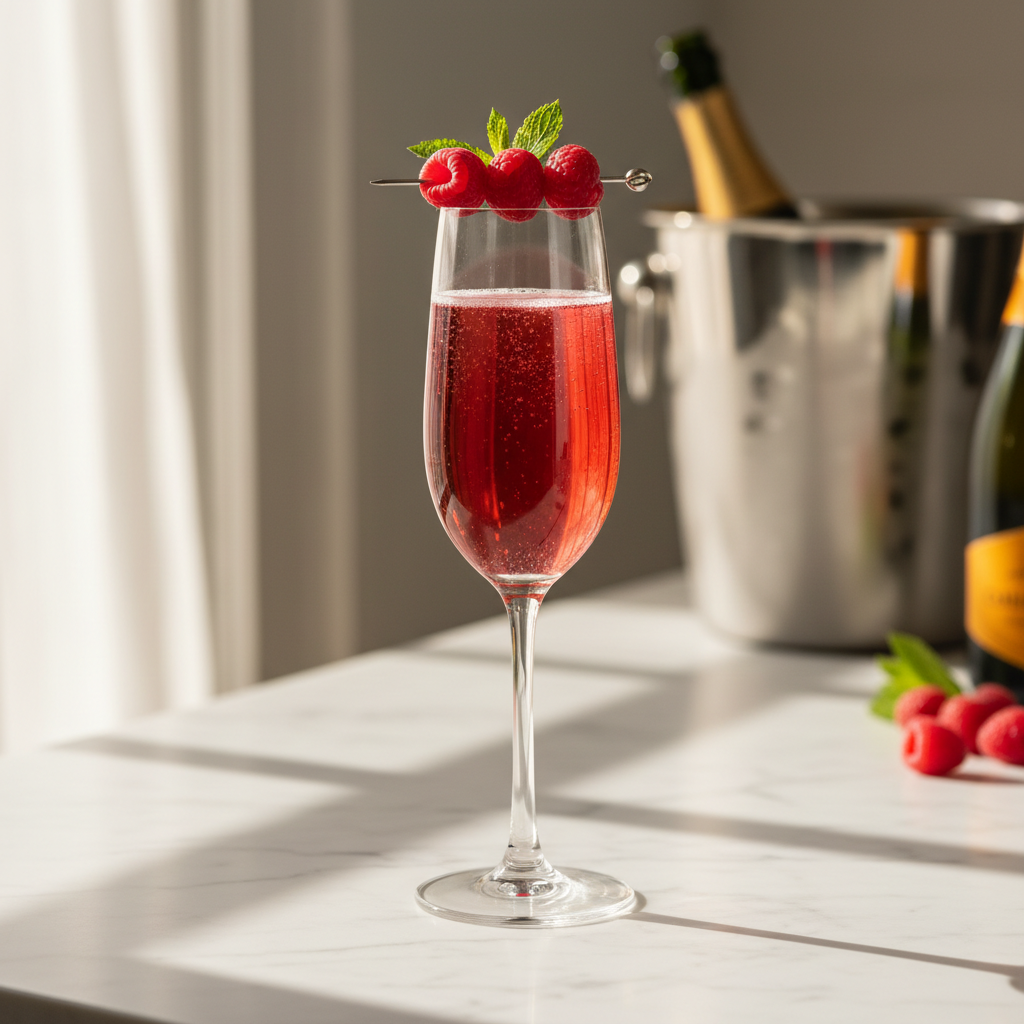
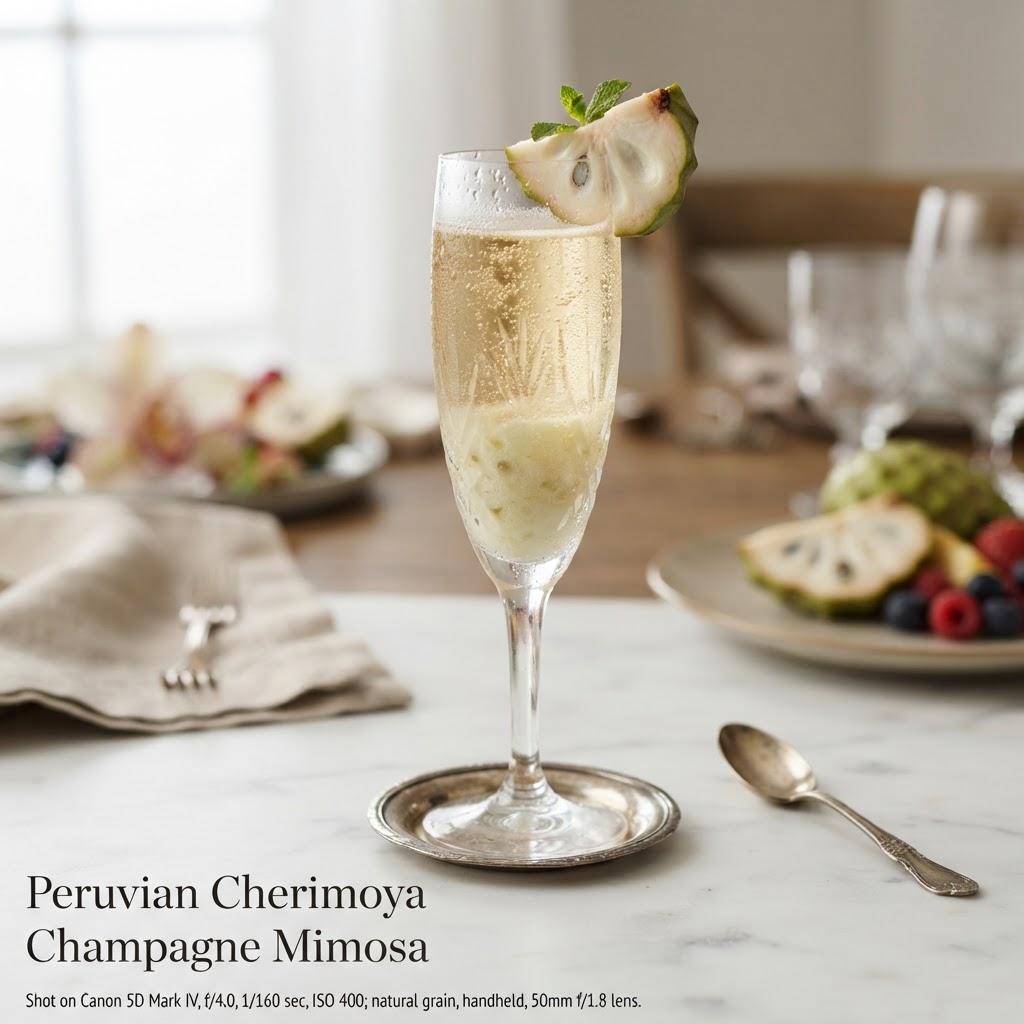
The Mimosa Pairing Logic: Honey and almond call for florals and fruit. The fig-honey Champagne mimosa is the natural-born partner — its fig and honey mirror the topping, its bubbles lifting the custard's richness. A lavender-elderflower mimosa is equally lovely, a floral Konditorei counterpoint. This is the German afternoon Kaffee und Kuchen, translated to brunch.
Reference Links: - Bienenstich (bee sting cake, earliest 20th-century recipes): Wikipedia - Authentic Bienenstich Kuchen: International Desserts Blog - What's in a Bee Sting Cake (Bienenstich): One Stop German Shop
Make-Ahead: Each element can be made a day ahead — dough and topping baked one day, custard chilled overnight — then filled the morning of serving. The filled cake is best within 24 hours, before the topping softens; cut only what you'll serve.
Pro Tips: Cool the cake completely before splitting and filling — warm cake plus custard means a soggy bottom. Use a long serrated knife and a gentle sawing motion to split evenly. Toast the almonds lightly before adding them to the topping for deeper flavor. Press plastic wrap directly onto the custard's surface so it doesn't form a skin. Cut with a knife wiped between slices — the honey-almond crown is sticky business.
Rate this recipe
Be the first to rate this recipe
to submit your rating.
Perfect Mimosa Pairings
Mimosas that pair perfectly with this dish
Recent Posts
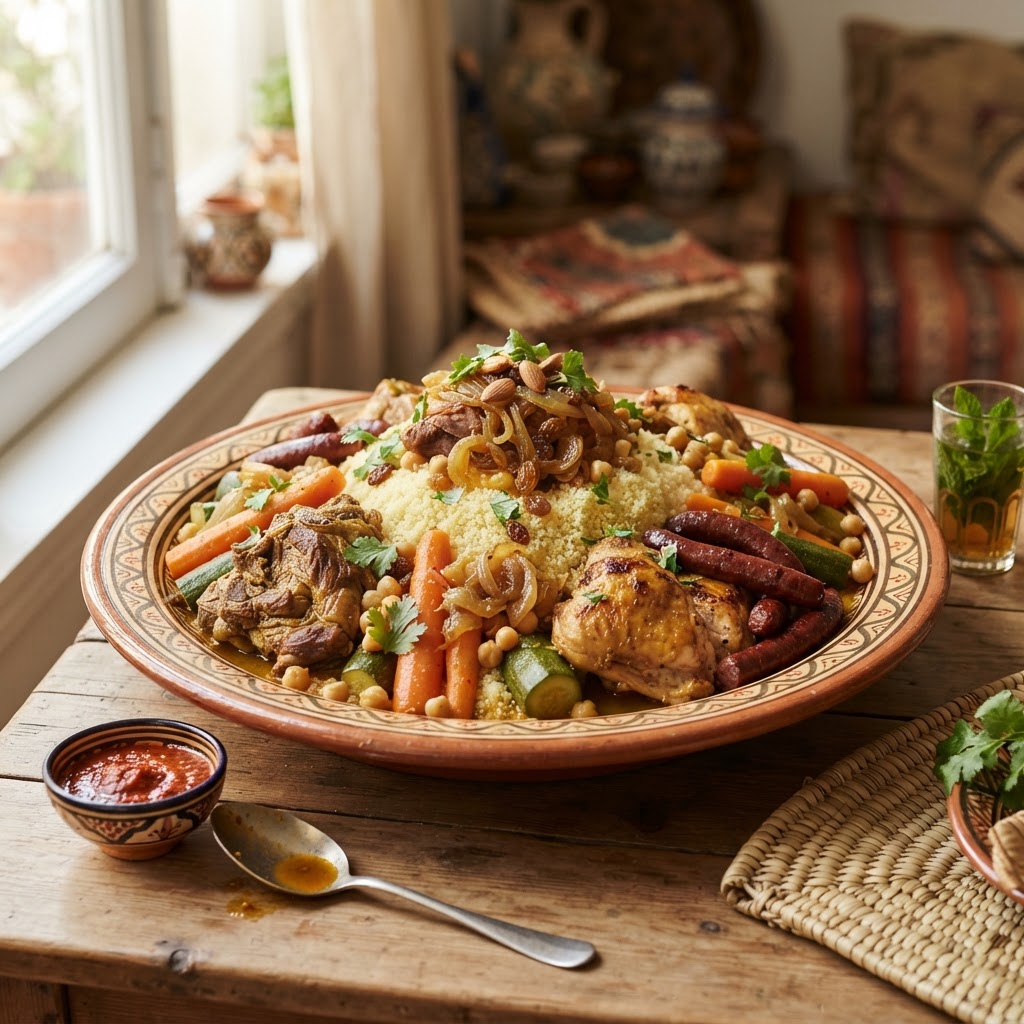
Couscous Royale: North Africa's Grand Platter of Lamb, Chicken, and Merguez
October 14, 2026
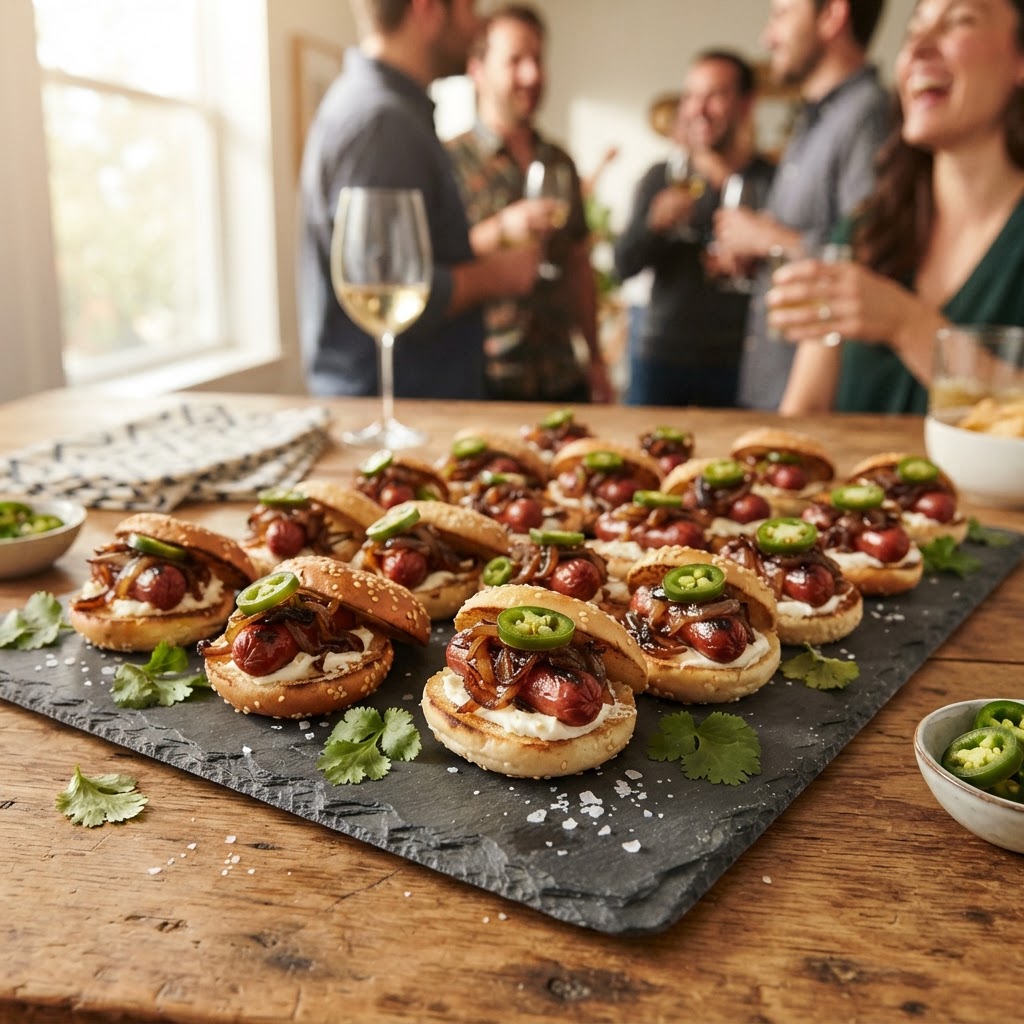
Seattle Cream Cheese Dog Bites: Hadley Long's 1989 Pioneer Square Invention
October 14, 2026

Khao Soi: Chiang Mai's Northern Thai Coconut Curry Noodles
October 13, 2026
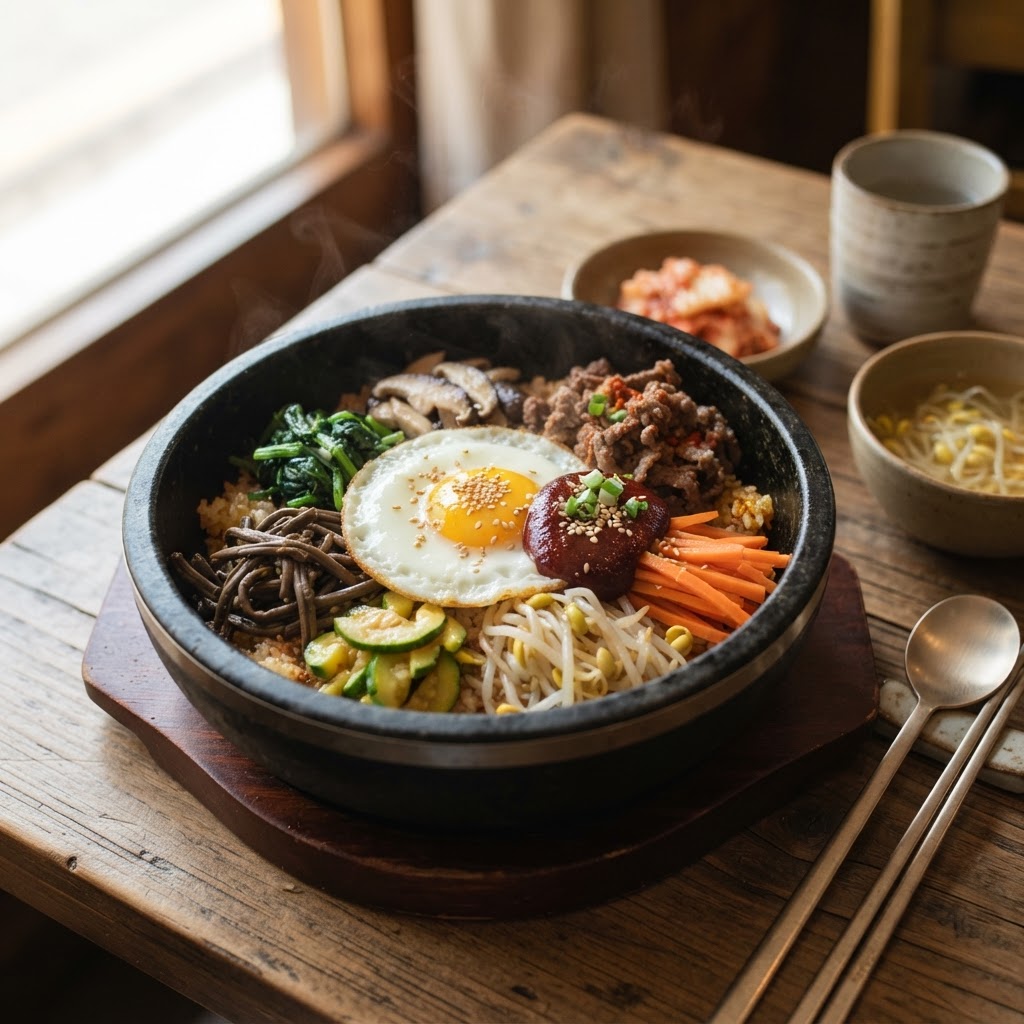
Korean Bibimbap: Jeonju's Joseon Dynasty Mixed Rice
October 11, 2026
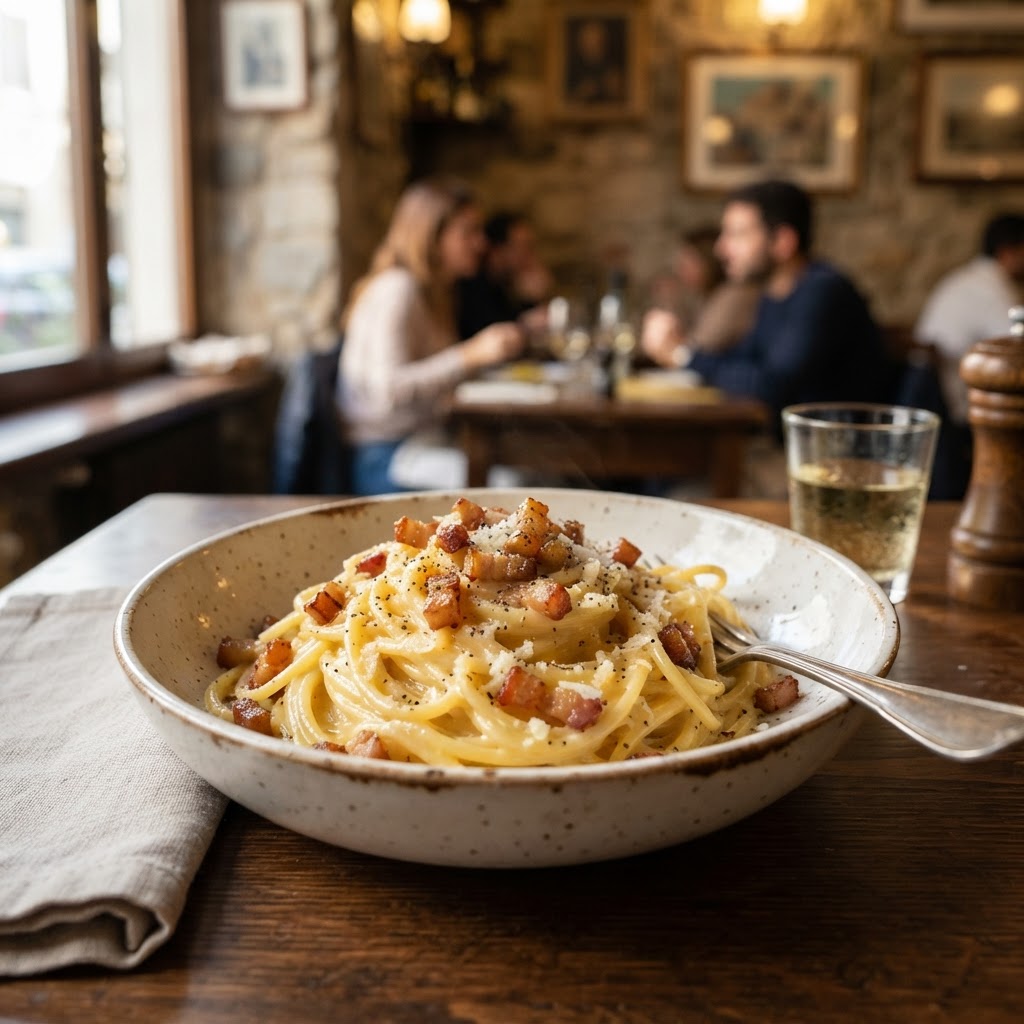
Spaghetti alla Carbonara: Rome's World War II Pasta of Eggs, Guanciale, and Pecorino
October 9, 2026