Gelato al Moscato d'Asti con Pesche
March 14, 2026
Gelato is not Italian ice cream. It is its own thing — denser, warmer in serving temperature, and lower in fat, which means flavors hit your palate with more intensity. Where American ice cream can feel like eating cold flavored butter, gelato feels like eating the actual ingredient, just frozen. The difference comes down to technique: less air (overrun), less fat, and a warmer serving temperature that lets flavors bloom on your tongue.
The history of gelato in Italy is usually credited to Bernardo Buontalenti, a Florentine architect, stage designer, and all-around Renaissance polymath who worked for the Medici court in the 16th century. Buontalenti is said to have created a frozen dessert of cream, sugar, and egg yolks for a banquet honoring a visiting Spanish delegation. The Medici family used gelato as a diplomatic tool — serving this exotic frozen dessert was a way of demonstrating Florence's wealth and sophistication. From there, gelato spread through Italy and, eventually, the world.
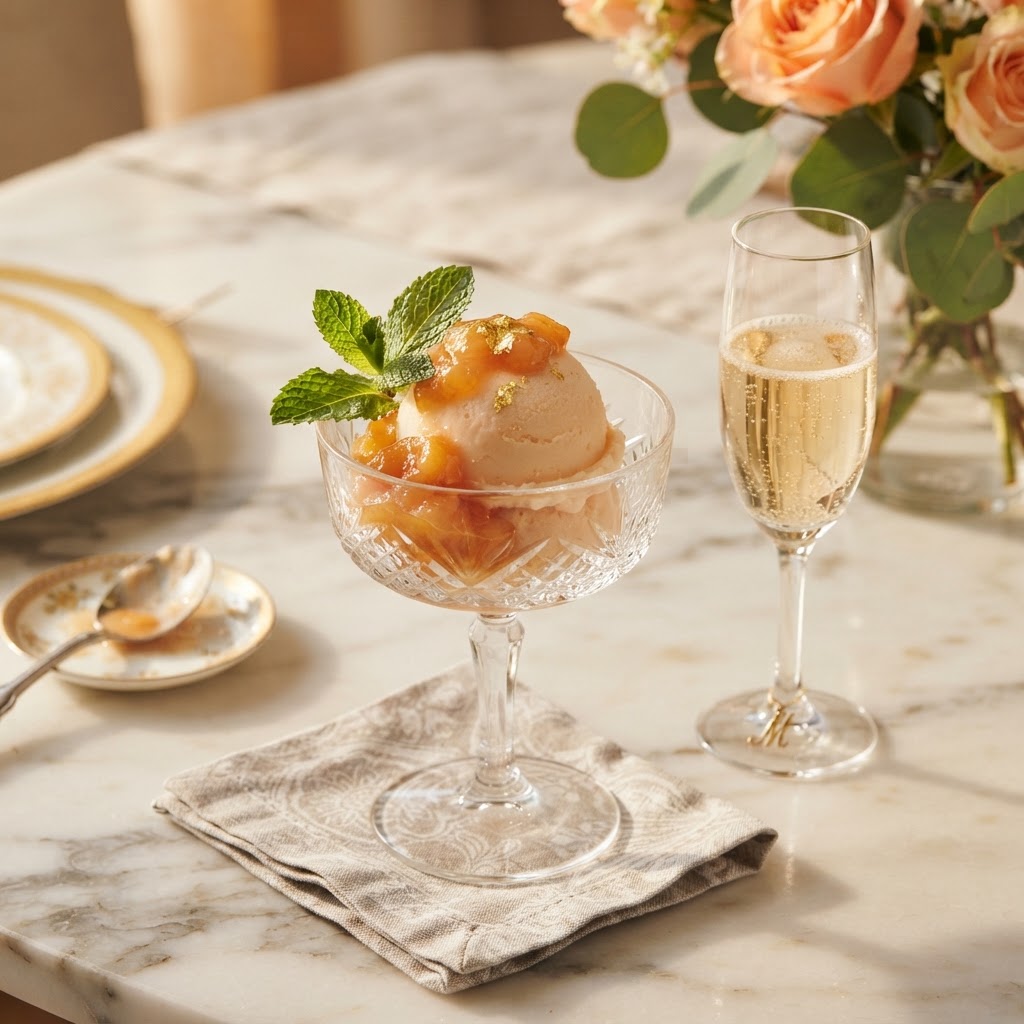
Our Mimosavated version uses Moscato d'Asti — a lightly sweet, low-alcohol, gently sparkling wine from Piedmont with intense aromas of peach, apricot, and orange blossom. The wine is reduced into a syrup and folded into a classic gelato base, then served with a warm peach compote that echoes the Moscato's signature fruit character.
Ingredients (serves 6-8):
The Moscato Gelato: - 1 cup whole milk - 1 cup heavy cream - 4 large egg yolks - 3 ½ oz granulated sugar - ½ cup Moscato d'Asti, reduced to 2 ⅔ tbsp (see instructions) - 1 teaspoon vanilla extract - A pinch of salt
The Peach Compote: - 4 ripe but firm peaches, peeled and sliced - 1 ¾ oz granulated sugar - 3 ⅓ tbsp Moscato d'Asti (not reduced — fresh from the bottle) - 1 strip of lemon zest - 1 tablespoon lemon juice - A sprig of fresh thyme
Making the Moscato Reduction: Pour ½ cup of Moscato d'Asti into a small saucepan. Bring to a gentle simmer over medium-low heat and reduce until you have about 2 ⅔ tbsp of concentrated, syrupy liquid — this takes about 15-20 minutes. The reduction concentrates the peach and floral aromas while removing the alcohol. Let cool completely.
Making the Gelato Base: In a saucepan, combine the milk, cream, and half the sugar. Heat gently until steaming but not boiling — about 158°F (160°F). In a separate bowl, whisk the egg yolks with the remaining sugar until thick and pale. Slowly pour the warm milk mixture into the yolks, whisking constantly, to temper them.
Return the mixture to the saucepan and cook over low heat, stirring constantly with a wooden spoon or heatproof spatula, until the custard thickens enough to coat the back of the spoon — when you draw a finger through the custard on the spoon, it should leave a clean line. This is the classic "nappé" stage, at about 180°F (180°F). Do not let it boil or you'll have scrambled eggs.
Remove from heat and strain through a fine-mesh sieve into a clean bowl. Stir in the cooled Moscato reduction, vanilla extract, and salt. Let cool to room temperature, then cover and refrigerate for at least 4 hours, or overnight.
Churning: Churn in an ice cream maker according to the manufacturer's instructions — usually 20-30 minutes. The gelato should be the consistency of soft-serve. Transfer to a container and freeze for at least 2 hours to firm up. Gelato is best served within 24 hours of churning.
Making the Peach Compote: In a saucepan, combine the peach slices, sugar, fresh Moscato d'Asti, lemon zest, lemon juice, and thyme. Cook over medium-low heat for 8-10 minutes, until the peaches soften and the liquid reduces to a light syrup. Remove the lemon zest and thyme. Let cool to warm or room temperature.
Serving: Scoop the gelato into coupe glasses or small bowls. Spoon the warm peach compote over and around the gelato. The contrast of cold gelato and warm peaches is part of the magic. Garnish with a sprig of thyme and serve immediately.
The Mimosa Pairing Logic: The Moscato d'Asti in the gelato makes a peach mimosa the obvious pairing — the peach in the mimosa echoes the peach compote and the Moscato's fruit character. A classic orange mimosa also works beautifully, as the citrus brightens the gelato's creamy sweetness. For a more adventurous pairing, a passionfruit mimosa adds tropical contrast that plays against the stone fruit. Avoid heavy, tannic, or very dry mimosas — the dessert's delicate floral notes need a gentle, fruity companion.
Reference Links: - Bernardo Buontalenti and gelato history: Fantastic Florence - History of gelato: Cooking Italy - Moscato d'Asti wine guide: Wine Folly - Gelato vs. ice cream technique: Serious Eats - Custard base technique (nappé): King Arthur Baking
Make-Ahead: The gelato base can be made up to 2 days ahead and refrigerated. The churned gelato can be frozen for up to a week, but it's best within 24 hours. The peach compote can be made a day ahead and gently reheated before serving. If you don't have an ice cream maker, freeze the base in a shallow container and stir vigorously every 30 minutes for 3-4 hours to break up ice crystals.
Pro Tips: The most important thing about gelato is the fat-to-milk ratio — it's lower than ice cream, which is why the flavors are more intense. Don't be tempted to increase the cream; it dilutes the flavor and makes the texture more like ice cream. The egg yolk custard must be cooked gently — use a thermometer if you're not confident. Straining through a fine-mesh sieve is non-negotiable; it removes any bits of cooked egg and ensures a silky texture. The gelato should be served at a slightly warmer temperature than ice cream — about -54°F (10°F) — so take it out of the freezer 5-10 minutes before serving. The Moscato reduction is key: adding raw Moscato directly would add too much liquid and the alcohol would prevent proper freezing.
Rate this recipe
Be the first to rate this recipe
to submit your rating.
Recent Posts

Couscous Royale: North Africa's Grand Platter of Lamb, Chicken, and Merguez
October 14, 2026

Seattle Cream Cheese Dog Bites: Hadley Long's 1989 Pioneer Square Invention
October 14, 2026

Khao Soi: Chiang Mai's Northern Thai Coconut Curry Noodles
October 13, 2026

Korean Bibimbap: Jeonju's Joseon Dynasty Mixed Rice
October 11, 2026

Spaghetti alla Carbonara: Rome's World War II Pasta of Eggs, Guanciale, and Pecorino
October 9, 2026