Spanish Gazpacho Shooters with Olive Oil & Chive
May 31, 2026
A gazpacho shooter is consumed in one or two seconds — but if the tomatoes are good and the soup is made the night before, those two seconds make an impression. Cold, intensely flavored, silky-smooth from a three-minute high-powered blend and overnight rest — it's the aperitivo moment that signals this is a serious event.
Gazpacho comes from Andalusia and dates back to the Moorish occupation of Spain. The modern version — ripe tomatoes, cucumber, green pepper, garlic, sherry vinegar, excellent olive oil, and day-old bread as the emulsifier — is one of the most finely constructed dishes in Spanish cuisine. The bread is not optional. The overnight rest is not optional. The tomato quality is everything.
Ingredients (makes 24 shooter portions, about 2 ⅔ tbsp each): - 2¼ lbs ripe, deeply flavored tomatoes (heirloom or Roma; never use hothouse tomatoes out of season) - 1 small cucumber (about 7 oz), peeled, seeded, roughly chopped - 1 green bell pepper, seeded and roughly chopped - 2 garlic cloves - 3 tablespoons extra virgin olive oil (use the best you have — it sets the flavor) - 2 tablespoons good-quality sherry vinegar (Jerez; or substitute red wine vinegar) - 1 ¾ oz day-old white bread, crusts removed, soaked in water for 5 minutes and squeezed - 1 teaspoon salt, or more to taste - Ice water for adjusting consistency (approximately 3 ⅓ tbsp-½ cup)
Garnish (per shooter): - A drizzle of exceptional extra virgin olive oil - 3–4 tiny cucumber brunoise cubes - 1 chive, halved - 1 tiny crouton (optional) - Pinch of Maldon sea salt
Gazpacho Instructions: Core and roughly quarter the tomatoes. Combine all gazpacho ingredients in a high-powered blender. Blend on high for 3 full minutes — the long blending time creates an emulsified, silky texture superior to a brief blend. Pass through a fine sieve or chinois, pressing firmly with a ladle to extract maximum liquid. Discard solids.
Taste: the gazpacho should be intensely tomato-flavored, brightly acidic from the vinegar, garlic-forward, and rounded with the olive oil's fruitiness. Adjust salt, vinegar, and olive oil. Add ice water to reach a consistency that flows easily but is not thin — it should coat the glass slightly.
Refrigerate for a minimum of 4 hours; overnight is strongly preferred. Cold intensifies the flavors and smooths the texture dramatically.
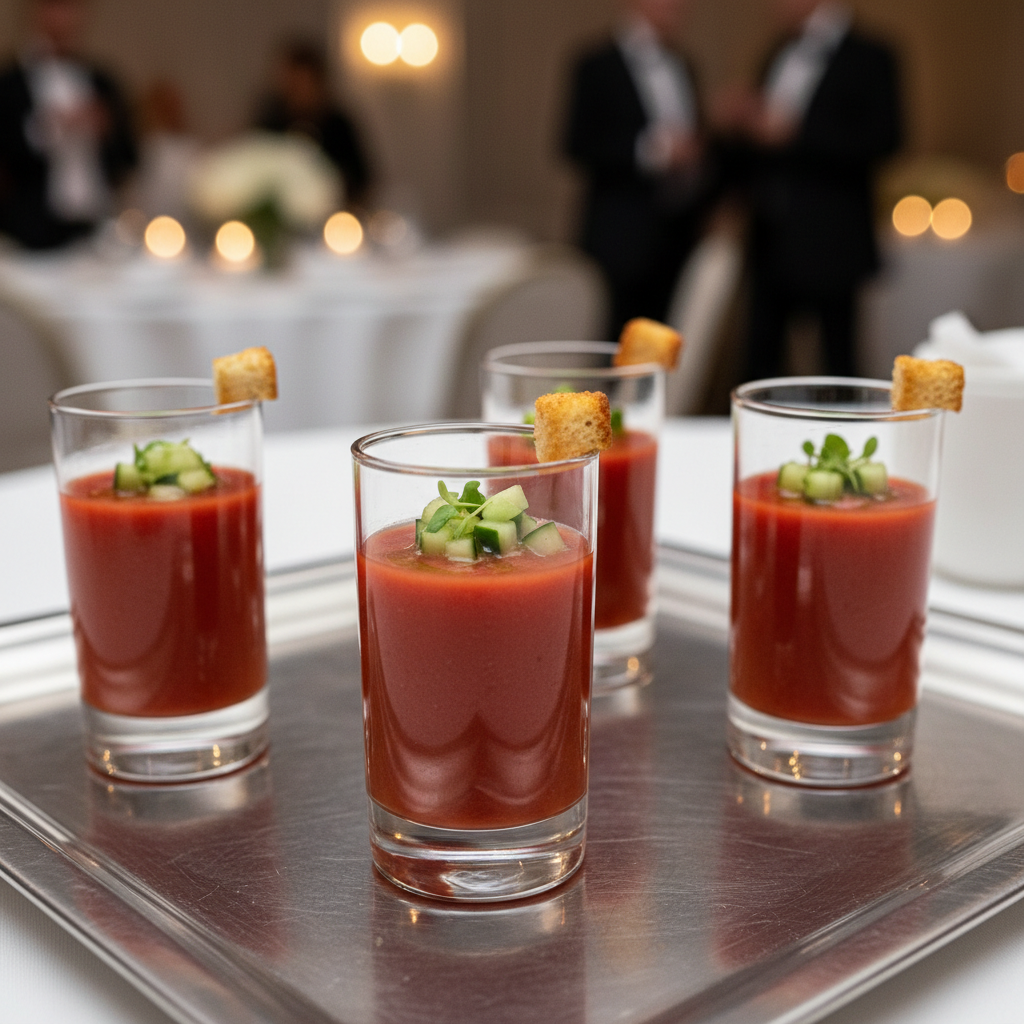
Service: Pour into small shot glasses, espresso cups, or elegant mini glasses (no more than ¼ cup capacity). For the most striking presentation, pour from a small jug. Add garnishes just before serving: a drizzle of olive oil drawn across the surface, 3–4 tiny cucumber cubes, a halved chive, and a pinch of Maldon sea salt.
Serve on a tray, either passed by a server or set out on a table for self-service.
Storage: Gazpacho improves for up to 3 days refrigerated. The oil may separate slightly — stir or blend briefly before serving.
Variations: - Gazpacho Verde: Replace red tomatoes with tomatillos and add avocado and serrano for a green version - Watermelon Gazpacho: Replace half the tomato with watermelon for a sweeter, more tropical version perfect for summer - White Gazpacho (Ajo Blanco): Almonds, garlic, and grapes blended with good olive oil and sherry vinegar for the Moorish original
Pro Tips: The quality of the tomatoes is everything — insipid supermarket tomatoes produce insipid gazpacho. In peak summer season, use the most flavorful tomatoes available (heirloom, garden-grown, or market-sourced). Out of season, high-quality canned San Marzano tomatoes are a better choice than watery fresh tomatoes. The bread acts as an emulsifier and body builder — do not omit it, even for a "lighter" version. The overnight rest is perhaps the single most impactful step — fresh gazpacho is sharp and disjointed; overnight-rested gazpacho is harmonious and deeply complex.
Rate this recipe
Be the first to rate this recipe
to submit your rating.
Recent Posts

Couscous Royale: North Africa's Grand Platter of Lamb, Chicken, and Merguez
October 14, 2026

Seattle Cream Cheese Dog Bites: Hadley Long's 1989 Pioneer Square Invention
October 14, 2026

Khao Soi: Chiang Mai's Northern Thai Coconut Curry Noodles
October 13, 2026

Korean Bibimbap: Jeonju's Joseon Dynasty Mixed Rice
October 11, 2026

Spaghetti alla Carbonara: Rome's World War II Pasta of Eggs, Guanciale, and Pecorino
October 9, 2026