French Dip Sandwich: Philippe Mathieu's 1918 Los Angeles Invention
February 23, 2026
In 1908, Philippe Mathieu, a French immigrant, opened a restaurant in Los Angeles called Philippe the Original. Ten years later, in 1918, according to the restaurant's own history, Mathieu was making a sandwich for a policeman when he accidentally dropped the sliced French roll into a roasting pan filled with hot juices from the oven. The policeman said he would take the sandwich anyway, and he returned the next day with friends asking for more dipped sandwiches. The French Dip was born.
A rival claim comes from Cole's Pacific Electric Buffet, another Los Angeles institution that also says it invented the sandwich around the same time. The dispute has never been settled, but Philippe's has the stronger story, and the restaurant still serves thousands of French Dips every day from its location near Union Station, now run by the third generation of the Martin family, who bought the restaurant from Mathieu in 1927.
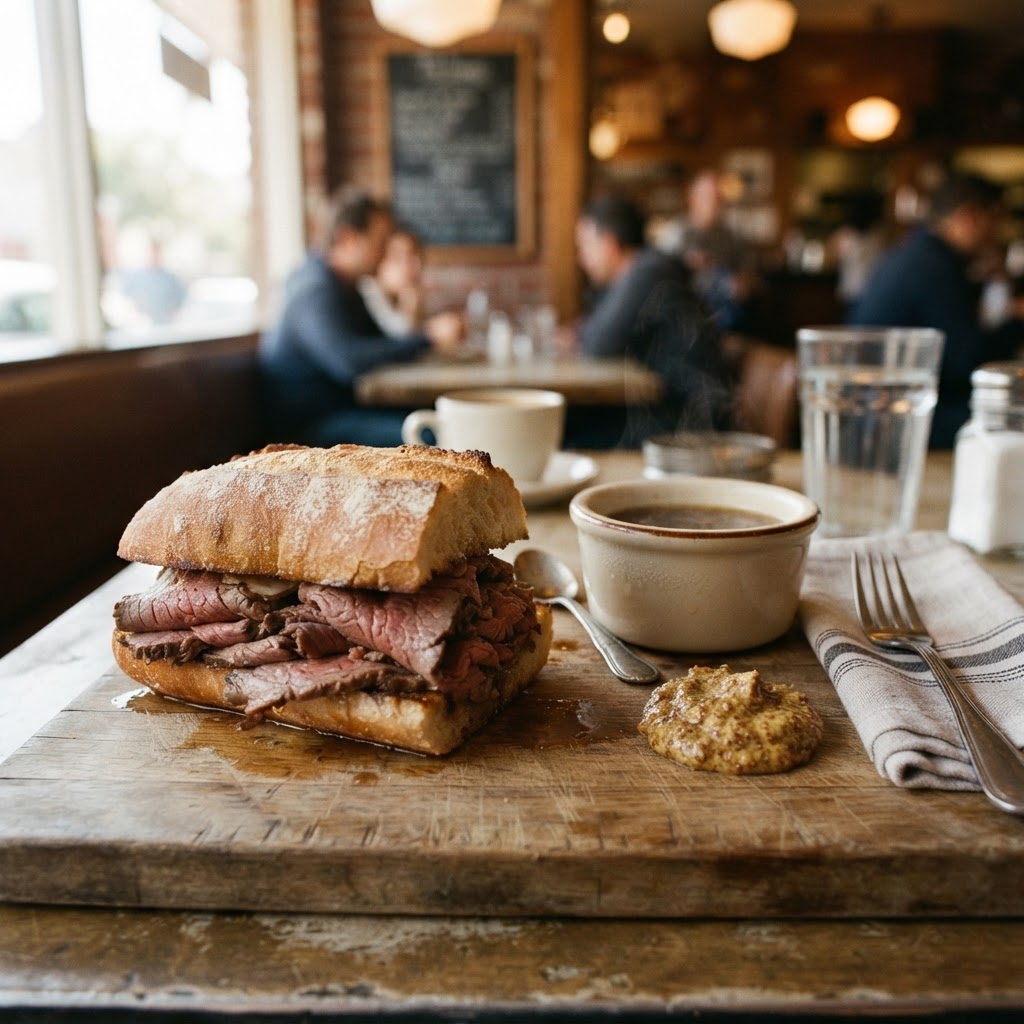
About the Ingredients: The roast beef should be rare and sliced paper-thin, so thin that it nearly shreds when you bite it. The roll is a crusty French baguette, firm enough to hold the juice without falling apart. The jus is the natural gravy from roasting, enriched with beef stock and a splash of red wine. Philippe's serves the sandwich with a side of their house-made hot mustard, which provides a sharp counterpoint to the rich, savory meat.
Ingredients (serves 4): - 2 lb beef roast (top round or chuck eye), trimmed - 4 crusty French rolls, split lengthwise - Kosher salt, freshly ground black pepper, and garlic powder
The Au Jus: - 1 onion, quartered - 1 carrot, chopped - 2 celery stalks, chopped - 4 garlic cloves, smashed - 2 tablespoons olive oil - 4 cups beef stock - 1 cup dry red wine - 2 bay leaves - 1 teaspoon fresh thyme - 1 tablespoon Worcestershire sauce - Salt and pepper to taste
Instructions: Preheat the oven to 450°F. Season the beef roast generously with salt, pepper, and garlic powder. Place it on a rack in a roasting pan and roast for 15 minutes at 450°F, then reduce the heat to 325°F and continue roasting for 45 to 60 minutes, until a meat thermometer reads 125°F for medium-rare. Remove from the oven and let it rest for 20 minutes.
While the beef roasts, heat the olive oil in a saucepan over medium heat. Add the onion, carrot, celery, and garlic. Cook, stirring occasionally, until the vegetables are deeply browned, about 15 minutes. Add the red wine and scrape up any browned bits from the bottom of the pan. Add the beef stock, bay leaves, thyme, and Worcestershire sauce. Bring to a simmer and cook for 30 minutes, until the liquid has reduced by about a third. Strain the jus through a fine mesh sieve and season with salt and pepper to taste.
Slice the rested beef as thinly as possible against the grain. Divide the sliced beef among the four split rolls. Pour the hot au jus into small bowls or ramekins. To serve Philippe's style, quickly dip the cut side of the roll into the jus before assembling the sandwich, then serve with additional jus on the side for dipping.
The Mimosa Pairing Logic: The savory, beefy richness of the French Dip calls for a mimosa with bright acidity and fruit to cleanse the palate. The Classic Champagne Mimosa is the ideal partner, its orange and champagne cutting through the richness of the jus. For a more robust pairing, the Cranberry Holiday Mimosa adds a tart, spiced note that complements the beef.
Reference Links: - French Dip – Wikipedia - Philippe The Original – Restaurant History
Make-Ahead: The beef can be roasted a day ahead and refrigerated. The au jus can be made up to 3 days ahead and reheated. Slice the beef cold (it is easier to slice thinly when cold) and warm it briefly in the hot jus before assembling the sandwiches. The rolls should be fresh, bought the same day you serve.
Pro Tips: The key to a proper French Dip is slicing the beef thin enough. If you have a meat slicer, use it. If not, chill the roast thoroughly in the refrigerator and use a very sharp knife to slice it as thin as you can manage. The jus should be deeply flavored but not salty. Taste it after straining and adjust. If it tastes flat, add a splash more Worcestershire or a pinch of salt. The dip should be quick, just a second or two in the hot jus, not a soak that makes the bread fall apart.
Rate this recipe
Be the first to rate this recipe
to submit your rating.
Recent Posts

Couscous Royale: North Africa's Grand Platter of Lamb, Chicken, and Merguez
October 14, 2026

Seattle Cream Cheese Dog Bites: Hadley Long's 1989 Pioneer Square Invention
October 14, 2026

Khao Soi: Chiang Mai's Northern Thai Coconut Curry Noodles
October 13, 2026

Korean Bibimbap: Jeonju's Joseon Dynasty Mixed Rice
October 11, 2026

Spaghetti alla Carbonara: Rome's World War II Pasta of Eggs, Guanciale, and Pecorino
October 9, 2026