Halo-Halo: The Philippines' Beloved Dessert of Mixed Summer Sweets
August 12, 2026
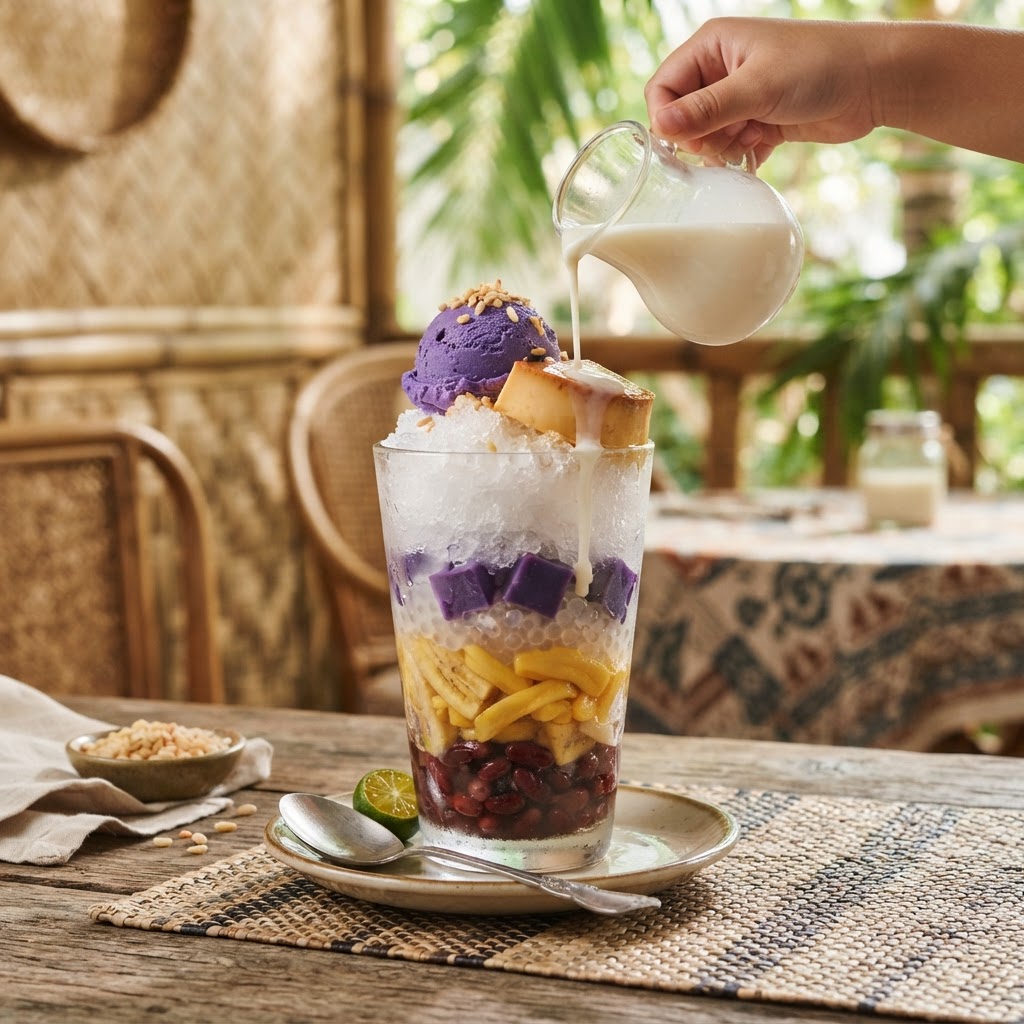
Halo-halo — Tagalog for "mixed-mixed" — is the unofficial national dessert of the Philippines and one of the great ice desserts of the world: a tall glass layered with sweetened beans, fruits, and jellies, packed with shaved ice, drowned in evaporated milk, and crowned with leche flan, purple ube halaya, and a scoop of ube ice cream, all stirred together before eating. According to Wikipedia, it is a popular cold dessert of crushed ice and evaporated milk with flavorings including ube jam, sweetened kidney beans or garbanzos, coconut sport (macapuno), sago, gulaman (agar), pinipig, and leche flan, and it is considered the Philippines' unofficial national dessert. Food historians trace its ancestor to Japanese kakigori — the article notes that some authors specifically attribute the dessert to Japanese migrants of the 1920s and 1930s around the Quinta Market in Quiapo, Manila, near the Insular Ice Plant — but Filipinos made it their own, burying the sweets under the ice rather than over it, and adding a riot of native ingredients until no two glasses look alike.
There is no single recipe — that is the point. The dessert is a summer festival in a glass, assembled from whatever sweet things the kitchen holds, and it is eaten in the Philippines from April through the depths of the hot season, at roadside stands and family tables alike.
About the Ingredients
Sweetened beans and chickpeas — cooked in syrup; they are the historic heart of the dessert and far more delicious than skeptics expect.
Ube halaya and ube ice cream — mashed purple yam jam and its ice cream; the violet crown and signature flavor of modern halo-halo.
Leche flan — the golden caramel custard that tops the glass, the richest jewel in the mix.
Evaporated milk — poured over the shaved ice at the table, melting into every crevice.
Ingredients (serves 4): - 1 cup sweetened red beans (kidney beans in syrup, drained) - 1 cup sweetened white beans or chickpeas in syrup, drained - 1 cup macapuno (coconut sport) or nata de coco - 1 cup kaong (sugar palm fruit), drained - 1 ripe saba banana or plantain, simmered in syrup and sliced - 1/2 cup jackfruit strips in syrup, drained - 1 cup cooked sago (tapioca pearls) - 1/2 cup cubed gulaman (agar jelly) - 4 cups very finely shaved or crushed ice - 1 1/2 cups chilled evaporated milk - 4 thick slices leche flan - 4 scoops ube ice cream and/or 4 tbsp ube halaya - pinipig (toasted young rice) to finish
Instructions: Divide the beans, macapuno, kaong, banana, jackfruit, sago, and gulaman among four tall glasses, layering them at the bottom in whatever order pleases the eye. Pack each glass generously with shaved ice, mounding it above the rim. At the table, pour evaporated milk slowly over each glass until the ice blushes white. Crown each with a slice of leche flan and a scoop of ube ice cream or a spoonful of ube halaya, scatter with pinipig, and serve at once with a long spoon — the traditional move is to mash and stir everything together before the first bite.
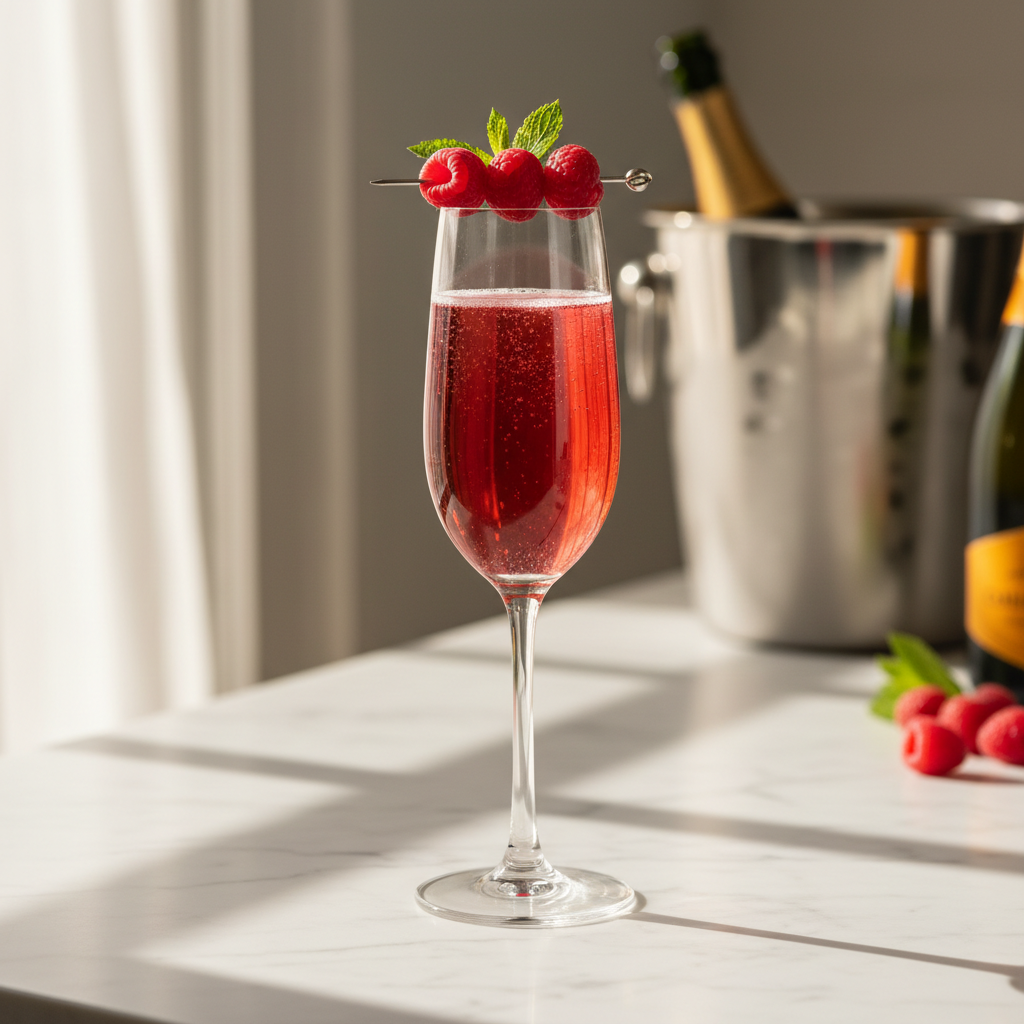
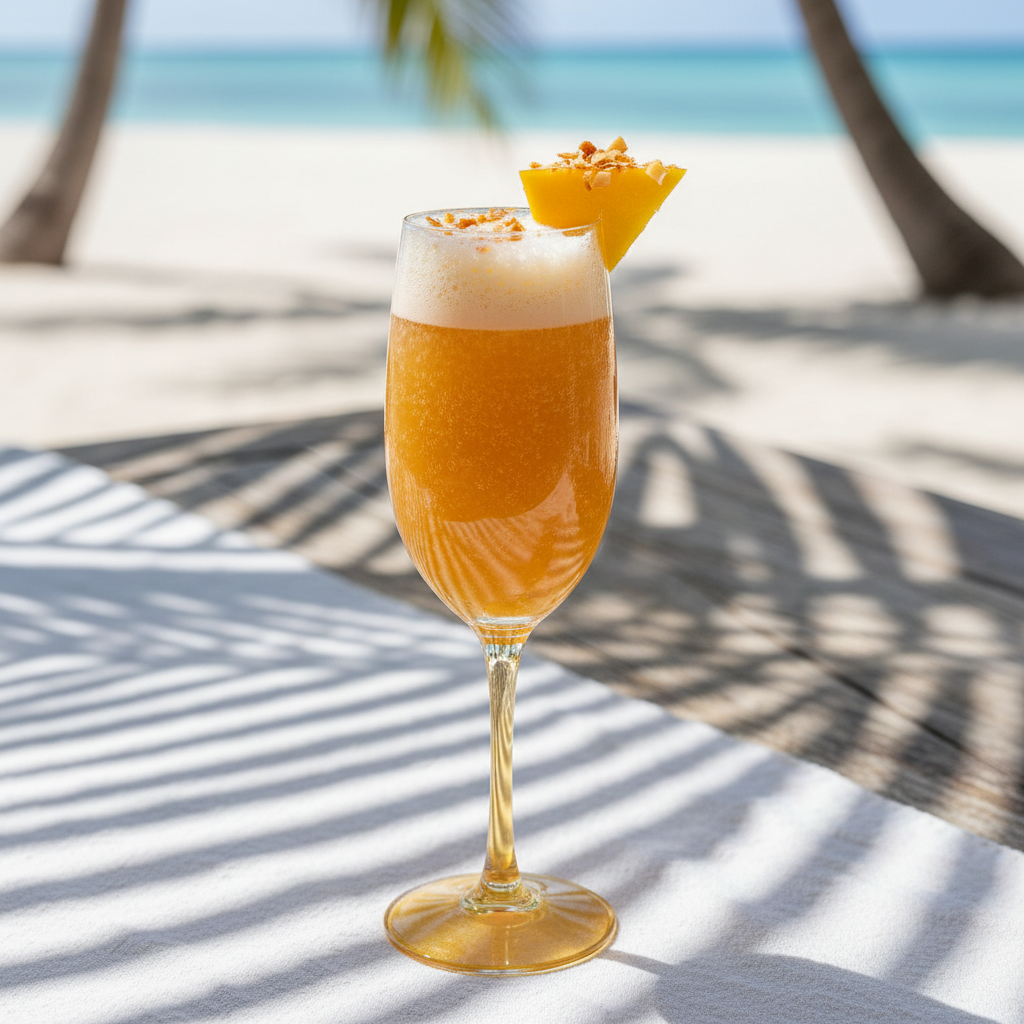
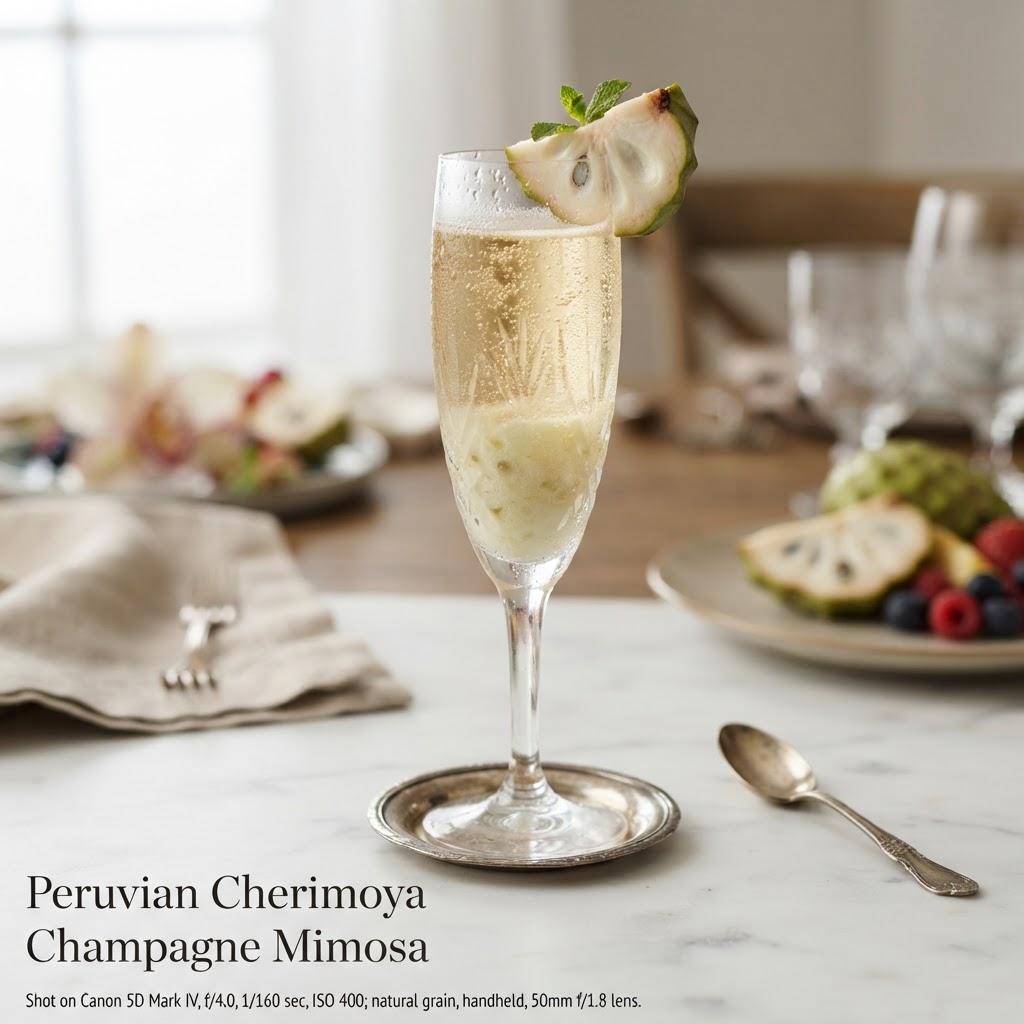
The Mimosa Pairing Logic: Halo-halo is already a sweet, milky, tropical spectacle, so the glass beside it should be bright and not too sweet. A tropical mango mimosa shares the dessert's sunny register, and a passionfruit mimosa is even better, its tartness slicing through the milk and syrup. Either turns merienda into a full celebration.
Reference Links: - Halo-halo (unofficial national dessert, Japanese kakigori ancestry): Wikipedia - Halo-Halo: The Surprising Origin of Philippines' Beloved Dessert: FilipiKnow
Make-Ahead: Every component — beans in syrup, sago, gulaman, leche flan, ube halaya — can be made or jarred days ahead and chilled. Shave the ice and assemble to order; halo-halo waits for no one, and a stirred, melted halo-halo is a sad soup.
Pro Tips: Shave the ice as finely as possible — coarse ice drinks the milk but never becomes the snow the dessert demands. Drain the jarred components well or the glass will flood. Keep everything thoroughly cold; the contrast of icy milk and syruped fruit is the entire architecture. Stir before eating — the name is the instruction.
Rate this recipe
Be the first to rate this recipe
to submit your rating.
Perfect Mimosa Pairings
Mimosas that pair perfectly with this dish
Recent Posts
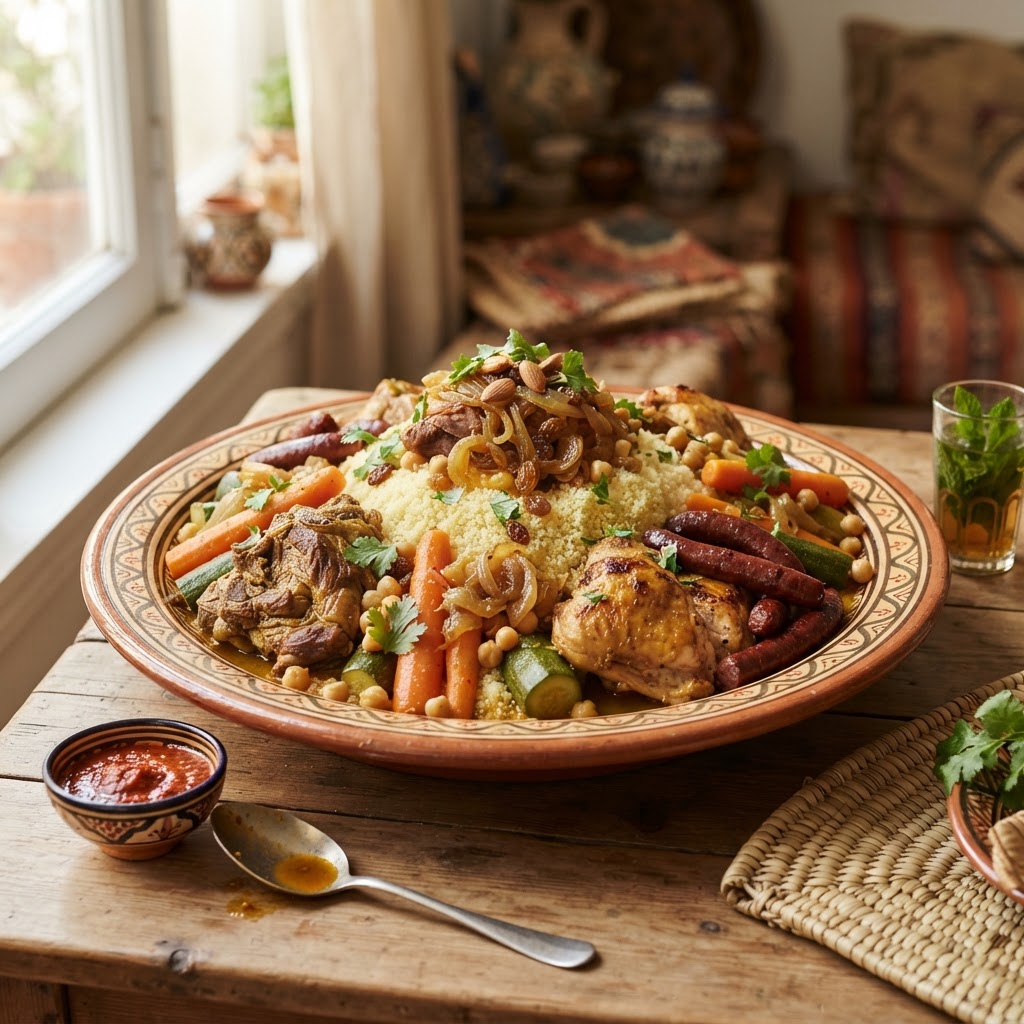
Couscous Royale: North Africa's Grand Platter of Lamb, Chicken, and Merguez
October 14, 2026

Seattle Cream Cheese Dog Bites: Hadley Long's 1989 Pioneer Square Invention
October 14, 2026
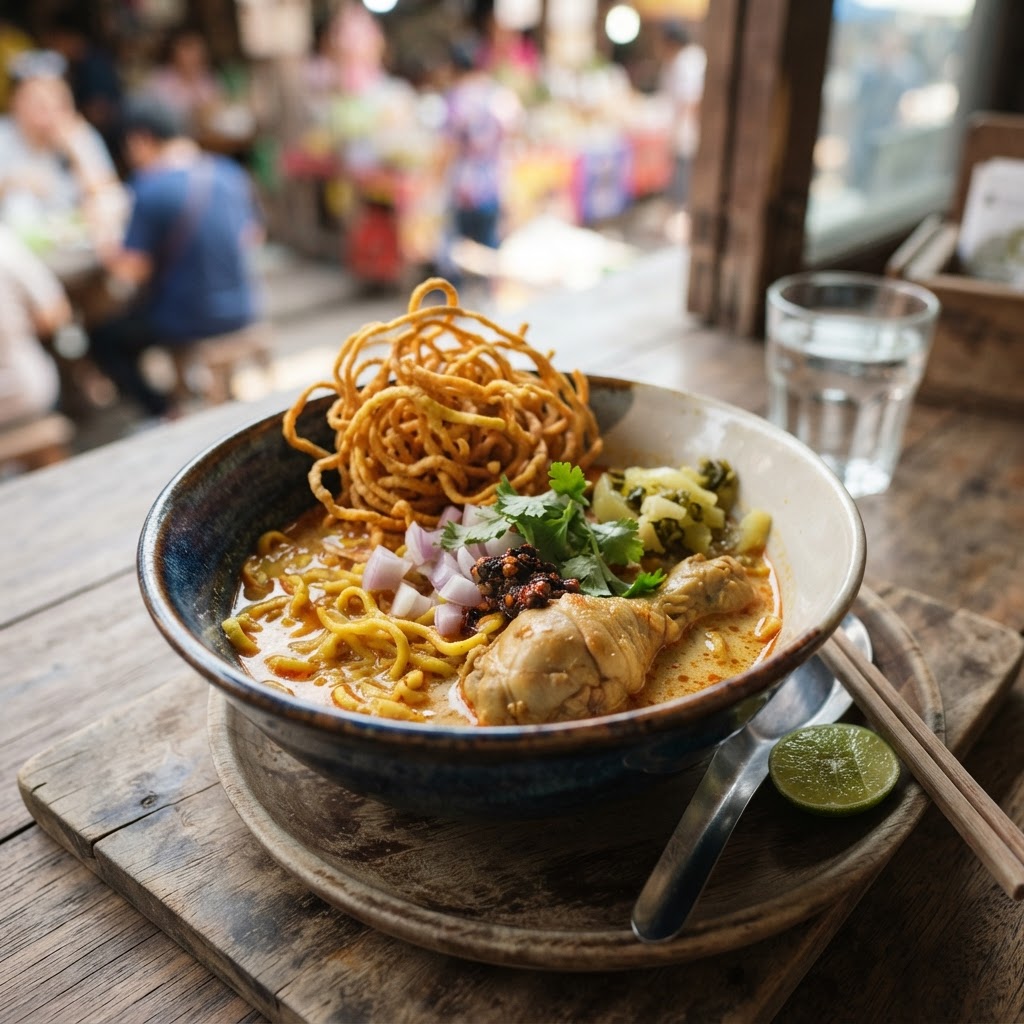
Khao Soi: Chiang Mai's Northern Thai Coconut Curry Noodles
October 13, 2026
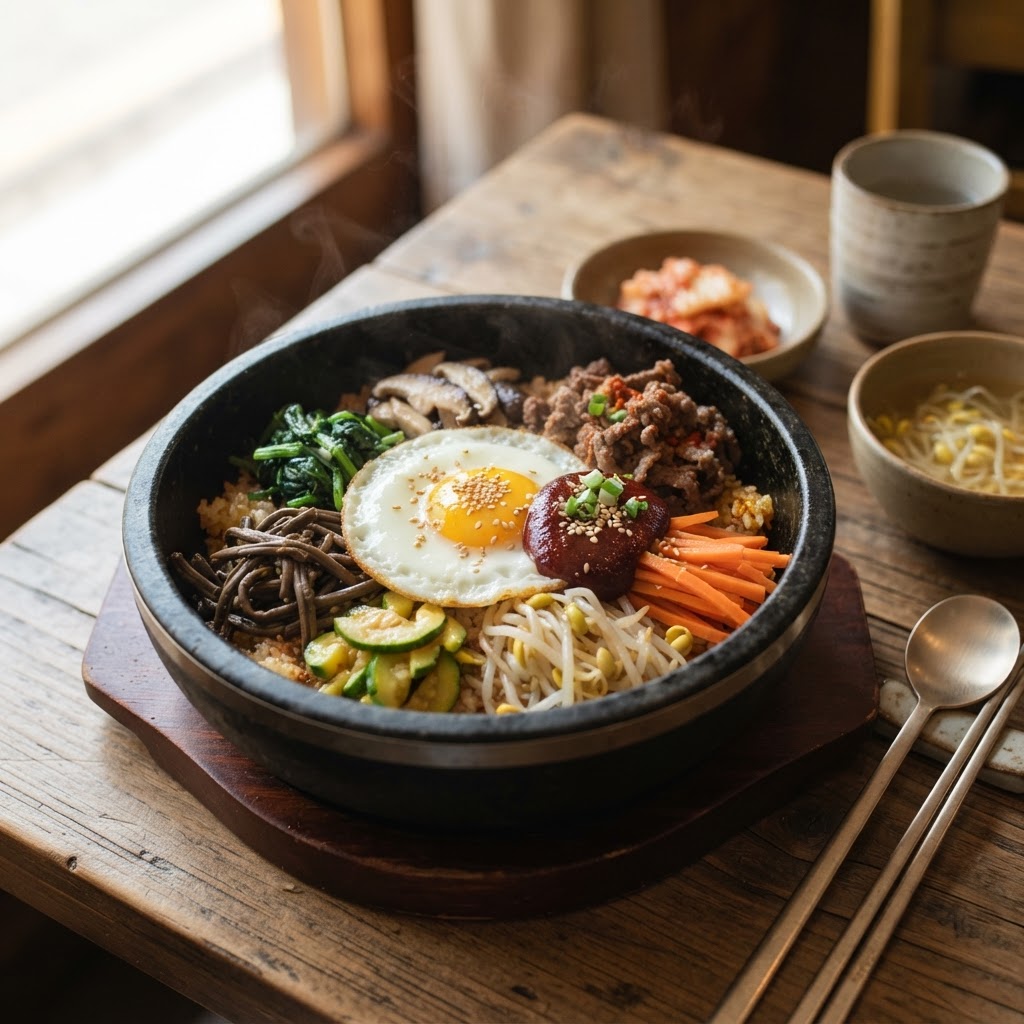
Korean Bibimbap: Jeonju's Joseon Dynasty Mixed Rice
October 11, 2026
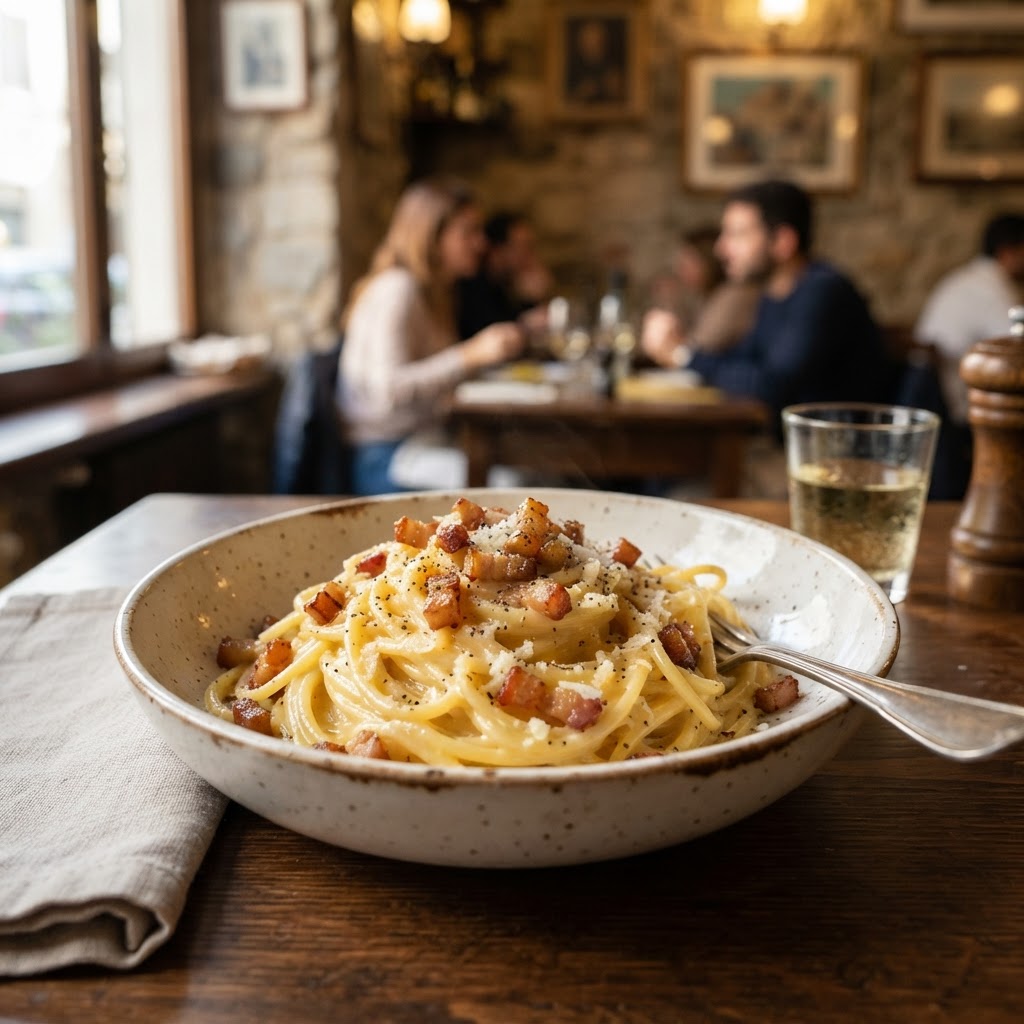
Spaghetti alla Carbonara: Rome's World War II Pasta of Eggs, Guanciale, and Pecorino
October 9, 2026