Fettuccine Alfredo: Alfredo Di Lelio's 1908 Roman Three-Ingredient Masterpiece
February 15, 2026
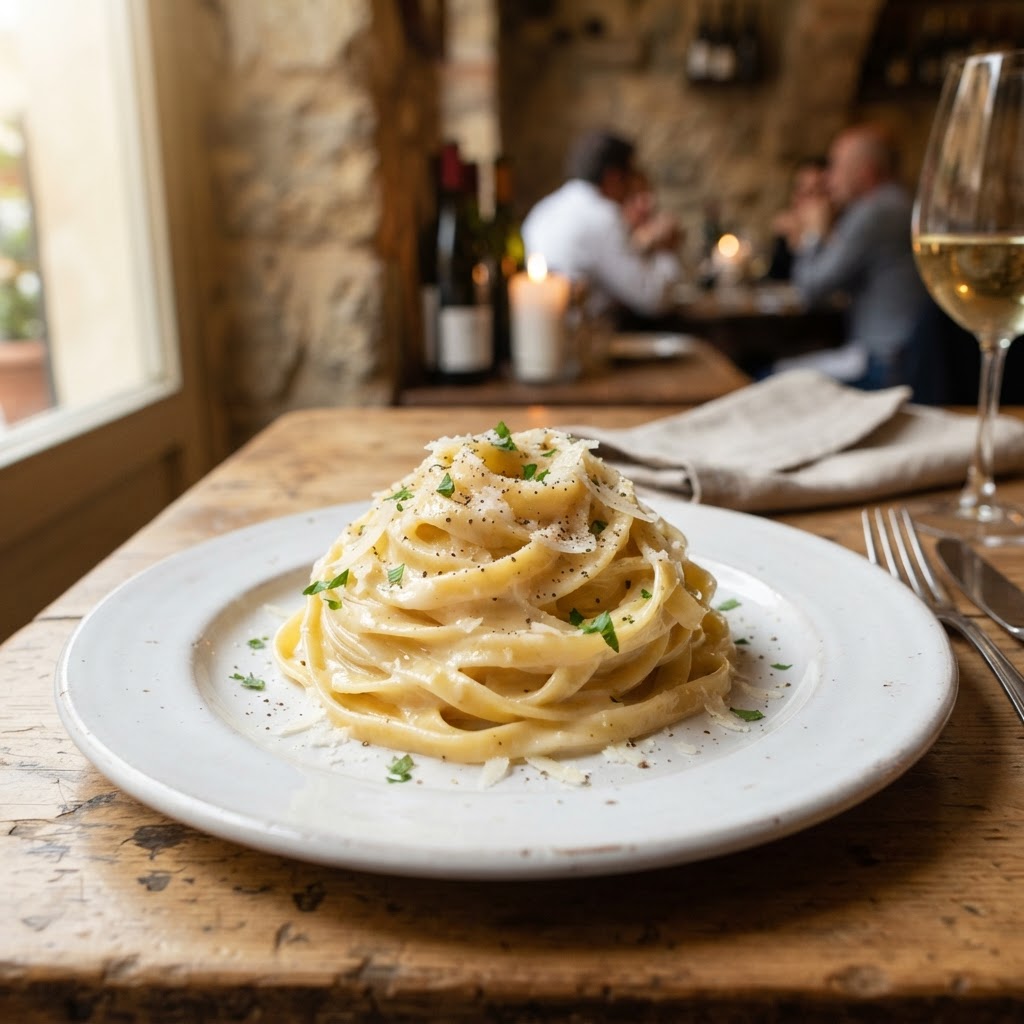
In 1908, Alfredo Di Lelio, a restaurant owner in Rome, created a simple dish of fettuccine tossed with butter and Parmigiano-Reggiano to tempt the appetite of his pregnant wife, who had lost her taste for food. The dish worked, and when Di Lelio opened his own restaurant, Alfredo alla Scrofa, on the Via della Scrofa in Rome, he served it to his customers with theatrical flair, tossing the pasta at the table with a gold fork and spoon.
The dish became famous when Hollywood stars Mary Pickford and Douglas Fairbanks visited Alfredo's restaurant on their honeymoon in 1927. They were so taken with the fettuccine that they presented Di Lelio with a golden fork and spoon, which hang in the restaurant to this day. The original Alfredo's recipe contains only three ingredients: fresh fettuccine, sweet cream butter, and aged Parmigiano-Reggiano. The American version, which adds heavy cream, is a different dish entirely, though no less popular.
About the Ingredients: The pasta must be fresh fettuccine, not dried. Fresh egg pasta has a porous surface that absorbs the butter and cheese in a way that dried pasta cannot. The butter should be the best quality sweet cream butter you can find, preferably European-style, which has a higher fat content. The cheese must be real Parmigiano-Reggiano, imported from Italy and aged at least 24 months. The technique of vigorously tossing the pasta with the cheese and a little pasta water is what creates the emulsion that coats each strand.
Ingredients (serves 4): - 1 lb fresh fettuccine (preferably homemade or from a good deli) - 1 cup (2 sticks) sweet cream unsalted butter, at room temperature - 2 cups Parmigiano-Reggiano, freshly grated (do not use pre-grated) - Salt for the pasta water - Reserved pasta cooking water
Instructions: Bring a large pot of water to a rolling boil. Salt it generously, though less than usual because the cheese and butter are both salty. The water should taste of the sea.
Add the fresh fettuccine and cook for 1 to 2 minutes, until it is al dente. Fresh pasta cooks much faster than dried. Before draining, reserve 1 cup of the pasta cooking water.
In a large, warm serving bowl, place the room-temperature butter. Add the hot, drained fettuccine on top of the butter. Begin tossing the pasta with the butter using tongs or, traditionally, a fork and spoon. The heat of the pasta will melt the butter.
Add the freshly grated Parmigiano-Reggiano, a handful at a time, tossing vigorously after each addition. Add a splash of the reserved pasta water, about 2 tablespoons at a time, to help the butter and cheese emulsify into a glossy, clinging sauce. The tossing is vigorous and constant, and the sauce should form a creamy coating on each strand of pasta without being watery or clumpy.
Continue adding cheese and pasta water, tossing constantly, until the pasta is coated in a silky, glossy sauce. Serve immediately in warmed bowls.
The Mimosa Pairing Logic: The rich, buttery simplicity of authentic fettuccine Alfredo calls for a mimosa with bright citrus to cut through the butter and cheese. The Classic Champagne Mimosa is the traditional match, its orange and champagne providing the acid lift the dish needs. For a more elegant pairing, the St. Germain Mimosa adds a floral, elderflower note that complements the sweetness of the butter.
Reference Links: - Fettuccine Alfredo – Wikipedia - Fettuccine Alfredo Recipe – Serious Eats
Make-Ahead: Fettuccine Alfredo cannot be made ahead. The sauce is an emulsion of butter, cheese, and pasta water that comes together at the moment of serving. If it sits, the butter and cheese will separate and congeal. Have everything prepped, the butter at room temperature, the cheese grated, the pasta water salted and boiling, and your guests at the table before you begin.
Pro Tips: The secret to authentic fettuccine Alfredo is the tossing. The sauce is not made in a separate pan and poured over the pasta. It is created by vigorously tossing the hot pasta with butter and cheese in a warm bowl, adding pasta water to create the emulsion. If the sauce seems too thick, add another splash of pasta water. If it seems too thin, add more cheese. Pre-grated Parmigiano-Reggiano is coated with cellulose to prevent clumping, and it will not melt properly into the sauce. Always grate it yourself, just before using.
Rate this recipe
Be the first to rate this recipe
to submit your rating.
Perfect Mimosa Pairings
Mimosas that pair perfectly with this dish
Recent Posts

Couscous Royale: North Africa's Grand Platter of Lamb, Chicken, and Merguez
October 14, 2026

Seattle Cream Cheese Dog Bites: Hadley Long's 1989 Pioneer Square Invention
October 14, 2026

Khao Soi: Chiang Mai's Northern Thai Coconut Curry Noodles
October 13, 2026

Korean Bibimbap: Jeonju's Joseon Dynasty Mixed Rice
October 11, 2026

Spaghetti alla Carbonara: Rome's World War II Pasta of Eggs, Guanciale, and Pecorino
October 9, 2026