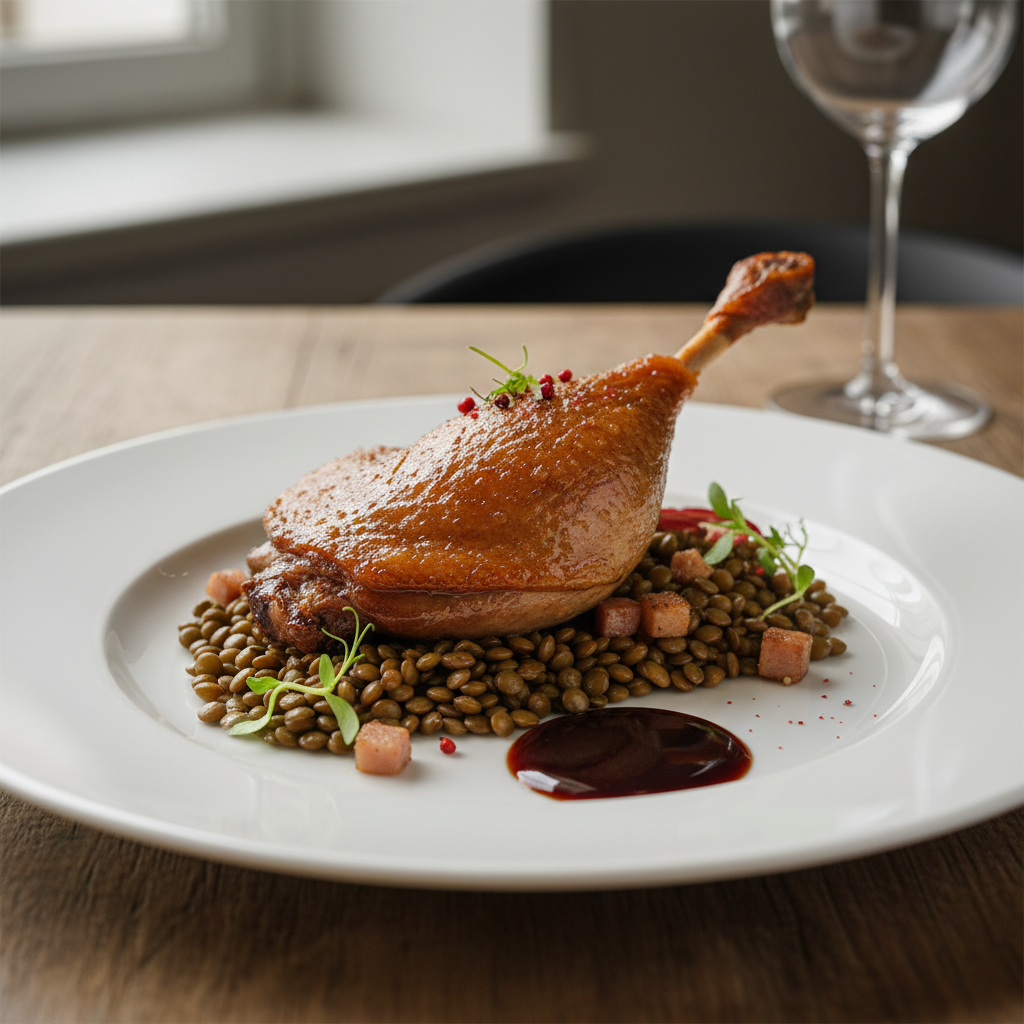
Duck Leg Confit with Lentilles du Puy & Port Jus
March 15, 2026
Duck confit — confiture de canard — is one of the oldest and most finely conceived preservation and cooking techniques in French cuisine. The Gascony region of southwestern France has been slow-cooking duck legs in their own rendered fat since the 15th century, both as a way to preserve summer birds for winter and because the method produces something genuinely extraordinary: dark, deeply savory meat with the tenderness of a braise and a skin that crisps, under a hot flame, into what many chefs consider the finest thing in French cooking.
Lentilles du Puy — the small, slate-green, peppery lentils from the volcanic soils of Le Puy-en-Velay in the Auvergne, protected since 1996 under French AOC designation — provide an earthy, mineral counterpoint to the duck's richness. A port jus reduction ties everything together with deep sweetness and acid balance. This is the complete French bistro plate elevated to event-dining level.
Ingredients (serves 10–12): - 10–12 duck legs (Moulard or Pekin), or 6 whole duck leg confits (readily available from D'Artagnan or French specialty grocers as high-quality confit de canard)
If Making Confit from Scratch: - 10 duck legs - 3 tablespoons kosher salt (for curing) - 1 tablespoon cracked black pepper - 4 fresh thyme sprigs - 3 bay leaves - 3 garlic cloves, smashed - Enough duck fat or a blend of duck fat and neutral oil to submerge (4–6 cups)
Lentilles du Puy: - 1 lb 5 oz Lentilles du Puy AOC (substitute: French green lentils — never brown or red lentils, which collapse) - 4 ¼ oz thick-cut lardons or pancetta, cubed - 1 large carrot, finely diced - 2 celery stalks, finely diced - 1 large onion, finely diced - 4 garlic cloves, minced - 1 qt good chicken or vegetable stock - 2 tablespoons Dijon mustard - 2 tablespoons red wine vinegar - 3 tablespoons fresh flat-leaf parsley, finely chopped - 3 tablespoons fresh thyme leaves - Salt and cracked black pepper
Port Jus: - ⅞ cup ruby or tawny Port - 1 ¼ cups good veal or duck stock (or a rich chicken stock reduced by half) - 2 shallots, finely minced - 1 tablespoon unsalted butter - Salt and cracked black pepper
Duck Confit (if making from scratch, 2 days ahead): Rub duck legs with salt, pepper, thyme, bay, and garlic. Refrigerate uncovered overnight. Rinse, pat dry. Submerge in warm duck fat in a deep baking dish. Cook in a 200°F oven for 3–4 hours until completely tender and the meat pulls easily from the bone. Cool in the fat. Can be refrigerated in the fat for up to 1 month.
Finishing the Duck: Remove legs from fat. Place skin-side down in a cold, heavy skillet. Turn heat to medium. Cook 12–15 minutes, pouring off rendered fat every 5 minutes, until the skin is deeply golden, crispy, and lacquered. The cold-pan method is the professional technique — it renders the fat gradually rather than seizing it.
Lentilles du Puy: Render lardons until crispy. Add carrot, celery, and onion; cook until soft, 8–10 minutes. Add garlic, thyme, cook 1 minute. Add rinsed lentils and hot stock. Simmer 22–28 minutes until tender but with a slight bite. Drain any excess liquid. Stir in Dijon, red wine vinegar, and parsley. Season generously. (Can be made 2 days ahead — reheat with a splash of stock.)
Port Jus: Sauté shallots in butter until soft. Add Port, reduce by three-quarters. Add stock, reduce until glossy and napped. Season. (Can be made 3 days ahead.)
Plating: Spoon a generous mound of lentilles du Puy onto the warm plate. Set the crispy duck leg on top, propped against the lentils, skin-side up. Spoon port jus around the lentils. Garnish with a thyme sprig or fresh parsley.
Reference Links: - D'Artagnan duck confit sourcing: D'Artagnan - Confit technique (Serious Eats): Serious Eats
Make-Ahead: Confit (1 month in fat, refrigerated); lentils (2 days); port jus (3 days). Crisp the duck skin to order — this step cannot be done ahead without losing the defining texture.
Pro Tips: Using quality pre-made duck confit (D'Artagnan, Rougié) is the professional shortcut that produces an indistinguishable result for this preparation. The cold-pan crisping method is the only technique that produces proper results — a hot pan seizes the skin before the fat can render, leaving a thick, flabby, unrendered layer.
Rate this recipe
Be the first to rate this recipe
to submit your rating.
Recent Posts

Couscous Royale: North Africa's Grand Platter of Lamb, Chicken, and Merguez
October 14, 2026

Seattle Cream Cheese Dog Bites: Hadley Long's 1989 Pioneer Square Invention
October 14, 2026

Khao Soi: Chiang Mai's Northern Thai Coconut Curry Noodles
October 13, 2026

Korean Bibimbap: Jeonju's Joseon Dynasty Mixed Rice
October 11, 2026

Spaghetti alla Carbonara: Rome's World War II Pasta of Eggs, Guanciale, and Pecorino
October 9, 2026