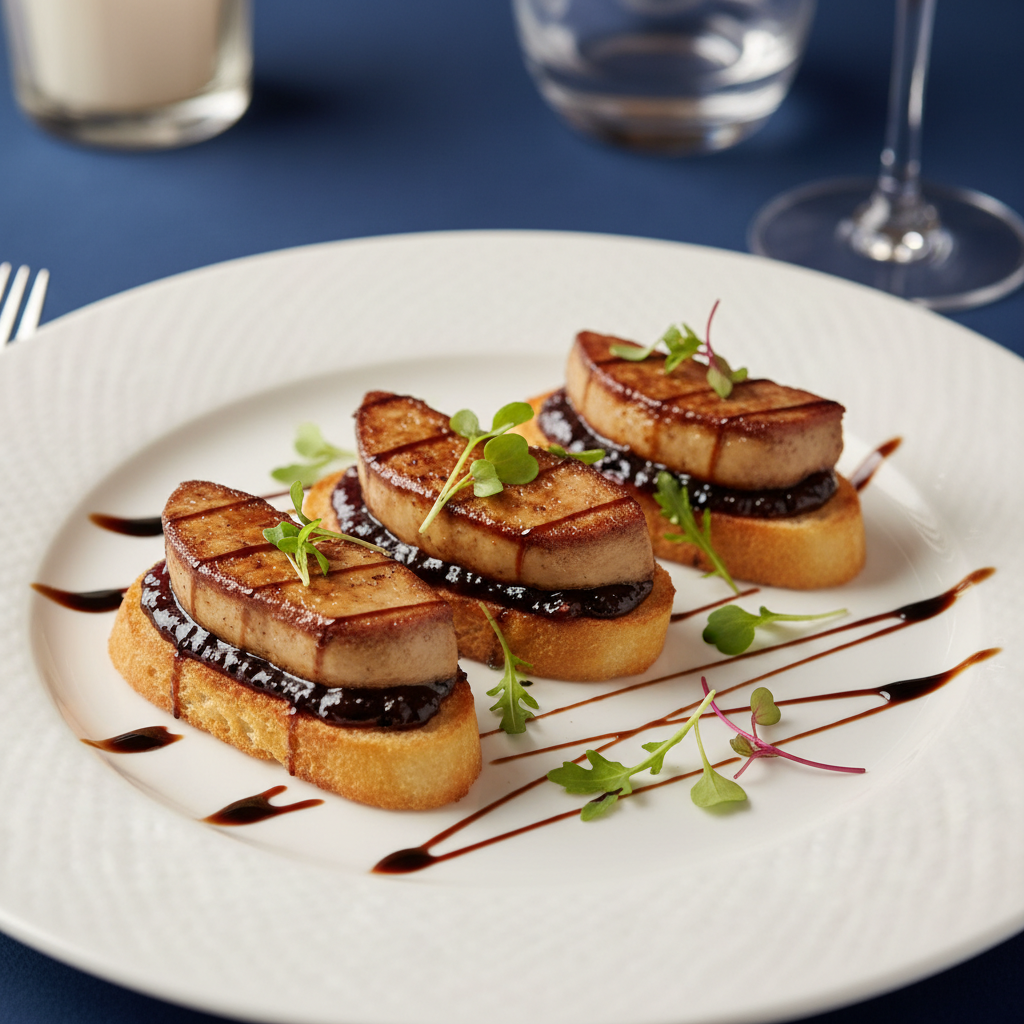
Pan-Seared Duck Foie Gras with Fig Jam & Brioche
May 31, 2026
Fresh figs and foie gras is one of those combinations that feels inevitable the first time you taste it. The fig's honeyed sweetness and jammy texture are a natural counterpoint to the foie's extraordinary richness — the sweetness amplifies the savory, the fruit's acid provides the brightness the fat needs. The brioche is the vehicle. The balsamic and honey drizzle ties it together.
Make the fig jam a week ahead. Toast the brioche rounds the morning of. The foie gras itself takes under 3 minutes — a screaming-hot dry pan, 45 seconds per side, rest on a wire rack. Practice with one slice first. The timing window is narrow.
Ingredients (serves 12 as an event appetizer): - 1 lb duck foie gras, whole lobe Grade A (fresh, deveined) - 12 rounds of brioche (sliced ½ inch thick, cut to the same diameter as the foie gras slices) - 2 tablespoons unsalted butter for brioche - Flaky sea salt and freshly cracked white pepper - Microgreens or baby arugula for garnish
Fresh Fig Jam: - 14 oz fresh black or green figs (or 9 oz dried figs rehydrated in warm water), roughly chopped - 4 tablespoons granulated sugar - 3 tablespoons good-quality Port or red wine - 1 tablespoon lemon juice - ½ teaspoon fresh thyme leaves - Pinch of salt
Aged Balsamic & Honey Drizzle: - 2 tablespoons aged balsamic glaze - 1 tablespoon wildflower or truffle honey, warmed
Fig Jam (make up to 1 week ahead): Combine chopped figs, sugar, Port, lemon juice, thyme, and salt in a small saucepan. Bring to a simmer over medium heat, stirring. Cook for 15–20 minutes, stirring frequently, until the mixture is jammy, thickened, and reduced. The figs should retain some texture. Cool completely. Refrigerate in an airtight container.
Brioche Preparation: Toast brioche rounds in butter in a skillet over medium heat until golden and crisp on both sides. Keep warm.
Foie Gras: Remove foie gras from the refrigerator 20 minutes before cooking — it should be cold but not ice-cold. Using a sharp knife dipped in hot water (dry the blade between cuts), slice into rounds approximately ½ inch thick. Season generously on both sides with flaky salt and cracked white pepper.
Heat a heavy cast iron or stainless steel pan over the highest possible heat until smoking. Do not add any fat. Working in batches of no more than 3–4 slices, add foie gras to the pan. Sear undisturbed for 45–60 seconds until a deep mahogany crust forms. Flip carefully. Sear the second side 30–45 seconds. Remove with a spatula to a wire rack to drain excess fat. Rest 30 seconds.
Plating: Place a warm brioche round on each plate or a small serving board. Spoon a generous mound of fig jam to one side of the brioche. Set the foie gras directly on the brioche — it will immediately begin to melt into the bread. Drizzle a few drops of balsamic glaze over the foie gras, allowing it to run into the jam. Drizzle a few drops of warm honey over the top. Place a small tuft of microgreens alongside. Finish with a grain of flaky salt and one crack of white pepper.
Service: Serve immediately and plate only at the last possible moment — the foie gras continues to melt from residual heat and the window between perfect and overdone is narrow.
Wine Service: Foie gras classically demands Sauternes (sweet Bordeaux), Tokaji Aszú, or an off-dry Alsace Gewürztraminer. At an event, serve chilled Champagne alongside as an alternative — the acid and bubbles cut through the richness beautifully.
Pro Tips: The dry, screaming-hot pan is absolutely non-negotiable — foie gras contains so much fat that any added fat simply creates a greasy pool. The rendered fat is extraordinary; use it to sauté fingerling potatoes for the next course. Fresh figs are ideal but the jam works equally well with dried figs softened in warm water.
Rate this recipe
Be the first to rate this recipe
to submit your rating.
Recent Posts

Couscous Royale: North Africa's Grand Platter of Lamb, Chicken, and Merguez
October 14, 2026

Seattle Cream Cheese Dog Bites: Hadley Long's 1989 Pioneer Square Invention
October 14, 2026

Khao Soi: Chiang Mai's Northern Thai Coconut Curry Noodles
October 13, 2026

Korean Bibimbap: Jeonju's Joseon Dynasty Mixed Rice
October 11, 2026

Spaghetti alla Carbonara: Rome's World War II Pasta of Eggs, Guanciale, and Pecorino
October 9, 2026