Duck à l'Orange: Louis Eustache Ude's 1813 Parisian Masterpiece
February 7, 2026
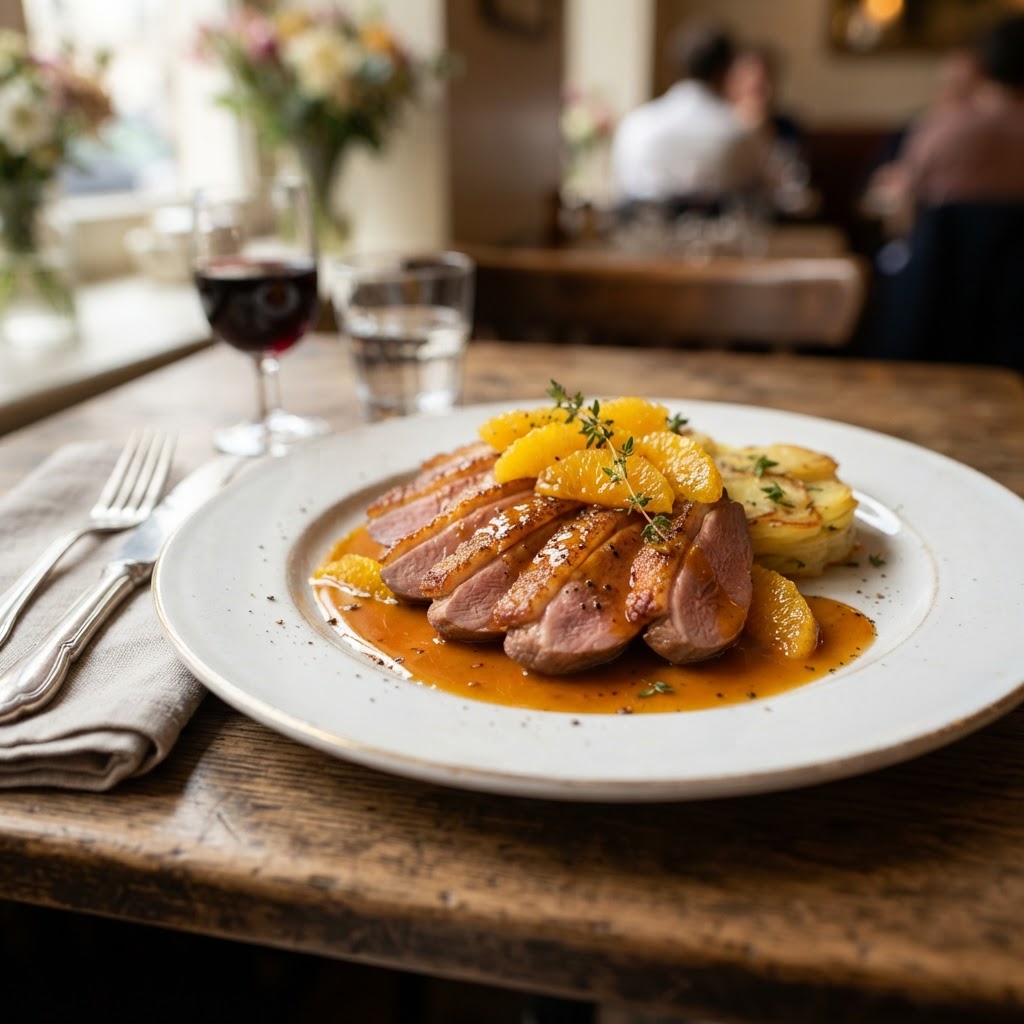
In 1813, the French chef Louis Eustache Ude published *The French Cook*, a book that codified the recipes of post-revolutionary French haute cuisine for an English-speaking audience. Among its pages was the first published recipe for what he called Ducklings à la Bigarade, a dish of roast duck served with a bitter orange sauce. The bigarade was the Seville orange, too sour to eat raw but perfect for cooking, and its bitterness against the richness of duck fat became one of the defining flavor combinations of French cooking.
The dish may be older still. Some food historians trace it to the Medici court of Renaissance Florence, brought to France when Catherine de' Medici married Henry II in 1533. Whether Italian or French in origin, by the 19th century it had become a fixture of the Parisian dinner table, and by the mid-20th century it was the dish that defined French restaurant cooking in America, served at every bistro with pretensions to elegance.
About the Ingredients: A whole Pekin (Long Island) duck is the standard choice, though a Muscovy duck has more flavor and less fat. The sauce depends on Seville or blood oranges when in season, but a combination of regular orange juice and lemon juice can approximate the bitter-sweet balance. The key is reducing the orange juice with a little sugar and vinegar until it becomes a glossy syrup, then mounting it with cold butter at the end.
Ingredients (serves 4): - 1 whole duck (about 4½ lb), neck and giblets reserved - Salt and freshly ground black pepper - 1 orange, halved
The Bigarade Sauce: - Juice of 2 oranges (about ¾ cup) - Juice of ½ lemon - 2 tablespoons red wine vinegar - 1 tablespoon sugar - ½ cup duck stock (or chicken stock) - 2 tablespoons Grand Marnier or Cointreau - 3 tablespoons cold unsalted butter, cubed - 1 orange, segmented, for garnish
Instructions: Preheat the oven to 425°F. Remove the giblets and neck from the duck cavity and reserve for stock. Trim any excess fat from the cavity opening. Prick the duck skin all over with a fork, being careful not to pierce the meat beneath. Season the cavity and the skin generously with salt and pepper. Place the orange halves inside the cavity.
Place the duck on a rack in a roasting pan and roast for 30 minutes. Reduce the heat to 350°F and continue roasting for 1 hour to 1 hour 15 minutes, spooning off the rendered fat every 20 minutes (save it for roasting potatoes). The duck is done when a thigh reads 165°F on a meat thermometer and the skin is deep golden and crisp.
While the duck roasts, combine the orange juice, lemon juice, vinegar, and sugar in a saucepan. Bring to a boil and reduce by half, until the liquid is syrupy and about ¼ cup remains. Add the stock and reduce again by half. Stir in the Grand Marnier. Remove from heat.
When the duck is done, transfer it to a carving board and let it rest for 15 minutes. Pour off all but 2 tablespoons of fat from the roasting pan. Set the pan over medium heat on the stovetop and deglaze with a splash of stock, scraping up the browned bits. Strain this liquid into the saucepan with the orange reduction. Return to low heat and whisk in the cold butter cubes one at a time, swirling the pan, until the sauce is glossy and thickened. Do not let it boil after adding the butter.
Carve the duck and arrange on a warmed platter. Pour the sauce over and scatter the orange segments around the plate.
The Mimosa Pairing Logic: The bitter orange and rich duck fat of this dish demand a mimosa with enough acidity and fruit to bridge the gap. The Blood Orange Mimosa is the natural choice, its blood orange juice echoing the bigarade sauce while adding a deeper, more complex citrus note. For a softer pairing, the Peach Bellini Mimosa provides a sweet counterpoint to the bitter edge of the sauce.
Reference Links: - Duck à l'Orange – Wikipedia - Duck à l'Orange Recipe – Serious Eats
Make-Ahead: The orange reduction can be made up to 2 days ahead and refrigerated. The duck should be roasted on the day of serving, as reheated duck loses its crisp skin. The sauce is finished with butter at the last minute, so have everything prepped and your guests seated before you begin the final assembly.
Pro Tips: Pricking the duck skin with a fork before roasting is what gives you crisp skin. It allows the subcutaneous fat to render out during cooking, leaving the skin tight and golden. Save every drop of that rendered duck fat. It is liquid gold for roasting potatoes and will keep in the refrigerator for months. When mounting the sauce with butter, the pan should be warm but not hot. If the butter melts instead of emulsifying, the sauce will be thin rather than glossy.
Rate this recipe
Be the first to rate this recipe
to submit your rating.
Perfect Mimosa Pairings
Mimosas that pair perfectly with this dish
Recent Posts

Couscous Royale: North Africa's Grand Platter of Lamb, Chicken, and Merguez
October 14, 2026

Seattle Cream Cheese Dog Bites: Hadley Long's 1989 Pioneer Square Invention
October 14, 2026

Khao Soi: Chiang Mai's Northern Thai Coconut Curry Noodles
October 13, 2026

Korean Bibimbap: Jeonju's Joseon Dynasty Mixed Rice
October 11, 2026

Spaghetti alla Carbonara: Rome's World War II Pasta of Eggs, Guanciale, and Pecorino
October 9, 2026