Colombian Arepa Bites with Chorizo, Avocado, and Queso Fresco
May 6, 2026
Arepas are one of the oldest foods of the Americas — round, flat cornmeal cakes made from masa de arepa (pre-cooked corn flour), a staple of both Colombian and Venezuelan cuisines for centuries before European contact. The word "arepa" comes from the language of the indigenous people of the region, and the cakes are eaten at every meal, stuffed with cheese, meat, eggs, or avocado, or simply split and buttered. Both Colombia and Venezuela claim the arepa as their own, and both have developed distinct regional styles. In Colombia, arepas are typically thinner and made from white corn flour, topped or stuffed with cheese, chorizo, or eggs, and served as a quick meal or snack.
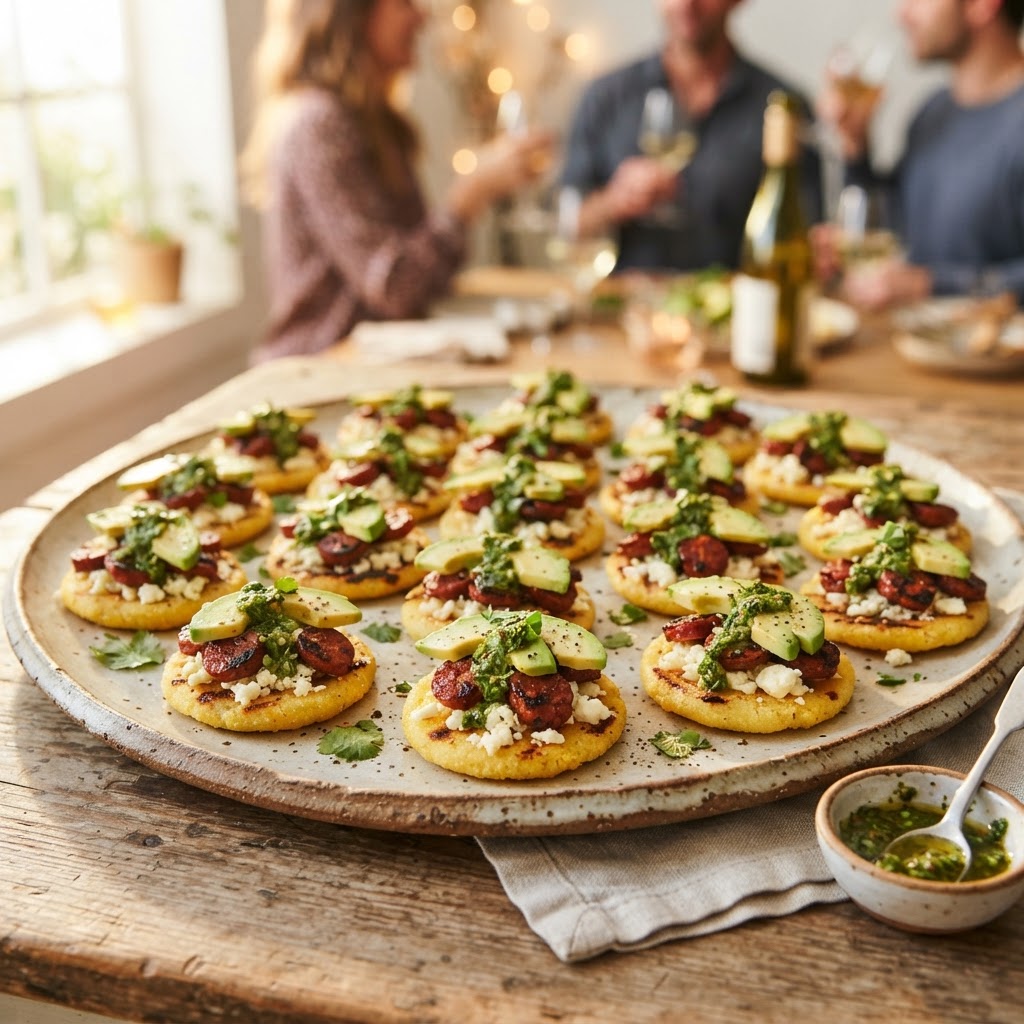
For a party, we create arepa bites — small, silver-dollar-sized arepas, pan-fried until golden, and topped with crumbled queso fresco, sliced chorizo, fresh avocado, and a drizzle of chimichurri. They are handheld, colorful, and bright, a celebration of Colombian flavors in a single bite.
Ingredients (makes 24 bites, serves 8–12): - 2 cups masarepa (pre-cooked white corn flour — P.A.N. is the standard brand) - 2½ cups warm water - 1 teaspoon salt - 3 tablespoons butter, melted (for a richer dough) - Neutral oil for pan-frying
Toppings: - 1 pound fresh Mexican chorizo, removed from casings and cooked, crumbled - 2 ripe avocados, sliced - 1 cup queso fresco, crumbled - ½ cup chimichurri sauce (see below) - Fresh cilantro for garnish - Lime wedges
Chimichurri Sauce: - 1 cup fresh parsley, finely chopped - ½ cup fresh cilantro, finely chopped - 4 cloves garlic, minced - 2 tablespoons fresh oregano (or 1 teaspoon dried) - ½ teaspoon red pepper flakes - ½ cup extra-virgin olive oil - 3 tablespoons red wine vinegar - 1 teaspoon salt - ½ teaspoon black pepper
Making the Dough: In a large bowl, whisk together masarepa and salt. Gradually add warm water and melted butter, stirring with your hands or a wooden spoon, until a soft, pliable dough forms. The dough should hold its shape without cracking — if it is too dry, add water 1 tablespoon at a time; if too wet, add a sprinkle of masarepa. Knead 2–3 minutes until smooth. Let rest 5 minutes — the flour hydrates fully during the rest.
Forming the Arepas: Divide dough into 24 portions (about 1½ tablespoons each). Roll each into a ball, then flatten between your palms into a disc about 2 inches in diameter and ¼ inch thick. Smooth the edges — cracks will cause them to break during frying.
Pan-Frying: Heat ¼ inch of oil in a heavy skillet over medium heat. Fry arepas in batches 3–4 minutes per side, until golden brown with a slight crust. They should be cooked through but still soft in the center (unlike Venezuelan arepas, which are thicker and crispier). Drain on paper towels.
Chimichurri: Combine all ingredients in a bowl. Let sit at least 30 minutes for flavors to meld. (Keeps 3 days, refrigerated — bring to room temperature before serving.)
Assembly: Place a warm arepa on a serving plate. Top with a spoonful of crumbled chorizo, a slice of avocado, a sprinkle of queso fresco, and a drizzle of chimichurri. Garnish with a cilantro leaf and serve with lime wedges. Eat immediately — the arepas should be warm and the toppings fresh.
The Mimosa Pairing Logic: The bright, herbal chimichurri, the rich chorizo, and the creamy avocado call for a mimosa with tropical fruit and enough acidity to balance the chorizo's richness. A tropical mango mimosa is the most natural pairing — the mango's sweetness and tropical character complement the Latin flavors while the acid cuts the chorizo. A passionfruit mimosa is equally inspired — the tart, exotic passionfruit provides a bright contrast to the rich, spiced chorizo and echoes the lime in the chimichurri. For a refreshing, cooling pairing, a cucumber mint mimosa provides a clean, herbal counterpoint that refreshes the palate between bites. Avoid heavy, sweet mimosas — they fight with the chimichurri's herbs.
Reference Links: - Colombian arepa with cheese, chorizo, and chimichurri: My Colombian Recipes - Arepas: a Colombian and Venezuelan staple: Sandwich Tribunal - Authentic Colombian arepas con queso: The Immigrant's Table - Chimichurri sauce recipe: The Spruce Eats
Make-Ahead: Chimichurri (3 days, refrigerated). Chorizo can be cooked 1 day ahead and reheated. Arepa dough can be made 1 day ahead, wrapped, and refrigerated. Fried arepas can be held warm in a 200°F oven for up to 1 hour. Assemble at the last moment — the toppings are best fresh.
Pro Tips: Masarepa (pre-cooked corn flour) is essential — regular cornmeal or corn flour will not work. P.A.N. is the standard brand and is available in most Latin markets and many supermarkets. The water temperature matters — warm water hydrates the flour more evenly and produces a smoother dough. The dough should rest 5 minutes before forming — this allows the flour to fully hydrate and prevents cracking. Arepas should be pan-fried, not deep-fried — the goal is a golden crust with a soft, moist interior. Do not overcrowd the pan — the oil temperature will drop and the arepas will absorb oil and become greasy. And top generously — the arepa is a base for the toppings, not the star; the chorizo, avocado, queso fresco, and chimichurri are what make the bite.
Rate this recipe
Be the first to rate this recipe
to submit your rating.
Perfect Mimosa Pairings
Mimosas that pair perfectly with this dish
Recent Posts

Couscous Royale: North Africa's Grand Platter of Lamb, Chicken, and Merguez
October 14, 2026

Seattle Cream Cheese Dog Bites: Hadley Long's 1989 Pioneer Square Invention
October 14, 2026

Khao Soi: Chiang Mai's Northern Thai Coconut Curry Noodles
October 13, 2026

Korean Bibimbap: Jeonju's Joseon Dynasty Mixed Rice
October 11, 2026

Spaghetti alla Carbonara: Rome's World War II Pasta of Eggs, Guanciale, and Pecorino
October 9, 2026