The California Meyer Lemon & Thyme Mimosa
September 12, 2026
The Meyer lemon is the citrus that California adopted and made its own, though it did not begin there. It is a cross between a true lemon and a mandarin or sweet orange, first identified in China and brought to the United States in 1908 by Frank N. Meyer, a Dutch-born agricultural explorer employed by the United States Department of Agriculture, who spent years collecting plants across Asia for introduction to American agriculture. The fruit that now bears his name is thinner-skinned, sweeter, and more floral than a conventional lemon, with a deep yellow-orange hue when fully ripe and a complex, almost bergamot-like aroma (Wikipedia).
For decades the Meyer lemon remained a curiosity, grown mainly in backyard gardens — including, famously, that of Alice Waters, who began using it at Chez Panisse in Berkeley and helped usher it into the broader culinary consciousness in the 1970s and 1980s. California now produces the overwhelming majority of the commercial crop, with the season running roughly from late autumn through early spring. In a mimosa, the Meyer lemon's lower acidity and floral perfume behave more like a sophisticated citrus cordial than a sharp lemon juice, and a single sprig of fresh thyme — a Mediterranean herb whose warm, piney volatile oils extract beautifully into cold liquid — gives the drink an aromatic depth that a plain lemon mimosa cannot reach.
Ingredients (serves 6): - 1 cup fresh Meyer lemon juice (about 8–10 Meyer lemons) - 2 oz thyme honey syrup (see below) or mild wildflower honey - 1 bottle (3 ⅛ cups) chilled Cava Brut or dry Prosecco - Meyer lemon twists and fresh thyme sprigs for garnish
Thyme Honey Syrup: Combine ½ cup water and ½ cup sugar in a small saucepan. Bring to a simmer, stir until dissolved. Remove from heat, add 4 fresh thyme sprigs, and steep 20 minutes. Strain and cool. Keeps refrigerated for 2 weeks.
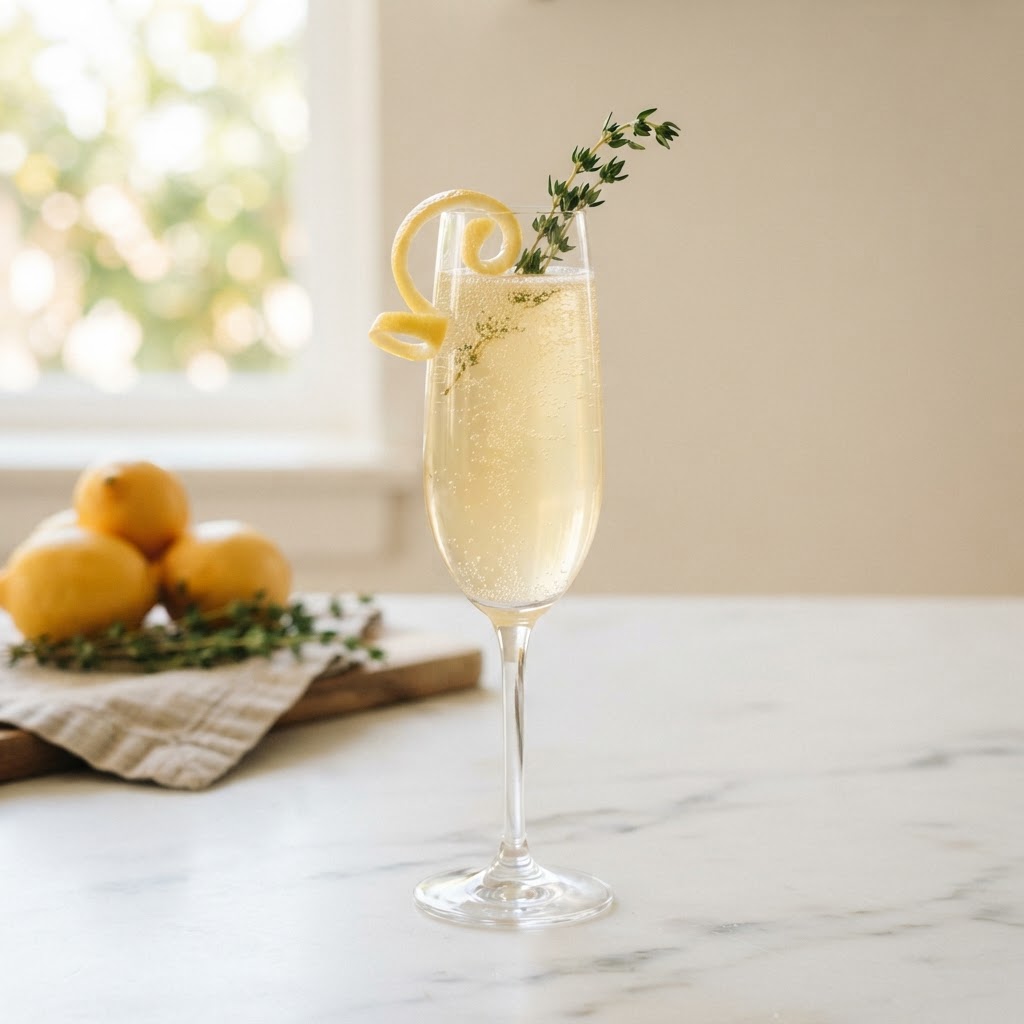
Instructions: Chill champagne flutes for 5 minutes. Stir together the Meyer lemon juice and thyme honey syrup in a small pitcher. Pour 2 oz of the lemon-thyme blend into each flute. Top slowly with chilled Cava, pouring down the side of the glass to preserve the bubbles. Express a Meyer lemon twist over the surface — bending the peel skin-side down to release the citrus oils — then drape it on the rim with a small thyme sprig.
For a Mimosa Bar (serves 12): - 2 cups Meyer lemon juice - 4 oz thyme honey syrup - 2 bottles chilled Cava Brut - Meyer lemon wheels and thyme sprigs for garnish
Variations: - Lavender Lemon: Replace the thyme syrup with lavender syrup (1 tablespoon culinary lavender steeped in the warm syrup) for a floral Provence-California crossover. - Meyer Lemon Royale: Use Champagne Blanc de Blancs and add ½ oz Lillet Blanc for a more complex, aperitif-driven version. - Ginger Lemon: Add 1 teaspoon fresh ginger juice to the blend for a warming, spicy note.
Pairing: The Meyer lemon's floral acidity makes this mimosa a natural companion to lemon ricotta pancakes, avocado toast, and any dish built around fresh citrus. It also bridges beautifully to lighter seafood — ceviche, oysters, and smoked salmon.
Reference Links: - Meyer lemon (Frank N. Meyer, 1908 USDA introduction): Wikipedia - Thyme (Mediterranean culinary herb): Wikipedia
Pro Tips: Meyer lemons are softer and juicier than conventional lemons — roll them firmly on the counter before cutting to maximize yield. Their lower acidity means the drink needs less sweetener than a standard lemon mimosa; taste the blend before pouring and adjust the syrup rather than over-sweetening. Use a vegetable peeler to cut the garnish twists, avoiding the bitter white pith beneath the zest. The thyme syrup is worth making in a double batch — it elevates gin cocktails, iced tea, and lemonade equally.
Rate this recipe
Be the first to rate this recipe
to submit your rating.
Recent Posts

Couscous Royale: North Africa's Grand Platter of Lamb, Chicken, and Merguez
October 14, 2026

Seattle Cream Cheese Dog Bites: Hadley Long's 1989 Pioneer Square Invention
October 14, 2026

Khao Soi: Chiang Mai's Northern Thai Coconut Curry Noodles
October 13, 2026

Korean Bibimbap: Jeonju's Joseon Dynasty Mixed Rice
October 11, 2026

Spaghetti alla Carbonara: Rome's World War II Pasta of Eggs, Guanciale, and Pecorino
October 9, 2026