Moules-Frites: Belgium's National Dish of Mussels and Golden Fries
August 20, 2026
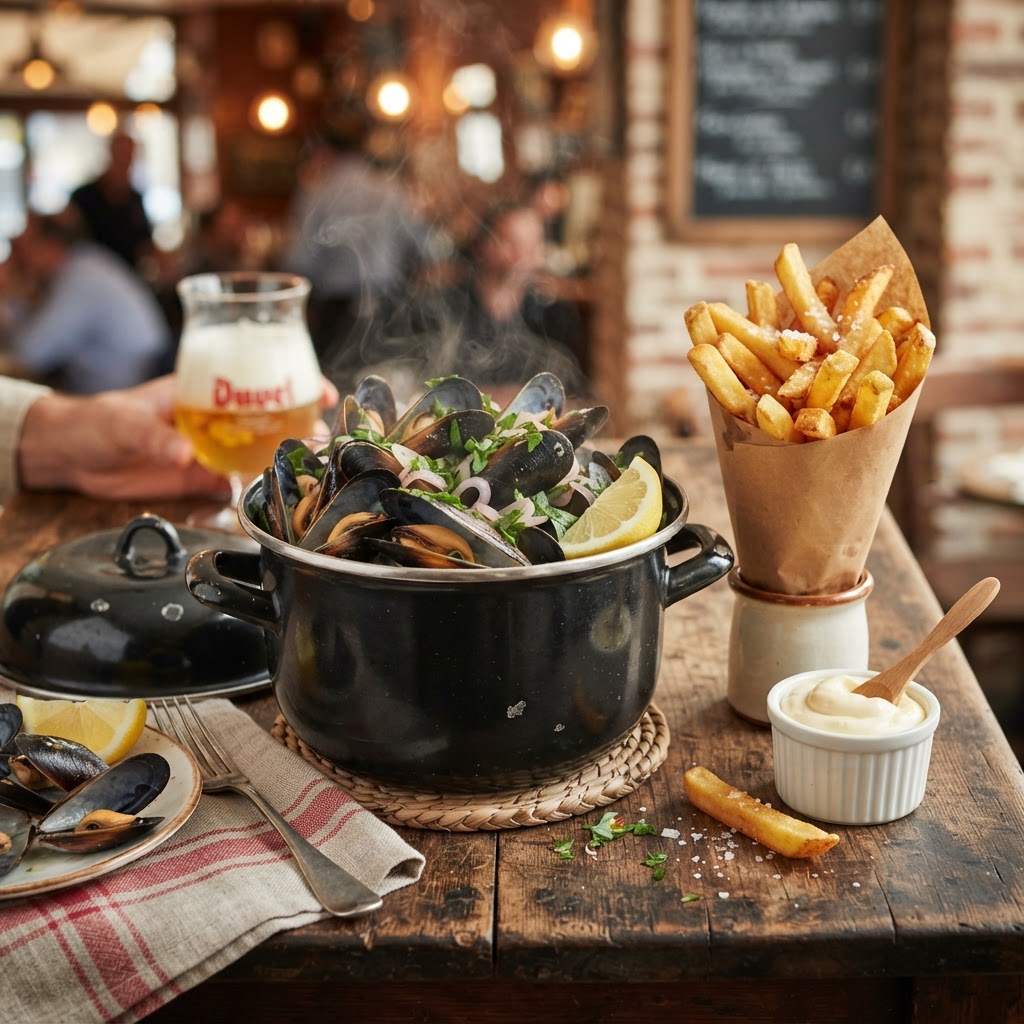
Moules-frites — mussels steamed in a fragrant broth, served with a heap of twice-fried golden frites — is the national dish of Belgium, eaten everywhere from the Flemish coast to the Ardennes. According to Wikipedia, the dish of mussels and fries originates in Northern France and Belgium, and it is the national dish of Belgium; the pairing likely arose from two humble staples — cheap, plentiful mussels from the Flemish coast and potatoes, which Belgians embraced early and fried through the winter when no fish was available. Saveur calls it a Belgian national obsession, and the classic of the canon is moules marinière: mussels steamed with white wine, shallots, butter, and parsley, their liquor sopped with fries or bread.
The genius of the dish is the pot. The mussels are served in the very vessel they were steamed in, so the winey, buttery broth collects at the bottom — a mussel in one hand, a fry dipped in the liquor in the other, and a cold drink beside. It is convivial by design, which makes it the perfect brunch-party centerpiece.
About the Ingredients
Mussels — farmed rope-grown mussels (clean, nearly grit-free), scrubbed and debearded; discard any that stay open when tapped.
The broth — dry white wine, shallots, butter, thyme or celery, and plenty of black pepper; the liquor that results is half the meal.
The frites — thick-cut potatoes, fried twice at 325°F and then 375°F for a moist core and a shattering crust — the Belgian method, and the reason Belgian fries are their own food group.
Ingredients (serves 6–8): - 4 lbs fresh mussels, scrubbed and debearded - 2 cups dry white wine - 3 shallots, thinly sliced - 4 tbsp butter - 2 sprigs thyme (or 1 celery rib, diced) - 1/2 cup chopped flat-leaf parsley, plus more to finish - Salt and coarse black pepper - 3 lbs russet potatoes, cut into 1/2-inch thick fries - Neutral oil for frying, and mayonnaise for the fries
Instructions: For the frites: soak the cut potatoes in cold water 30 minutes and dry thoroughly. Fry in batches at 325°F for 6–8 minutes, until limp and pale; drain and cool at least 20 minutes. Just before serving, fry again at 375°F for 3–4 minutes until deep gold and crisp; salt immediately. For the mussels: in a wide, heavy pot, sweat the shallots in 2 tbsp butter, add the wine and thyme, and bring to a boil. Add the mussels, cover, and steam 4–6 minutes, shaking once, until they spring open; discard any that refuse. Off the heat, swirl in the remaining butter and most of the parsley, and grind pepper over. Serve the pot on the table with the frites alongside in paper cones, mayonnaise within reach, and empty shells for discards — the broth at the bottom is the last, best course.
The Mimosa Pairing Logic: The natural partner here is what the Belgians would drink — something crisp, floral, and bubbling. A St. Germain mimosa is the house pick: the elderflower liqueur plays beautifully with the winey, thyme-scented broth, like a glass of the pot's own perfume. A lemon verbena mimosa is the brighter alternative, its citrus-herbal snap cutting the butter. This is the Belgian coast at a brunch table.
Reference Links: - Moules-frites (national dish of Belgium, Flemish coast origins): Wikipedia - A National Obsession: Belgium's Moules Frites: Saveur
Make-Ahead: The frites can be fried once (the pale, limp stage) hours ahead and held at room temperature — the second fry is 4 minutes at the last moment, which is how every Belgian friterie works. The mussels must steam to order; the shallot-wine base, though, can be made ahead and brought to a boil the second the guests sit.
Pro Tips: Dry the potatoes completely before the first fry — water is the enemy of crust. Do not crowd either pot: mussels and frites both need space. Discard open-before-cooking and closed-after-cooking mussels without sentiment. Serve in the cooking pot, never drained — the liquor is the dish. And put the mayonnaise on the table without apology; in Belgium, it is not optional.
Rate this recipe
Be the first to rate this recipe
to submit your rating.
Recent Posts
Couscous Royale: North Africa's Grand Platter of Lamb, Chicken, and Merguez
October 14, 2026
Seattle Cream Cheese Dog Bites: Hadley Long's 1989 Pioneer Square Invention
October 14, 2026
Khao Soi: Chiang Mai's Northern Thai Coconut Curry Noodles
October 13, 2026
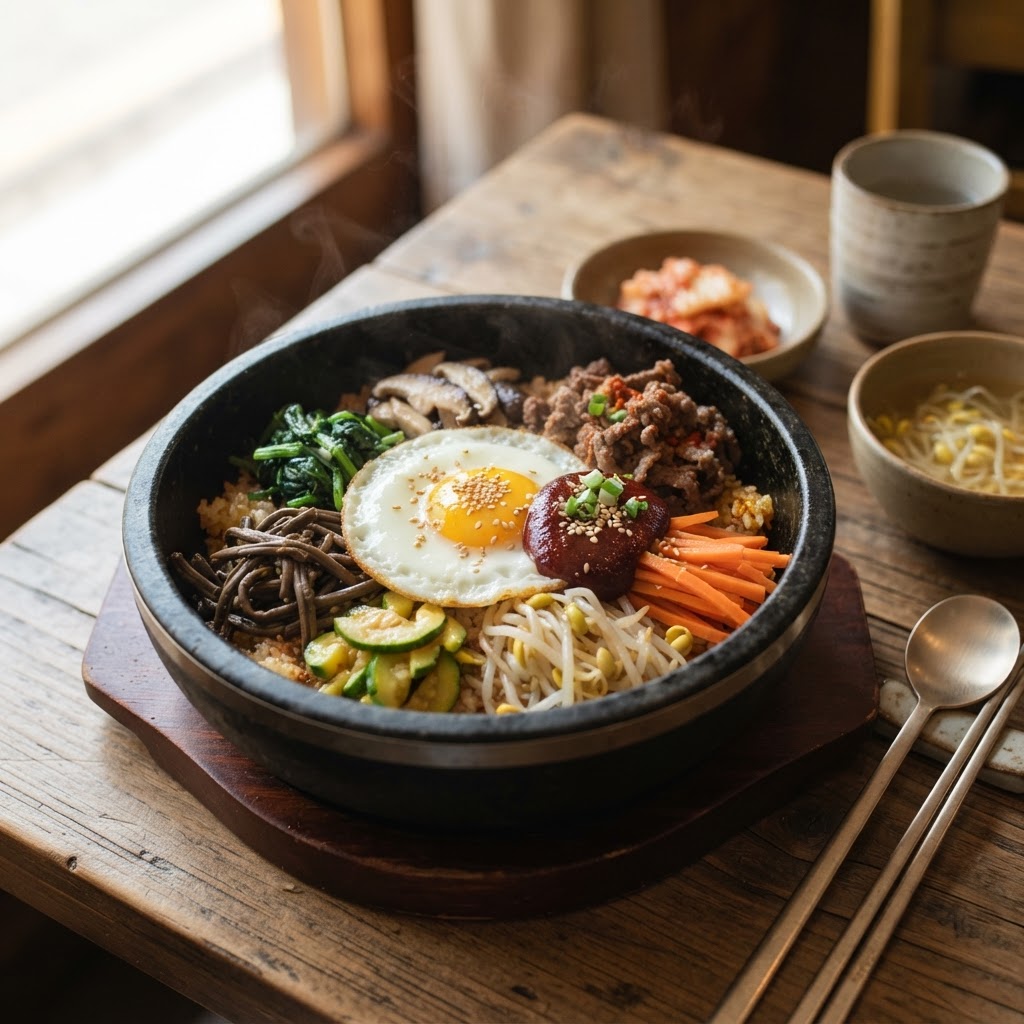
Korean Bibimbap: Jeonju's Joseon Dynasty Mixed Rice
October 11, 2026
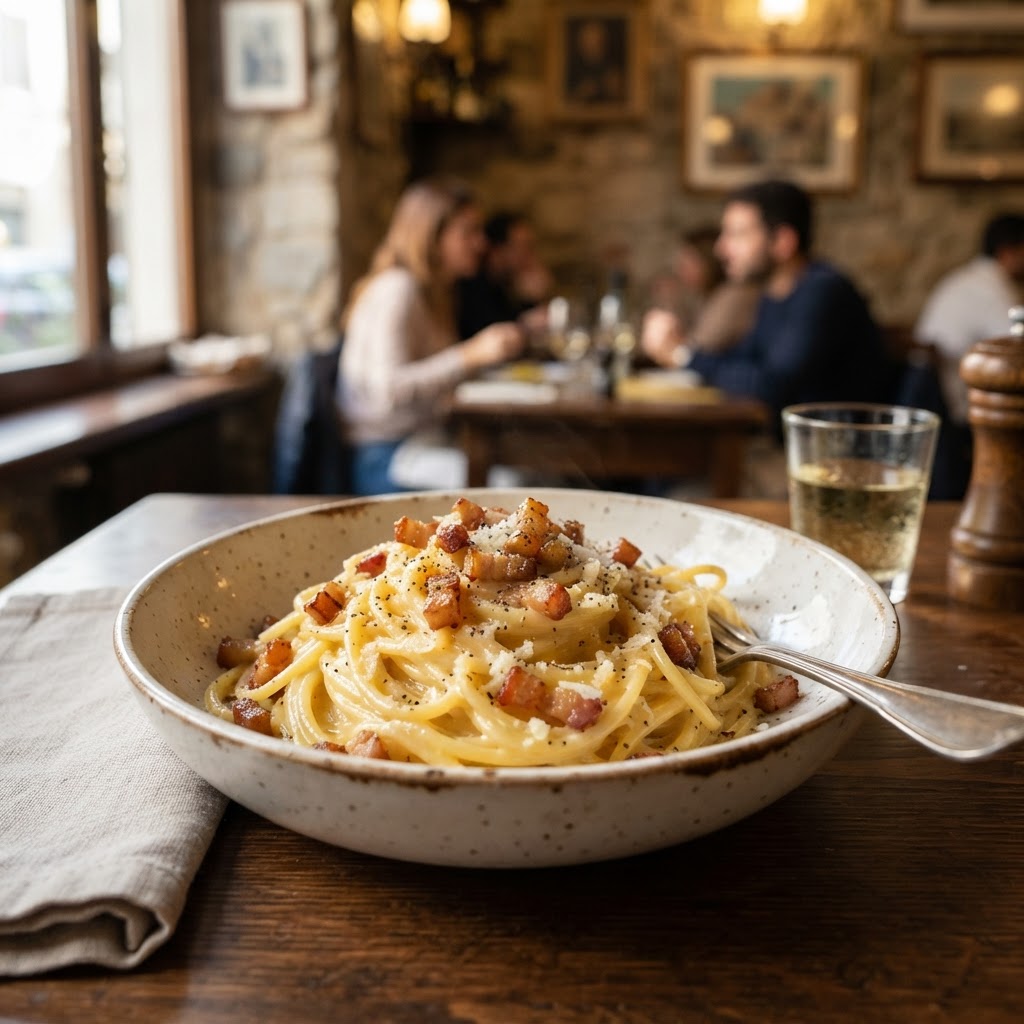
Spaghetti alla Carbonara: Rome's World War II Pasta of Eggs, Guanciale, and Pecorino
October 9, 2026