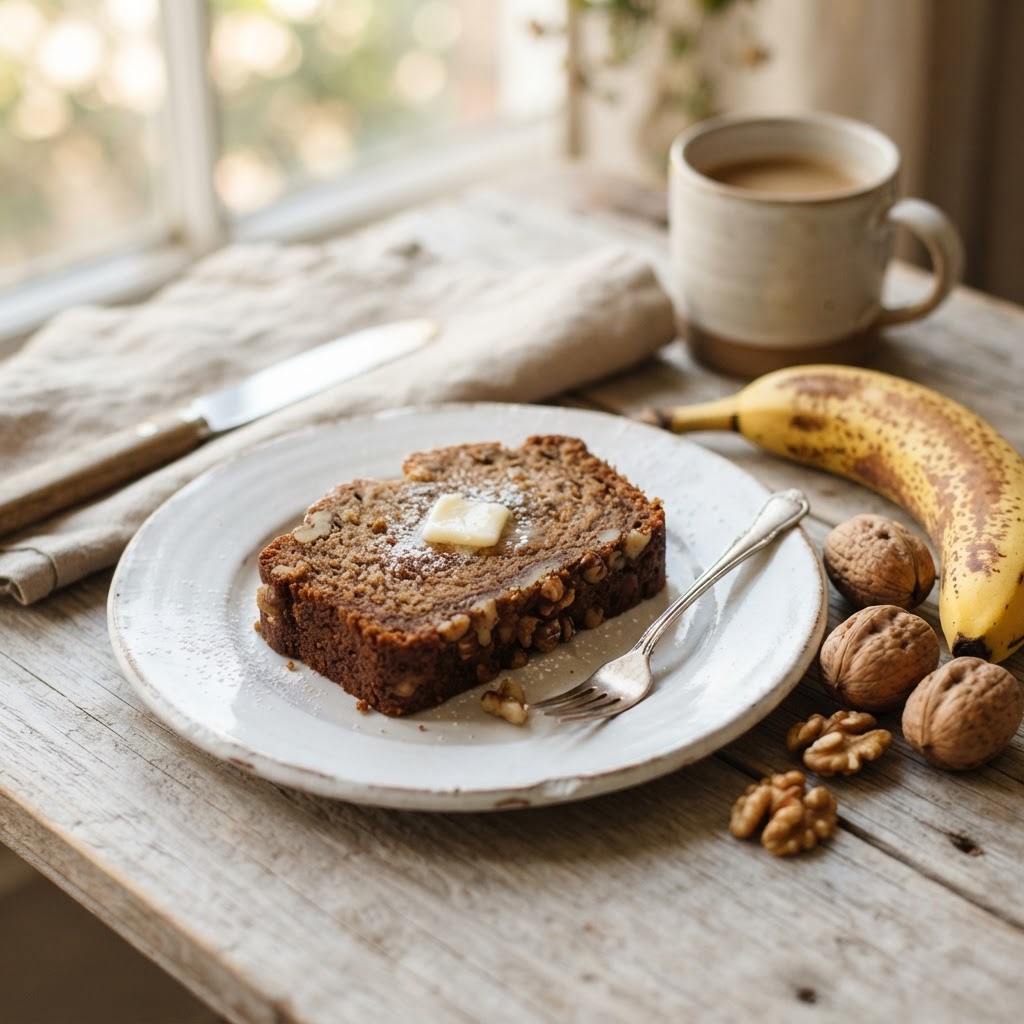
Banana Bread with Walnuts
January 30, 2026
Banana bread first appeared in an American cookbook in 1933, in Pillsbury's *Balanced Recipes*, and it took hold in American kitchens through the 1930s as baking powder became a grocery-store staple and as the Great Depression taught cooks not to throw away a blackened banana. The first banana bread had been sold in Lawrence, Kansas, as early as January 1881, but the recipes that became the modern loaf came fifty years later, when corporate test kitchens and community cookbooks alike began turning overripe bananas into a moist, tender quick bread. The Chiquita Banana recipe booklet of 1947 spread the loaf further, and February 23 is now National Banana Bread Day.
The loaf is a piece of resourcefulness: bananas too ripe to eat become a bread that is sweeter and more deeply flavored for the waiting. The key is to use bananas that are extremely ripe, the skins black and the flesh soft and fragrant. The riper the bananas, the more starch has converted to sugar, and the sweeter, moister, and more intense the loaf.
Ingredients (makes 1 loaf):
The Batter: - 3–4 very ripe bananas (the skins should be mostly black — this is non-negotiable) - 3 ½ oz unsalted butter, melted and cooled - 5 ¼ oz light brown sugar (or dark brown for deeper caramel flavor) - 1 large egg, at room temperature - 1 teaspoon vanilla extract - 7 oz all-purpose flour - 1 teaspoon baking soda - ½ teaspoon salt - ½ teaspoon ground cinnamon (optional but recommended — it enhances the banana flavor) - ½ teaspoon ground nutmeg (optional) - 3 ½ oz walnuts, toasted and roughly chopped (pecans are an excellent substitute)
Topping: - 1 ¾ oz walnuts, halved (for decorating the top) - 1 tablespoon turbinado sugar (for a crunchy, sparkly crust) - 1 banana, sliced lengthwise (optional, for decoration)
Optional Additions: - 1 ¾ oz chocolate chips (semi-sweet or dark) - 1 ¾ oz dried cranberries or raisins
Preparing the Bananas: The bananas must be very ripe — if yours are not ripe enough, place them on a baking sheet and bake at 300°F (302°F) for 15–20 minutes until the skins are black and the flesh is very soft. Let cool. Mash the bananas with a fork until smooth (some small lumps are fine — they add texture).
Mixing the Batter: Preheat oven to 350°F (347°F). Grease a 9x5-inch loaf pan and line with parchment paper (leaving overhang for easy removal).
In a large bowl, whisk together the melted butter and brown sugar until smooth. Whisk in the mashed bananas, egg, and vanilla until well combined. In a separate bowl, whisk together the flour, baking soda, salt, cinnamon, and nutmeg. Add the dry ingredients to the wet ingredients and stir with a wooden spoon or spatula until just combined — do not overmix (overmixing makes the bread tough). Fold in the toasted, chopped walnuts (and chocolate chips or dried fruit, if using).
Baking: Pour the batter into the prepared loaf pan. Arrange the walnut halves in a decorative pattern on top. Sprinkle with turbinado sugar. If using the sliced banana, arrange the slices on top of the batter.
Bake at 350°F for 55–65 minutes until a toothpick inserted into the center comes out clean (a few moist crumbs are fine — wet batter means it needs more time). The top should be golden brown and the bread should have pulled away slightly from the sides of the pan.
Cooling: Let the bread cool in the pan for 10 minutes, then lift it out using the parchment overhang and transfer to a wire rack. Cool for at least 30 minutes before slicing — slicing while too warm causes the bread to fall apart. The bread firms up as it cools.
The Mimosa Pairing Logic: The sweet, comforting, nutty character of banana bread calls for a mimosa with warm fruit notes that complement the banana and the walnuts. A classic orange mimosa is the most natural pairing — the citrus provides a bright contrast to the rich, sweet bread and the champagne's effervescence refreshes the palate. A peach bellini mimosa is inspired — the peach's sweetness echoes the ripe banana and the brown sugar, and the prosecco's fruitiness complements the warm spices. For a more structured pairing, a mango mimosa provides a tropical fruit counterpoint that echoes the banana's tropical origins. Avoid very dry, bitter mimosas — the bread's sweet, comforting character needs a mimosa with complementary fruit and warmth.
Reference Links: - Banana bread history: Wikipedia - Short history of banana bread: King Arthur Baking - Banana bread recipe: Simply Recipes - Baking powder and quick breads: Serious Eats
Make-Ahead: Banana bread is one of the best make-ahead baked goods — it keeps for 3–4 days at room temperature (wrapped tightly in plastic) and actually improves in flavor on the second day. It can be frozen for up to 3 months (wrap in plastic, then foil). The batter can be mixed the night before and refrigerated — let it come to room temperature for 30 minutes before baking. Very ripe bananas can be frozen whole (in their skins) and thawed for future use.
Pro Tips: The bananas must be extremely ripe — skins mostly black, flesh soft and fragrant. Underripe bananas produce a flat, starchy bread with little banana flavor. If your bananas are not ripe enough, bake them at 300°F for 15–20 minutes until the skins blacken — this concentrates the sugars and produces the same effect as natural ripening. Do not overmix the batter — stirring too much develops the gluten in the flour and makes the bread tough and dense. The walnuts should be toasted before adding — toasting brings out their oils and deepens their flavor (toast at 350°F for 8–10 minutes). The bread should be tested with a toothpick — a few moist crumbs are fine, but wet batter means it needs more time. Do not underbake — the center should be fully set. Let the bread cool completely before slicing — slicing warm banana bread causes it to crumble.
Rate this recipe
Be the first to rate this recipe
to submit your rating.
Recent Posts

Couscous Royale: North Africa's Grand Platter of Lamb, Chicken, and Merguez
October 14, 2026

Seattle Cream Cheese Dog Bites: Hadley Long's 1989 Pioneer Square Invention
October 14, 2026

Khao Soi: Chiang Mai's Northern Thai Coconut Curry Noodles
October 13, 2026

Korean Bibimbap: Jeonju's Joseon Dynasty Mixed Rice
October 11, 2026

Spaghetti alla Carbonara: Rome's World War II Pasta of Eggs, Guanciale, and Pecorino
October 9, 2026