Argentine Alfajores al Brachetto
July 19, 2026
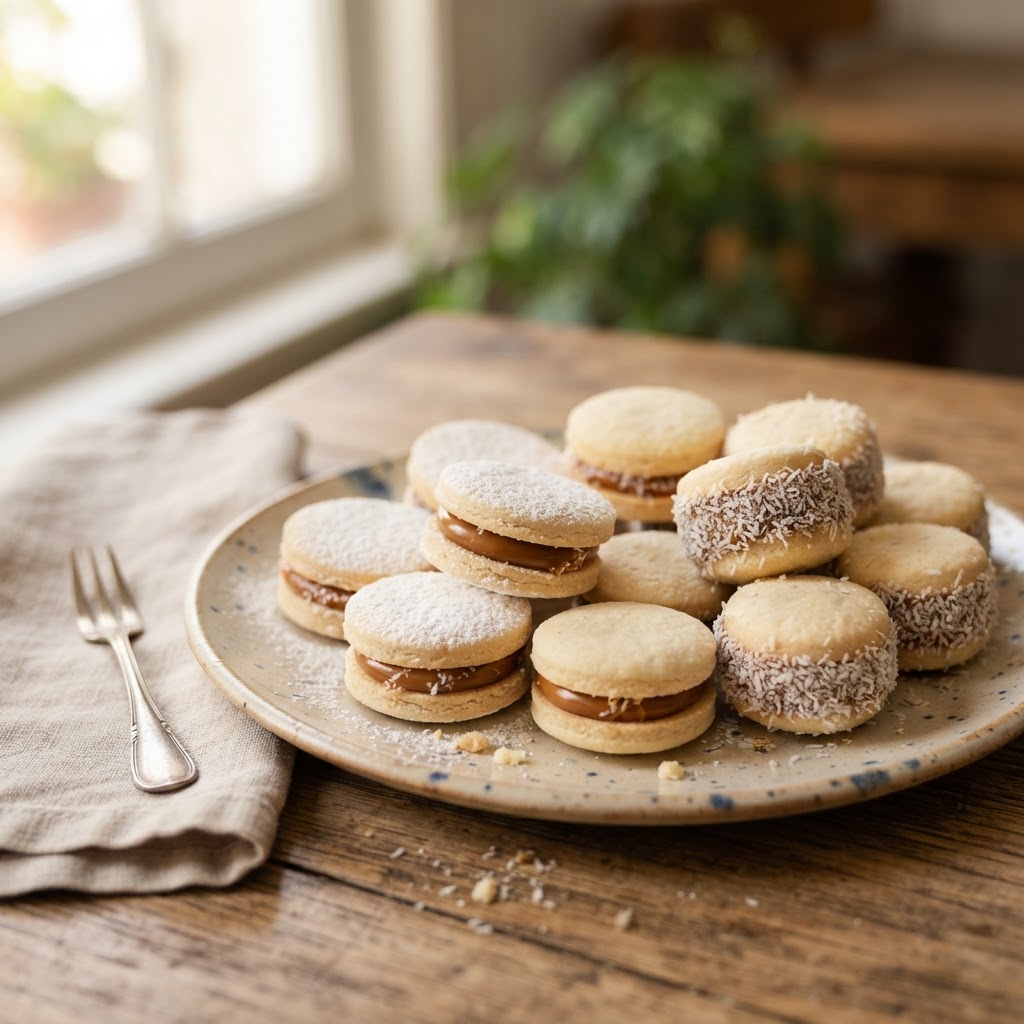
Alfajores — delicate sandwich cookies of two crumbly shortbread rounds filled with thick, glossy dulce de leche and often rolled in shredded coconut or dusted with powdered sugar — are the national sweet of Argentina and one of the most popular cookies in all of Latin America. Their history is a story of Moorish Spain, transatlantic migration, and the South American love affair with dulce de leche.
As Kevin is Cooking explains, traditional alfajores from Argentina, Peru, and Venezuela feature two round, sweet biscuits held together with a layer of dulce de leche. Caroline's Cooking traces the origins of alfajores to the Moors, who brought the concept to Spain many centuries ago; the cookies then traveled to Latin America via Spanish colonists, where they were transformed by local ingredients — most importantly, dulce de leche, the creamy, caramel-like milk confection that is the soul of South American pastry.
The Argentine alfajor is a study in textures. The cookies are made with a combination of wheat flour and cornstarch — the cornstarch is the key to the signature melt-in-the-mouth, crumbly, almost shortbread-like texture that dissolves on the tongue. The filling is dulce de leche — thick, spreadable, deeply caramelized — and it should be generous, oozing slightly when the cookie is pressed. The most traditional finishing is a roll in unsweetened shredded coconut, which clings to the exposed dulce de leche around the edges and provides a textural and flavor contrast; others are dusted with powdered sugar or dipped in chocolate. In Argentina, alfajores are eaten at every hour of the day — with morning coffee, as an afternoon snack (the *merienda*), and as dessert — and they are sold everywhere from neighborhood bakeries to corner kiosks to artisanal pastry shops.
Our Mimosavated version adds a splash of Brachetto d'Acqui to the cookie dough — the sweet, lightly sparkling red wine with strawberry and rose aromas has a natural affinity for the vanilla and the butter of the shortbread, adding a subtle berry note that complements the dulce de leche.
Ingredients (makes about 18 sandwich cookies):
The Alfajor Cookies: - 7 oz all-purpose flour - 7 oz cornstarch - 1 teaspoon baking powder - ½ teaspoon salt - 5 ¼ oz unsalted butter, room temperature - 3 ½ oz powdered sugar (plus extra for dusting) - 3 large egg yolks - 3 ⅓ tbsp Brachetto d'Acqui - 1 teaspoon vanilla extract - 1 teaspoon lemon zest
The Filling and Finishing: - 14 ⅛ oz dulce de leche (thick, spreadable) - 3 ½ oz unsweetened shredded coconut (for rolling) - Powdered sugar (for dusting, if not using coconut)
Making the Cookie Dough: In a bowl, whisk together the flour, cornstarch, baking powder, and salt. In a large bowl, beat the butter and powdered sugar until light and fluffy. Add the egg yolks one at a time, beating well after each. Beat in the Brachetto, vanilla, and lemon zest. Gradually add the dry ingredients, mixing just until the dough comes together — it will be soft and slightly crumbly. Form the dough into a disk, wrap in plastic, and chill for at least 1 hour.
Cutting and Baking: Preheat the oven to 347°F (350°F). Line two baking sheets with parchment paper.
On a lightly floured surface, roll the chilled dough to about 3mm thick. Cut out rounds with a 2 in (2-inch) round cutter. Place the rounds on the prepared baking sheets, leaving a little space between them. Bake for 10–12 minutes, until the cookies are just set and barely beginning to turn golden at the edges — they should remain pale. Let cool on the baking sheet for 5 minutes, then transfer to a wire rack to cool completely.
Assembling: Spread a generous layer of dulce de leche (about a tablespoon) on the flat side of one cookie. Top with another cookie, flat side down, and press gently to sandwich. Roll the exposed dulce de leche edge in shredded coconut (or dust the whole sandwich with powdered sugar). Repeat with the remaining cookies.
Serving: Alfajores are best after a few hours (or overnight) so the cookies soften slightly from the moisture of the dulce de leche — this transforms the texture from crisp to the signature melt-in-the-mouth tender. Serve at room temperature with coffee, tea, or a glass of milk.
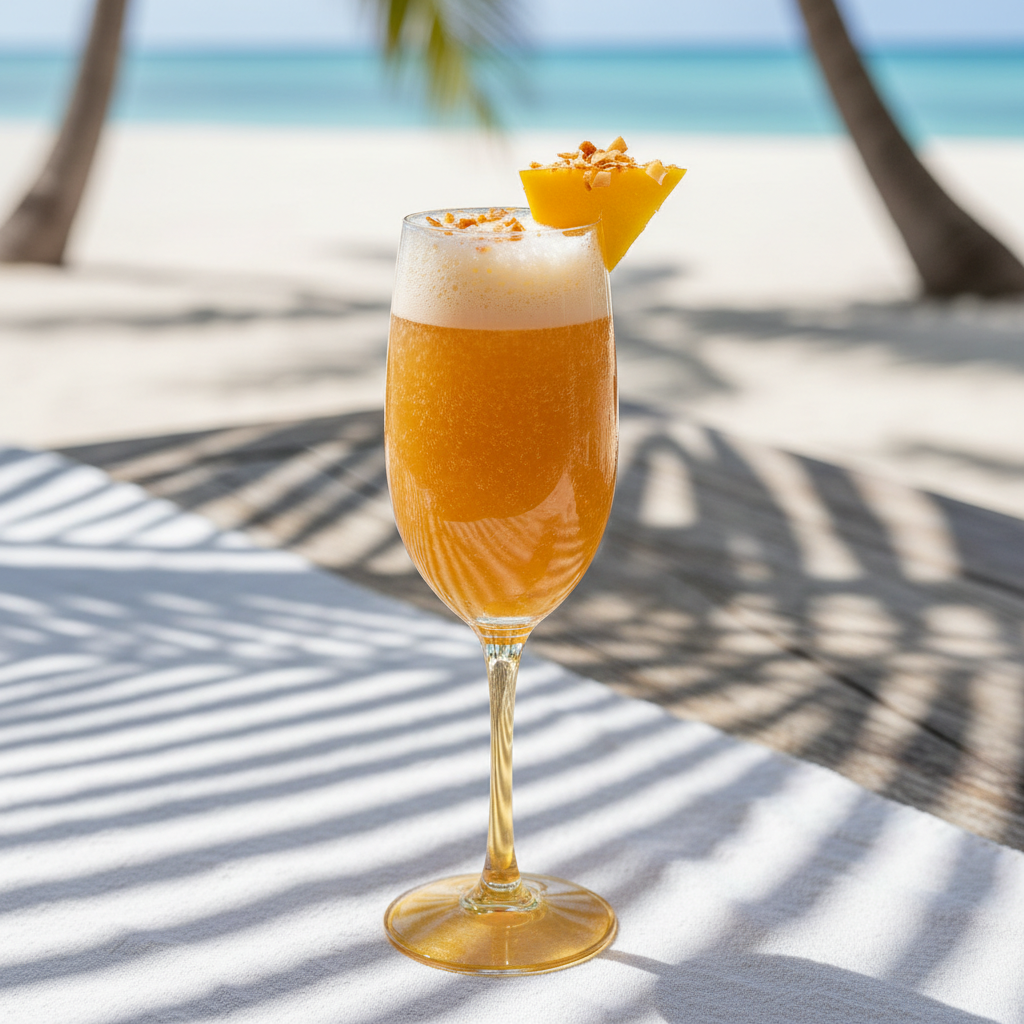
The Mimosa Pairing Logic: Since the cookie dough contains Brachetto d'Acqui, pair with a strawberry mimosa — strawberry purée and Prosecco. The strawberry echoes the Brachetto and complements the caramel dulce de leche. A peach bellini mimosa is also excellent — the peach and the dulce de leche is a classic pairing. Avoid heavy or dry mimosas — alfajores are delicate, buttery, and caramel-sweet, and you need something light and fruity to complement them.
Reference Links: - Alfajores (Dulce de Leche Sandwich Cookies, Argentina): Kevin is Cooking - Alfajores (dulce de leche sandwich cookies, Moorish origins): Caroline's Cooking - Brachetto d'Acqui wine guide: Wine Folly
Make-Ahead: The cookie dough can be made up to 2 days ahead and refrigerated, or frozen for up to 1 month — thaw in the refrigerator before rolling. The baked cookies can be stored in an airtight container at room temperature for up to 1 week. The assembled alfajores are best after resting overnight (the cookies soften and the flavors meld) and keep for up to 5 days in an airtight container. The coconut-coated alfajores can be frozen for up to 1 month — thaw at room temperature. Do not freeze powdered-sugar-dusted alfajores (the sugar will weep).
Pro Tips: The cornstarch is the key to the melt-in-the-mouth texture — don't reduce or substitute it; it is what makes the cookies crumbly and tender rather than crisp. The dough will be soft and slightly crumbly — chill it thoroughly before rolling, and work quickly with a light hand. Don't overbake — the cookies should be barely golden at the edges; overbaked alfajores will be hard and will not soften properly with the dulce de leche. Use thick, spreadable dulce de leche — a runny filling will ooze out and make a mess; if your dulce de leche is too thin, simmer it gently in a saucepan for 10–15 minutes to thicken. Be generous with the filling — a proper alfajor should have a thick, visible layer of dulce de leche, not a thin smear. Let the assembled alfajores rest overnight before serving — this resting time is what transforms the texture from crisp to the signature melt-in-the-mouth tender, and it lets the flavors meld. The coconut is traditional and adds a textural contrast — don't skip it if you want the authentic Argentine experience.
Rate this recipe
Be the first to rate this recipe
to submit your rating.
Perfect Mimosa Pairings
Mimosas that pair perfectly with this dish

Recent Posts

Couscous Royale: North Africa's Grand Platter of Lamb, Chicken, and Merguez
October 14, 2026

Seattle Cream Cheese Dog Bites: Hadley Long's 1989 Pioneer Square Invention
October 14, 2026

Khao Soi: Chiang Mai's Northern Thai Coconut Curry Noodles
October 13, 2026

Korean Bibimbap: Jeonju's Joseon Dynasty Mixed Rice
October 11, 2026

Spaghetti alla Carbonara: Rome's World War II Pasta of Eggs, Guanciale, and Pecorino
October 9, 2026