The Apricot Thyme Champagne Mimosa
February 18, 2026
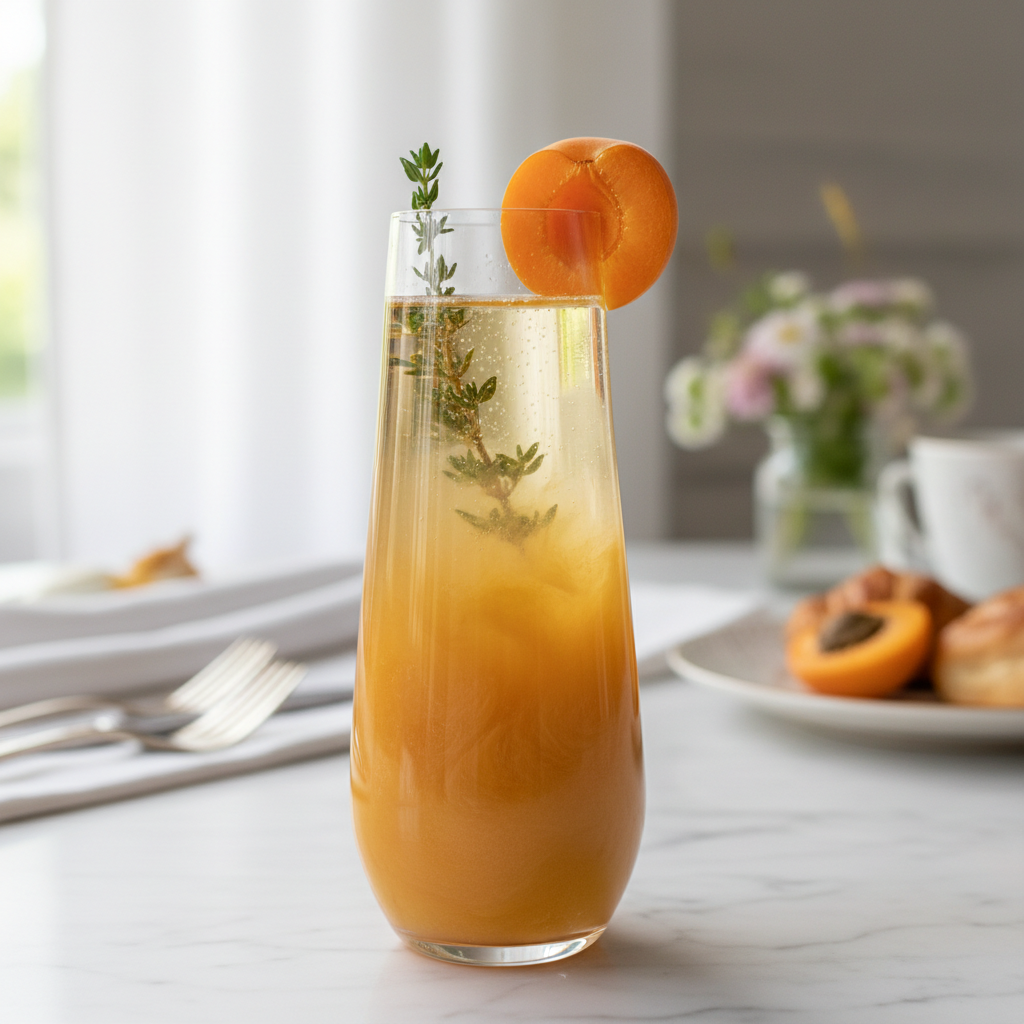
The Apricot Thyme Champagne Mimosa is the unexpected stone-fruit mimosa that belongs on every spring and summer brunch table. Where the peach bellini has become a classic — popular, well-documented, and reliably excellent — the apricot is its more complex, more sophisticated sibling: less sweet, more tart, with a distinctive floral-almond quality (apricot kernels are the botanical source of amaretto) that makes it far more interesting in a champagne flute. The addition of fresh thyme introduces a savory, herbal dimension that transforms the drink from a simple fruit mimosa into something genuinely distinctive.
About Apricots
The apricot (*Prunus armeniaca*) is one of the oldest cultivated fruits — its cultivation dates back at least 4,000 years in China and Central Asia, and it was introduced to Europe through Alexander the Great's campaigns. The finest apricots for cooking and cocktails come from the Rhône Valley in France, the Abruzzo region of Italy, and California's Central Valley. Look for the Blenheim (also called Royal) variety — California's most prized apricot, available at farmers' markets June through July — for the most flavorful purée.
For year-round use, high-quality apricot nectar (such as Ceres) provides excellent results. Monin also produces an Apricot Syrup ideal for bars and batch service. Apricot brandy (DeKuyper, or the superior Rothman & Winter Orchard Apricot) amplifies the fruit character beautifully as an optional addition.
Ingredients (serves 6): - 5–6 ripe apricots (about 14 oz), halved and pitted — or 1¼ cups Looza apricot nectar - 1 tablespoon fresh lemon juice - 1 tablespoon honey (adjust to fruit sweetness) - 4 sprigs fresh thyme, plus more for garnish - 1 bottle (25 oz chilled Champagne Brut NV (Billecart-Salmon, Nicolas Feuillatte, or Pol Roger) - Optional: 1 oz apricot brandy (Rothman & Winter Orchard Apricot)
For the Apricot-Thyme Purée: Combine apricot halves, lemon juice, honey, and thyme sprigs in a small saucepan with 2 tablespoons of water. Simmer gently for 8 minutes until soft. Remove thyme. Blend until completely smooth. Pass through a fine-mesh sieve. The purée should be vivid deep gold-orange and intensely fragrant. Cool completely and refrigerate for up to 3 days. If using apricot nectar, simply steep 2 thyme sprigs in the warmed nectar for 15 minutes, then cool — no cooking required.
Instructions: Chill Champagne flutes for 5 minutes. Pour about 2 oz of the apricot purée (and optional apricot brandy) into each flute. Top slowly with chilled Champagne poured down the side of the glass. The golden purée blooms through the pale wine, creating a warm amber gradient. Garnish with a small fresh thyme sprig inserted at the rim and, if available, half a fresh apricot rested on the rim.
For a Mimosa Bar (serves 12): - 2¾ cups apricot purée or steeped nectar - 2 oz apricot brandy (optional) - 2 bottles Champagne Brut, chilled
Label the pitcher "Apricot Thyme" and set alongside a small bundle of fresh thyme as decoration.
Variations: - Replace thyme with fresh rosemary (1 sprig per serving) for a more resinous, Mediterranean-herb note. - Add ¾ oz of Cointreau per serving for an Apricot Cointreau Champagne Mimosa with an orange-citrus bridge. - Use Crémant d'Alsace (Alsace's excellent sparkling wine) instead of Champagne — Alsace is one of France's great apricot-producing regions and the regional terroir pairing is exceptional.
Pairing: The apricot's stone-fruit sweetness and thyme's savory herbs make this mimosa exceptional alongside anything with almond, honey, or mild cheese: honey ricotta crostini, almond croissants, brie boards, and fresh fruit tarts. The apricot-thyme combination also pairs beautifully with savory brunch dishes like eggs royale and smoked salmon.
Pro Tips: Apricot purée oxidizes quickly — add lemon juice immediately after blending and press plastic wrap directly onto the surface of the purée to prevent browning. For the deepest possible flavor, use apricots that are fully ripe to the point of being slightly soft — under-ripe apricots produce a thin, astringent purée with little of the fruit's characteristic sweet-tart complexity.
Rate this recipe
Be the first to rate this recipe
to submit your rating.
Recent Posts

Couscous Royale: North Africa's Grand Platter of Lamb, Chicken, and Merguez
October 14, 2026

Seattle Cream Cheese Dog Bites: Hadley Long's 1989 Pioneer Square Invention
October 14, 2026

Khao Soi: Chiang Mai's Northern Thai Coconut Curry Noodles
October 13, 2026

Korean Bibimbap: Jeonju's Joseon Dynasty Mixed Rice
October 11, 2026

Spaghetti alla Carbonara: Rome's World War II Pasta of Eggs, Guanciale, and Pecorino
October 9, 2026